
Judicial conversations: Experts unpack JLOS impact
The discussion focused on the Justice, Law and Order Sector (JLOS), a government framework that brings together key institutions involved in administering justice and maintaining law and order.
Senior Advocate Elison Karuhanga (C) poses for a photo with Rachel Odoi Musoke (R) and Sam Rogers Wairagala after JSC Conversations on Wednesday, March 18, 2026. (Courtesy photo)
_______________
Uganda’s justice sector is undergoing a quiet but significant transformation, with experts emphasising that the focus is shifting from physical infrastructure to real impact on citizens’ access to justice.
This was the central theme during the latest edition of the Judicial Service Conversations (JSC), hosted by senior advocate Elison Karuhanga, which featured Rachel Odoi Musoke, a Senior Technical Advisor, JLOS Secretariat and Sam Rogers Wairagala, deputy Senior Technical Advisor, JLOS Secretariat, on Wednesday (March 18).
The discussion focused on the Justice, Law and Order Sector (JLOS), a government framework that brings together key institutions involved in administering justice and maintaining law and order.
Odoi Musoke traced the origins of JLOS to 1999, when leaders in the justice system recognised the need for better coordination among institutions such as the Judiciary, Police, and Directorate of Public Prosecutions.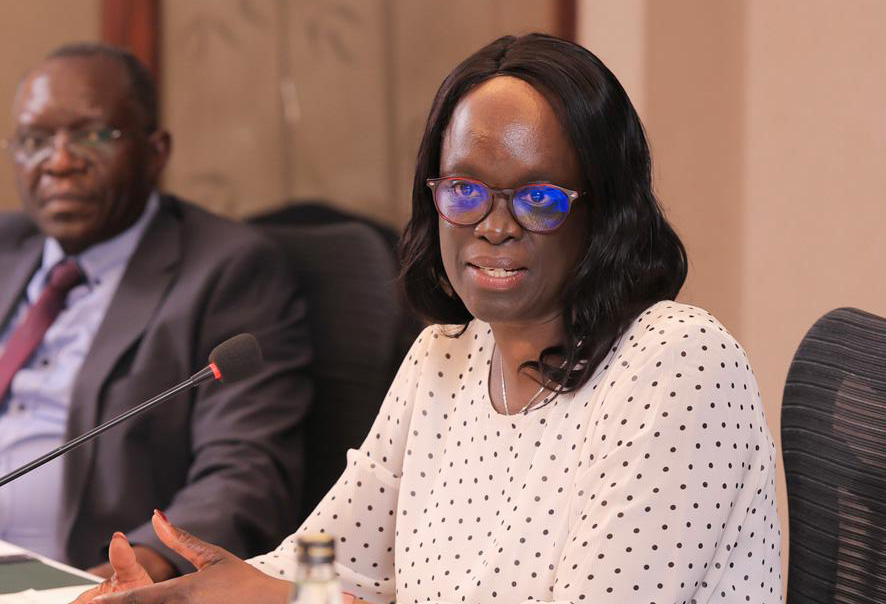
Rachel Odoi Musoke, a Senior Technical Advisor at the Justice, Law and Order Sector (JLOS) Secretariat, speaking during the JSC Conversations hosted by senior advocate Elison Karuhanga. (Courtesy photo)
“At the time, the system was disjointed. Institutions were not speaking to each other, which affected service delivery,” she said, explaining that JLOS was built on the principle that a justice system is only as strong as its weakest link.
Over the years, JLOS has grown from a cluster of about 10 institutions focused on criminal justice to a broader sector of about 18 agencies, now covering civil, commercial, land and family justice.
Through structured coordination, communication and cooperation, the sector has implemented joint planning and reforms aimed at improving efficiency and service delivery.
According to Odoi Musoke, one of JLOS’s biggest achievements has been strengthening institutions to function effectively.
“In the past, the system faced very basic challenges—lack of resources, poor coordination and inefficiencies. Today, institutions are stronger, better equipped and more capable of delivering justice,” she noted.
Wairagala highlighted the importance of systems thinking in ensuring justice is accessible to all Ugandans.
“Our focus is on making justice work for everyone, not just a few. It’s about ensuring that systems deliver results and make life better for citizens,” he said.
He added that his work combines economics, strategy and policy to find practical solutions to justice challenges, stressing that justice delivery must be efficient, inclusive and people-centred.
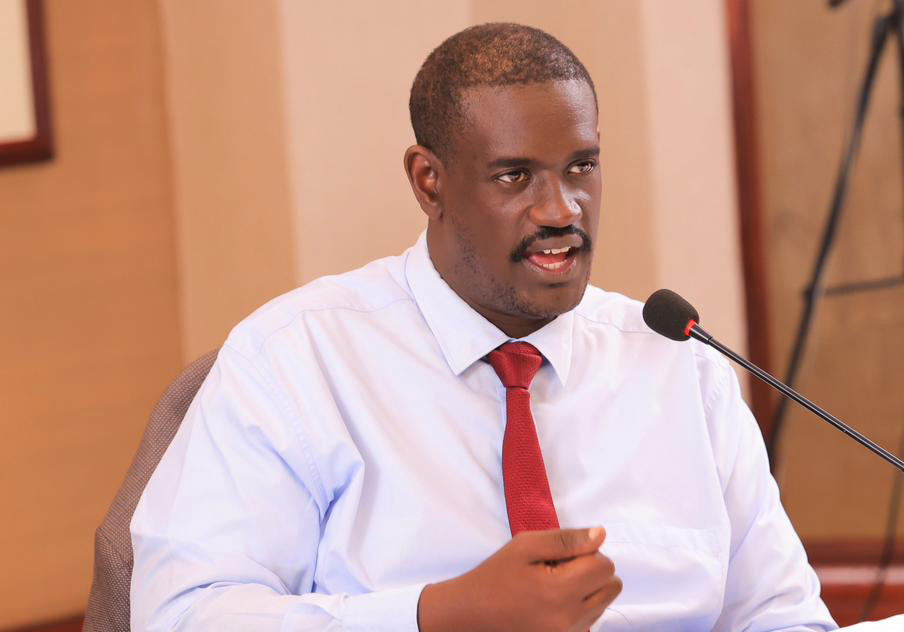
Senior Advocate Elison Karuhanga speaking during the JSC Conversations on Wednesday, March 18, 2026. (Courtesy photo)
The discussion also explored how JLOS has evolved within Uganda’s broader government planning framework, transitioning from a sector-wide approach to a programme-based model under the Governance and Security Programme.
Despite this shift, the core objective remains the same, ensuring collaboration among institutions to improve justice delivery.
The experts emphasised that while infrastructure development, such as court buildings and police facilities, has been important, the real test lies in whether ordinary Ugandans can access timely and fair justice.