
Jinja civil servants told to declare assets or face prosecution
"Even if you are an officer trainee, as long as you are drawing money from the Consolidated Fund, you are supposed to declare."
IGG Naluze Aisha Batala (2nd left) chatting with some of the Jinja district officials after meeting with them at the Jinja District headquarters on April, 15. Looking on is the Director of Ombudsman Affairs in the IG's office Kakooza Savio Ntensibe (right) and the Jinja district speaker, Moses Lwochaza (left). Photos by Donald Kiirya)
________________
The director of anti-corruption at Uganda's Inspectorate of Government (IG), Robert Lugoloobi, has warned public officials in Jinja city and the surrounding districts to declare their assets, income, and liabilities before the April 30 deadline.
He said his office is prepared to move beyond warnings to active prosecution for those who fail to comply with the leadership code.
Lugoloobi made the remarks during a courtesy visit to the Jinja district offices led by IGG Naluze Aisha Batala.
He said that while leaders (heads of departments and high-ranking officials) declare every two years in March, the month of April is specifically mandated for all other public servants on the government payroll.
"Even if you are an officer trainee, as long as you are drawing money from the Consolidated Fund, you are supposed to declare."
Lugoloobi also cautioned officials against waiting for the final days of the month, noting that technical delays or network jams would not be accepted as valid excuses for non-compliance.
Mainstreaming TAC
Beyond asset declaration, the IG revealed a shift in government strategy towards the Transparency, Accountability, and Anti-Corruption (TAC) programme, which Lugoloobi said is no longer optional; it is now a requirement for the approval of policy statements and budgets.
Councilor Agnes Kadama (standing middle) registering her complaints before the IGG at Jinja City chambers on April 15. 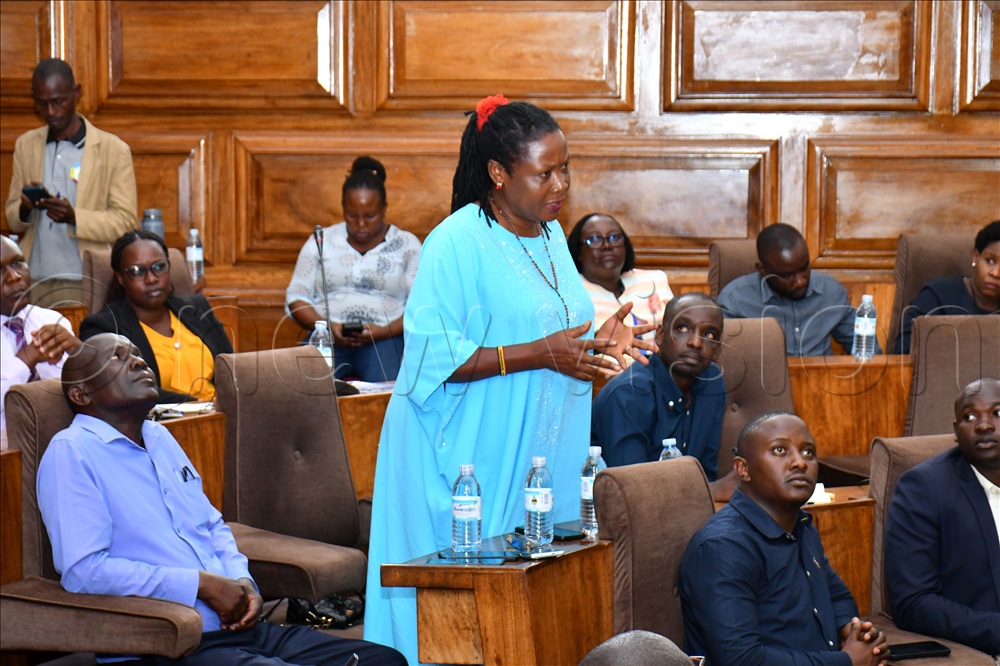
The programme aims to address corruption at the source by strengthening internal mechanisms, including ensuring politicians and technical staff provide honest reports on construction sites and abandoned projects.
“Instead of waiting for the IGG to come in, handle issues at the district or city level first,” said Lugoloobi.
“Be part of the solution. Public resources must be used prudently for the benefit of citizens, especially in critical sectors like health, education and engineering."
He also appealed to Jinja leaders to allocate land for the construction of a regional IGG office to strengthen the inspectorate’s presence in eastern Uganda.
Challenges in Jinja
The IG’s visit also brought to light deep-seated grievances within the Jinja leadership.
Kakooza Savio Ntensibe, director of ombudsman affairs, highlighted widespread complaints regarding the Jinja City Service Commission.
He noted that recruitment processes are often marred by allegations of favouritism, where jobs are reportedly reserved for relatives and political allies.
Ntensibe urged public officers to serve citizens with a smile and to strictly follow laid-down procedures.
“Corruption thrives when we ignore statutory processes."
Thursday's meeting took a dramatic turn when Agnes Kadama, a long-serving councillor, voiced frustrations over systemic corruption and the marginalisation of oversight committees.
She alleged that council resolutions are routinely ignored and that technical officers have denied councillors access to vital financial documents, including trial balances.
"A lot of money, local revenue, and taxpayer funds are not respected here," Kadama remarked, further alleging that public land, including landfills and marketplaces, is being grabbed, with titles issued under the watch of technical staff.
In response to these challenges, the IG expressed its intent to establish a permanent footprint in the region.
IGG Naluze advised Kadama to petition the town clerk, and that if they do not respond, then the IG’s office will come in. She told her to put her complaints in writing.
The inspectorate encouraged whistleblowers and aggrieved citizens to utilise the Access to Information Act to demand transparency, promising that the “big fish” and "crocodiles" involved in maladministration would be held accountable.