
International law evolving, not collapsing — experts
Speaking on the topic, “The Future of International Law,” Dr Brenda Akia, Chairperson of the African Group on the United Nations Committee on the Elimination of Discrimination Against Women, said the global legal system remains relevant but is increasingly strained by unequal power dynamics.
Dr Brenda Akia, Chairperson of the African Group on the United Nations Committee on the Elimination of Discrimination Against Women (CEDAW), speaking during the Judicial Service Conversation hosted by Elison Karuhanga. (Courtesy photo)
________________
International law is not collapsing but evolving under pressure from geopolitical tensions, rising inequality, and technological disruption, experts have said during the Judicial Service Conversation hosted by Elison Karuhanga, a Kampala city lawyer.
Speaking on the topic, “The Future of International Law,” Dr Brenda Akia, Chairperson of the African Group on the United Nations Committee on the Elimination of Discrimination Against Women, said the global legal system remains relevant but is increasingly strained by unequal power dynamics.
“International law is not disappearing. It is evolving. The question is how we make it work for everyone, not just the powerful,” she said.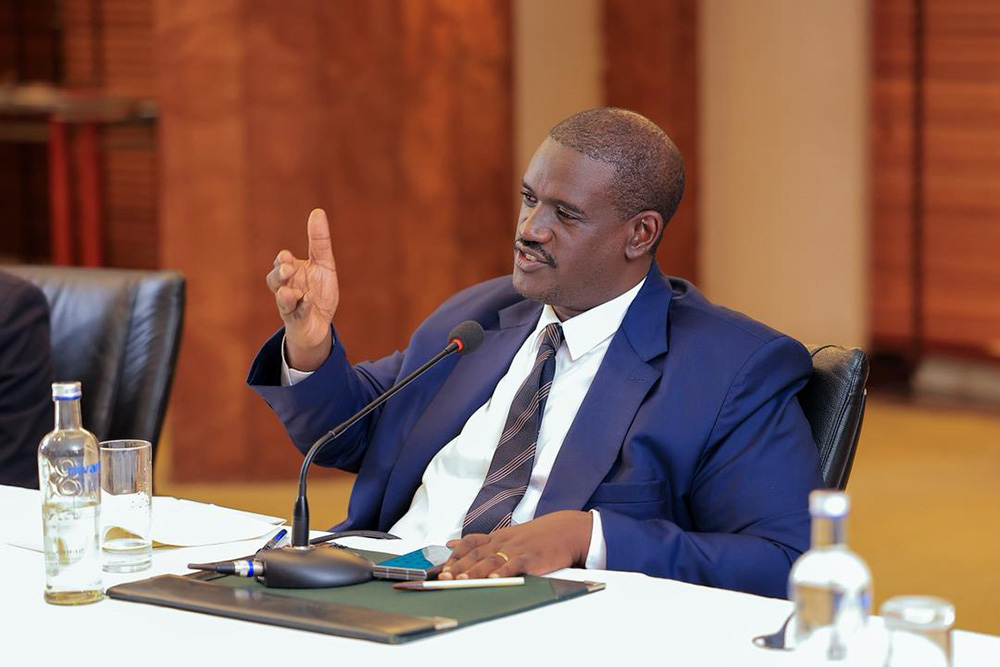
Elison Karuhanga, a Kampala city lawyer and the host of the Judicial Service Conversations, speaking during the conversations. (Courtesy photo)
She was joined by Adonia Ayebare, Uganda’s Permanent Representative to the United Nations, who argued that the system is adapting rather than failing.
“International law is only adapting under pressure. It was designed after World War II largely to serve major powers, and when tested against them, it faces challenges,” Ayebare said.
Akia acknowledged criticism that the system sometimes appears to serve as a “language of power,” noting that enforcement often depends on a country’s economic and political strength.
“If you are wealthy, you can sometimes disregard international law. If you are not, you must comply. That imbalance is real,” she said.
Ayebare echoed this, pointing to tensions between sovereignty and global norms, and the tendency of states to comply with rules “when convenient.”
Africa’s place at the table
A recurring theme was Africa’s limited influence in shaping international legal frameworks.
Akia warned that underrepresentation risks sidelining the continent’s interests.
“If you are not at the table, you are on the menu. Africa must be present where international law is made,” she said.
She cited her own role at the CEDAW as an example of why representation matters, noting that decisions taken in Geneva directly influence national laws and policies on gender equality.
Ayebare added that Uganda has consistently backed qualified candidates for global legal bodies, including the International Court of Justice and the International Criminal Court, helping shape global jurisprudence.
Impact of international law
Despite criticism, both speakers emphasised the tangible impact of international legal systems.
Akia cited cases where engagement with governments led to immediate reforms, including improved access to justice for women and the repeal of discriminatory laws in some countries.
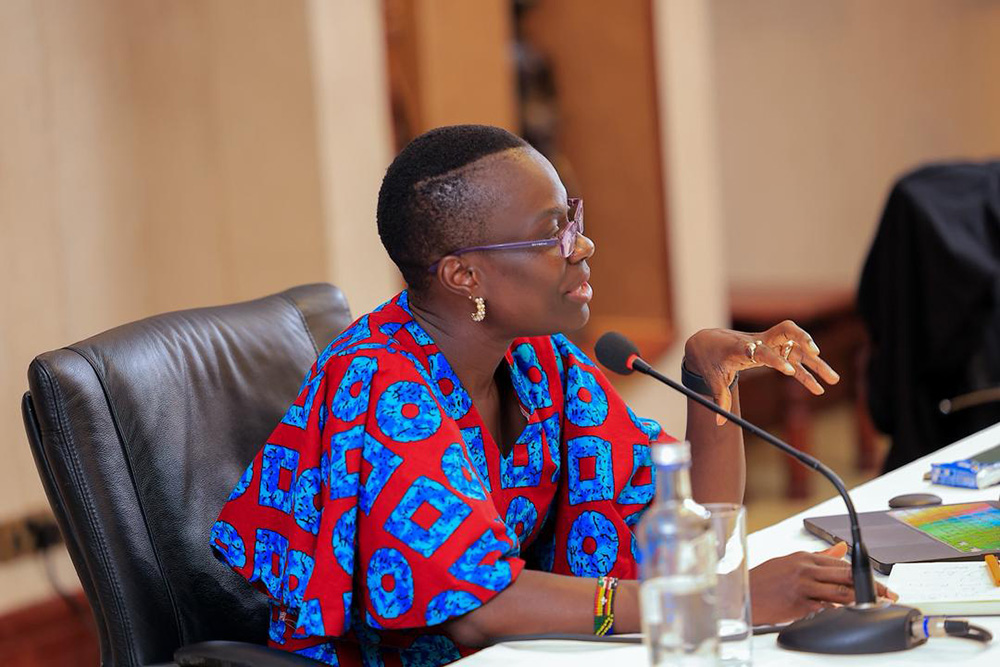
Dr Brenda Akia, Chairperson of the African Group on the United Nations Committee on the Elimination of Discrimination Against Women (CEDAW), speaking during the Judicial Service Conversation hosted by Elison Karuhanga. (Courtesy photo)
She described CEDAW as central to advancing women’s rights globally, influencing national legislation on issues such as education, political participation, and protection from violence.
New frontiers: technology and inequality
The conversation also explored emerging challenges, particularly in technology and artificial intelligence.
Akia warned that Africa risks being left behind due to limited access to electricity and the internet.
“You cannot talk about AI or digital governance when over 600 million Africans lack electricity,” she said.
She added that the digital divide, especially between men and women, could deepen inequality if not addressed.
Calls for reform
Both speakers called for reforms to make international law more equitable, including rethinking global governance structures such as the UN Security Council veto system.
Akia urged young lawyers to engage actively in shaping the future of international law.
“This is the moment to rethink the system, to make it fair, inclusive, and reflective of today’s realities,” she said.