
IGG Naluzze raises alarm on corruption in district service commissions
Batala said the commonest complaints are related to forgery of academic documents, bribery and irregular recruitment processes, where individuals allegedly pay money to secure government jobs.
Kabale political and technical leaders in a group photo with Inspector General of Government (IGG) Justice Aisha Naluzze Batala. (Photos by Nelson Ahimbisibwe)
________________
Inspector General of Government (IGG) Justice Aisha Naluzze Batala has raised serious concerns over rising corruption and misconduct in public institutions, citing increasing complaints against district service commissions and alarming negligence within government health facilities.
Batala raised the concerns on February 10, 2026, during the launch of her nationwide inspection tour in Kabale district, marking her first official visit to the Kigezi region since assuming office. The tour, she said, is aimed at assessing governance, accountability and service delivery in public institutions across the country.
While addressing political and technical leaders from Kabale district and municipality, the IGG revealed that her office has registered a growing number of corruption-related complaints, particularly involving district service commissions, which are mandated to oversee recruitment and human resource management at the local government level.
Batala said the commonest complaints are related to forgery of academic documents, bribery and irregular recruitment processes, where individuals allegedly pay money to secure government jobs.
“Since I assumed office, we have received many complaints concerning district service commissions, especially involving forged academic documents and the payment of bribes to secure employment. These practices undermine public trust and deny qualified Ugandans the opportunity to serve,” Batala said.
She added that corruption within recruitment systems not only compromises service delivery but also entrenches inefficiency and impunity in public service. The IGG emphasised that her office will closely scrutinise the operations of district service commissions during the tour, warning that officials found culpable will be held accountable.
Fight against corruption
Batala urged the citizens to actively participate in the fight against corruption, stressing that the responsibility does not lie with oversight institutions alone.
“The fight against corruption requires collective responsibility. Citizens must be vigilant, report wrongdoing, and refuse to participate in corrupt practices,” she urged.
She further encouraged whistleblowers to use the available reporting channels at the Inspectorate of Government, assuring them of confidentiality and protection.
Timely visit
Kabale district chairperson Nelson Nshangabaijasha welcomed the IGG’s visit, describing it as timely and necessary in strengthening transparency and accountability in local government operations.
He underscored the need for continued collaboration between the IGG’s office and district service commissions to address persistent challenges affecting public service recruitment.
“We believe that with closer supervision and co-operation, many of the issues affecting recruitment and service delivery can be resolved,” Nshangabaijasha said.
Access to information challenges
However, concerns were also raised regarding access to information from the Inspectorate of Government. Robert Kakuru, an executive director, pointed out challenges faced by civil society organisations and members of the public in obtaining timely information from the IGG’s office, calling for improved communication and openness to enhance public engagement.
Impromptu visit to the hospital
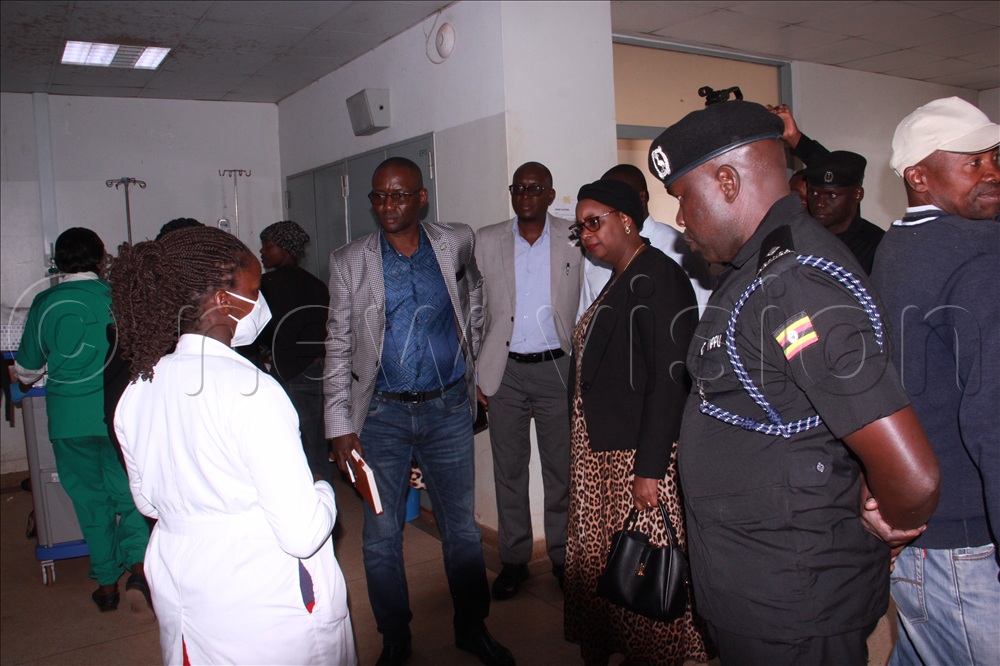
Following the meeting, Justice Batala led an impromptu inspection of several government projects and institutions in Kabale, including Kabale Regional Referral Hospital, where shocking revelations of negligence and misconduct were uncovered.
During the surprise visit to the hospital in the afternoon, the IGG team found several administrators and medical staff absent from duty during working hours. At the Emergency Unit, critically ill patients were reportedly unattended, raising serious concerns about patient safety and professionalism.
Batala expressed shock at the state of affairs, describing the situation as unacceptable, especially in a regional referral hospital expected to offer specialised and emergency care to patients from across the Kigezi sub-region and beyond.
One caretaker, Abias Ndyabaje from Kamwezi, narrated how his injured brother was denied treatment at the hospital and instead directed to purchase drugs and medical supplies from a nearby private pharmacy.
“They told us to go and buy drugs outside, yet my brother was bleeding and in pain. We wasted a lot of time moving around,” Ndyabaje said.
Further investigations by the IGG team revealed that the hospital had the required drugs and supplies in stock at the time patients were being referred to private pharmacies. This discovery prompted the immediate arrest of Nicholas Tumuheki, a nursing assistant at the hospital, over alleged negligence and for reportedly directing patients to buy medicines externally despite availability within the facility.
Tumuheki was taken to the Police to record a statement as investigations commenced. Batala warned that such conduct amounts to abuse of office and exploitation of vulnerable patients, particularly those seeking emergency care.
“It is unacceptable for health workers to neglect patients or send them to private pharmacies when drugs are available in the hospital. This is not only unethical but criminal,” Justice Batala said, vowing that her office would pursue the matter to its logical conclusion.
The IGG further cautioned health workers against engaging in practices that prioritise personal gain over patient welfare, emphasising that public health facilities exist to serve all citizens, regardless of their financial status.
Acting hospital director Dr Peter Kangwaje apologised for the incident, attributing some of the challenges to intermittent drug shortages from the National Medical Stores (NMS). However, Justice Batala dismissed any justification for negligence, noting that drug supply challenges cannot excuse abandonment of duty or deliberate misconduct.
“Even where there are shortages, patients must be handled with care, professionalism, and honesty. Absenteeism and negligence will not be tolerated,” she said.
Justice Batala ordered further investigations into the conduct of hospital administrators and staff, indicating that more arrests and disciplinary actions could follow. She also directed hospital management to strengthen supervision, attendance monitoring, and accountability mechanisms to prevent recurrence of similar incidents.
The Kabale visit set the tone for the IGG’s nationwide inspection tour, which will cover various regions to assess public service delivery, investigate corruption complaints, and engage leaders and citizens on good governance.
Justice Batala reiterated her commitment to restoring integrity in public institutions, pledging zero tolerance for corruption, negligence, and abuse of office.
“Our goal is to ensure that public institutions work for the people. Those entrusted with public responsibility must act with integrity, professionalism, and respect for the law,” she said.