
ICC confirms sh226 billion for LRA victims in northern Uganda
“Whenever there is a process involving benefits, some people attempt to manipulate it. We have put safeguards in place to detect and prevent such actions,” Kamara said.
LRA leader Joseph Kony. (File photo)
________________
The International Criminal Court (ICC) has confirmed a reparations order of €52 million (about sh226 billion) for eligible victims of the Lord’s Resistance Army (LRA) conflict in northern Uganda.
The Hague-based court said approximately 49,722 victims are eligible to benefit through the Trust Fund for Victims (TFV). These include direct victims from four locations—Abok Internally Displaced Persons (IDP) camp in Oyam District, Lukodi in Gulu, Odek in Omoro, and Pajule/Lapul in Kitgum—as well as victims of “thematic crimes” such as child soldier recruitment and sexual slavery, including those linked to the Sinai Brigade.
The reparations follow the conviction of former LRA commander Dominic Ongwen, who was found guilty of 61 crimes and sentenced to 25 years in prison.
Maria Mabinty Kamara, the ICC’s Public Information and Outreach Coordinator in Uganda addressing stakeholders at the dialogue at Gracious Palace Hotel in Lira City. (Photo by Patrick Okino) 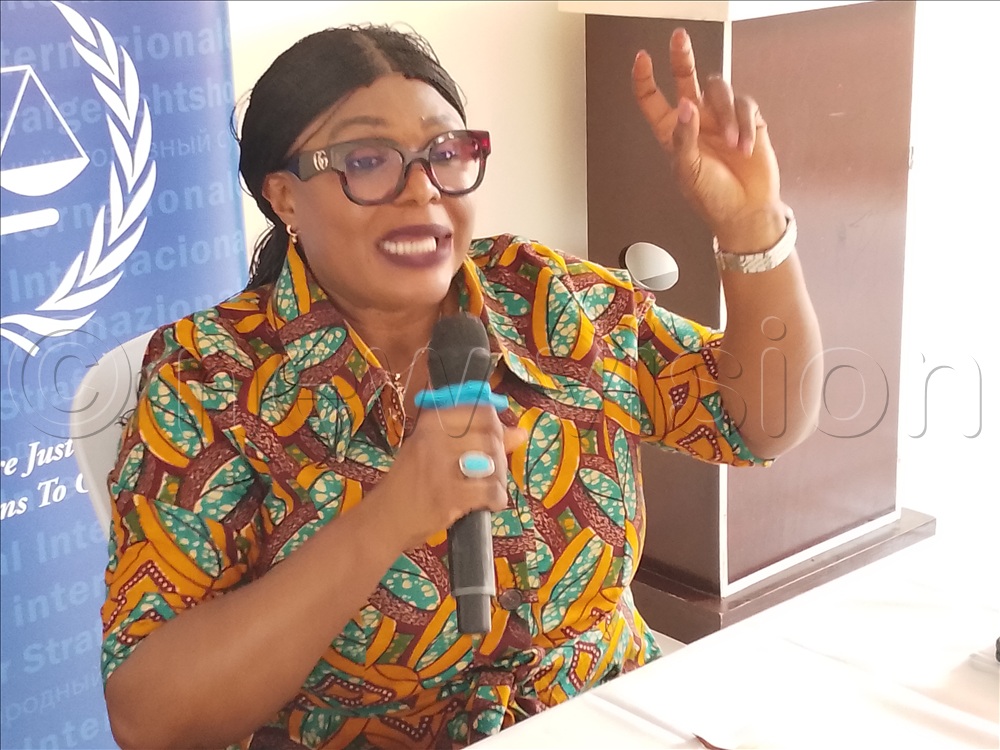
The statement was made by Maria Mabinty Kamara, the ICC’s Public Information and Outreach Coordinator in Uganda, during a stakeholders' engagement with Religious leaders, cultural leaders, civil society and the media at St Gracious Hotel, in Lira city on Wednesday, 22 April, 2026.
Kamara cautioned communities against fabricating claims or colluding with others to fraudulently qualify for compensation.
“Whenever there is a process involving benefits, some people attempt to manipulate it. We have put safeguards in place to detect and prevent such actions,” she said.
Kamara explained that the TFV is establishing victims’ participatory committees in affected communities to act as watchdogs and help ensure that only eligible individuals benefit. These committees will also channel complaints and concerns to the TFV.
Calling for close monitoring and transparency, Kamara added, “we are not permanently based in these communities. We come on missions for short periods, so we rely on local structures and partners to monitor the process and report any irregularities to ensure that the right people benefit.”
Victims are being supported by 32 clerks and over 50 intermediaries across 19 districts working with the ICC’s Victims Participation and Reparations Section (VPRS).
Kamara emphasised the need for collective responsibility in safeguarding the process.
The ICC team also provided updates on ongoing judicial developments, including the case of LRA leader Joseph Kony.
Dr Ocen giving his views at the dialogue at Gracious Palace Hotel in Lira City. (Photo by Patrick Okino) 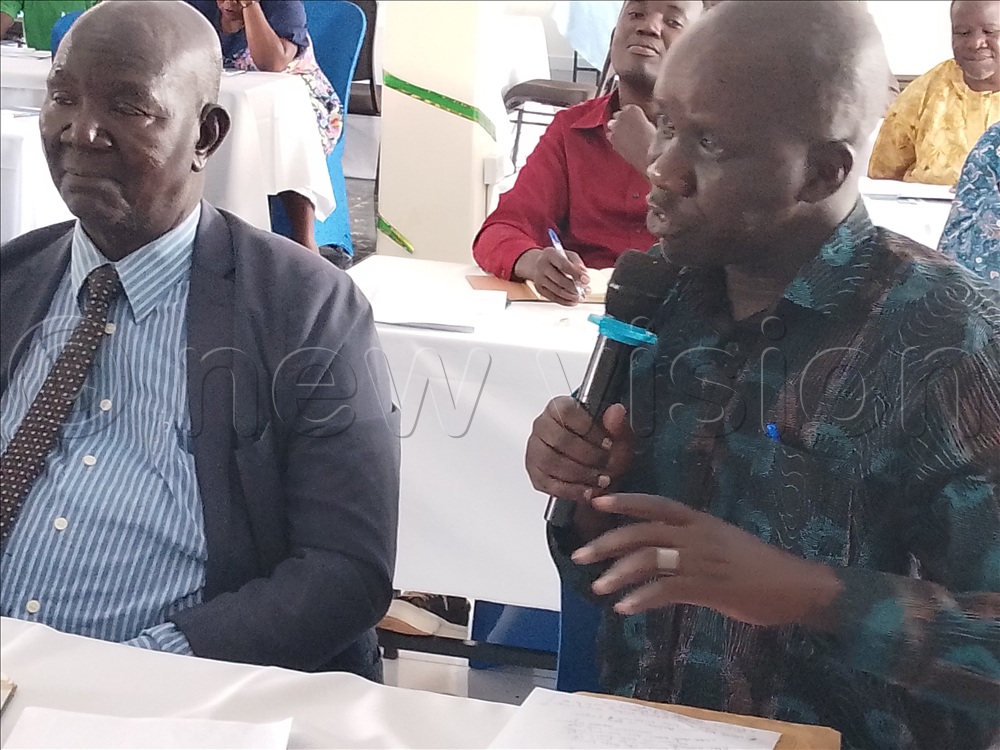
According to Kamara, the ICC’s work in northern Uganda has now entered a critical phase focused on restorative justice, following the legal milestone in the Ongwen case.
Stakeholders reaction
Dr Laury Ocen, a senior lecturer at Lira University, questioned the relatively small number of beneficiaries compared to the scale of suffering. He also pointed out that while Ongwen is serving his sentence in Norway, victims continue to face hardship.
Margaret Akullo Elem called for complementary use of traditional justice mechanisms, noting that the ICC process alone may not address all victims’ needs. She added that of the five LRA commanders indicted, three have since died, potentially limiting access to justice and reparations.
Clan leader Patrick Abal highlighted the environmental and cultural impact of the war, noting that land was heavily affected by the establishment of IDP camps and mass graves. He said some affected communities, including those in Lango with over 5,500 registered victims, feel overlooked.
He urged the ICC to consider environmental damage and the erosion of cultural institutions as part of the broader reparations discussion.