Harvest money expo: Four key things poultry farmers must get right
“You cannot expect excellent results from poor genetics,” Ssewagudde explains.
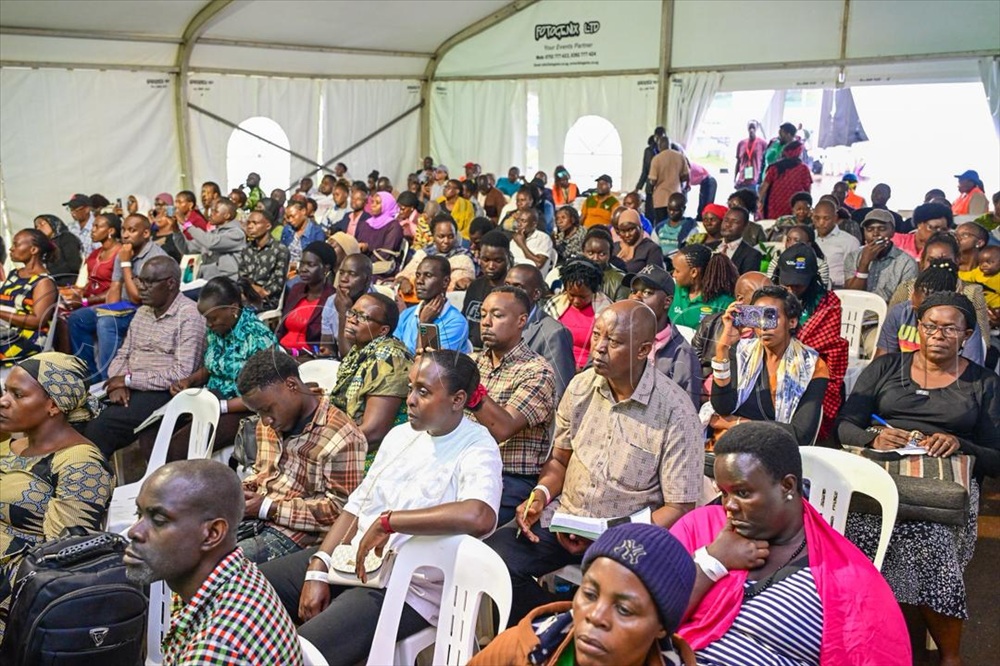
Expo-goers attending a poultry training session. (Photos by Miriam Namutebi)
________________
Poultry farmers hoping to improve production should pay close attention to four key factors, including genetics, feed and water, environment, sound and noise, according to veterinarian Dr Samuel Ssewagudde.
He was delivering a lecture on poultry farming at the Harvest Money Expo 2026 at the Kololo Ceremonial Grounds.
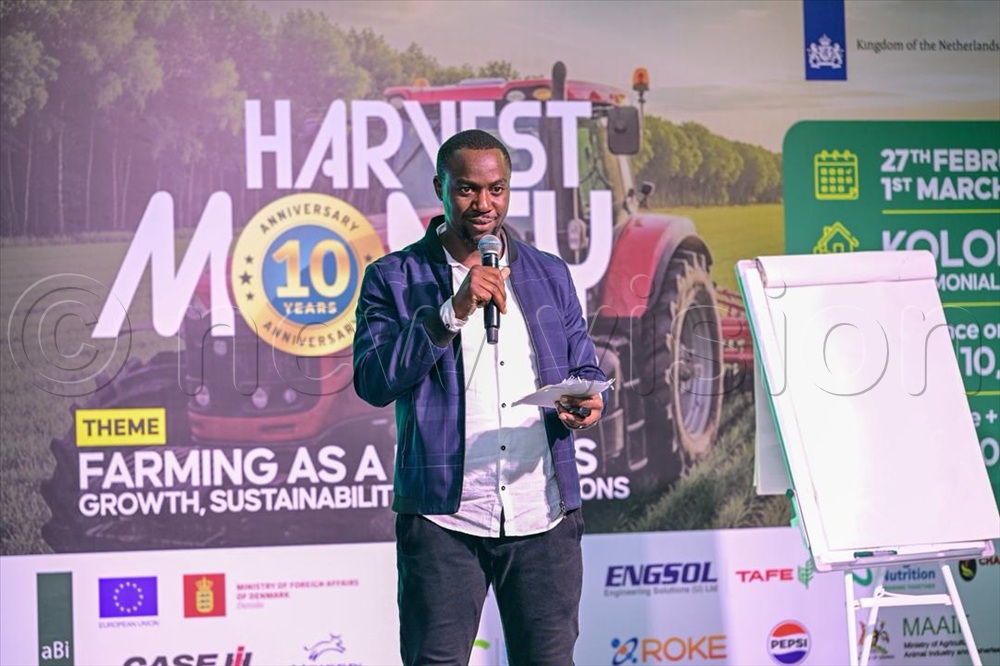
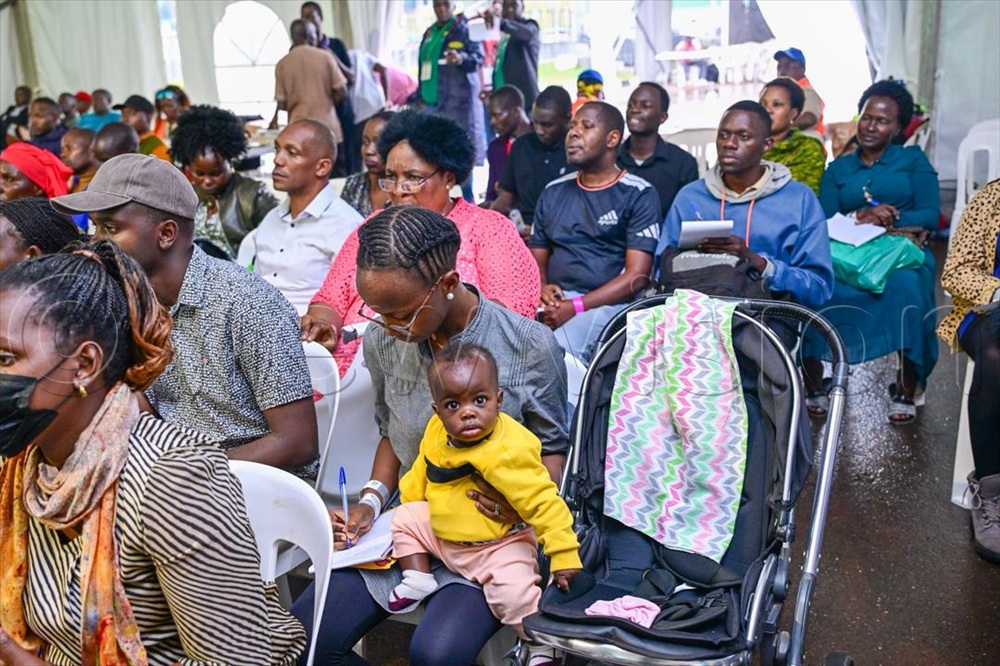
Ssewagudde, who is a veterinary officer of farm health at Tunga Nutrition, manufacturers of Hendrix concentrates, says performance in chickens, whether layers or broilers, does not happen by chance. It is the result of careful management, starting with genetics and extending to feeding, housing and handling.
Genetics
According to Ssewagudde, the foundation of good poultry performance is the breed. “You cannot expect excellent results from poor genetics,” Ssewagudde explains.
“But even the best breed will fail if it is poorly managed.” Choosing high-quality chicks from reputable breeders gives farmers a strong starting point, whether they are producing eggs or meat.
Feed and water
Nutrition, he says, is central to unlocking a bird’s genetic potential. “To reach their full performance, birds must be fed properly. Good feed gives layers the capacity to lay consistently and enables broilers to gain the right weight for market.” Ssewagudde compares poultry feeding to raising a child.

“For a child to grow healthy, they need proper nourishment. The same applies to chickens.”
He cautions that even a good breed will underperform if given poor-quality feed. Likewise, excellent feed cannot fully compensate for poor genetics.
Ssewagudde says water, often overlooked, is equally critical. Chickens drink up to three times as much water as the feed they consume. Without adequate clean water, feed intake and productivity drop.
“Chickens do not have teeth,” he notes. “They pick feed and then drink water to help digestion. Therefore, water must always be available and clean.”
The feed should also be appropriate in structure and quality. Large, whole grains that birds struggle to consume can reduce intake. “The feed must be edible and suitable for the age and type of bird,” he advises.
Environment
Housing conditions can either support or undermine performance. “The environment can spoil everything,” Dr Ssewagudde warns. Poor ventilation and excessive heat cause birds to pant, reducing feed intake and growth.
“If you enter a poultry house and you are dripping with sweat, that is not a good place for chickens,” he says.


He explains that lighting must also be carefully managed. Layers, in particular, are sensitive to light exposure. More than 16 hours of light can negatively affect their performance, while broilers require a different lighting programme.
Sound and noise
Stress is another silent production killer. Excessive noise or constant disturbances can affect feeding patterns, egg production and weight gain. Calm, stable conditions help birds maintain consistent performance. Ssewagudde emphasises that successful poultry farming is about balance.
“Genetics, feeding, water, environment and stress control all work together,” he says. “When one is neglected, performance suffers.” For farmers, he adds, attention to these basics can make the difference between profit and loss.
The 2026 Harvest Money Expo is being held under the theme “Farming as a business” and runs from February 27, 2026, to March 1, 2026, at the Kololo Ceremonial Grounds in Kampala.
The expo is sponsored by the Kingdom of Netherlands, ENGSOL, Tunga Nutrition, aBi, Pearl Bank, and Uganda Development Corporation. Other sponsors are Heifer International, Roke Telecom, Ministry of Agriculture, Animal Husbandry and Fisheries (MAAIF) and Uganda Revenue Authority (URA).