
Great Lakes observers set ahead of Uganda election
“The Forum of Parliaments has deployed this Electoral Observation Mission to observe the January 15, 2026, general elections in Uganda in accordance with regional, continental and international democratic standards."
The leader of the Forum of Parliaments of the International Conference on the Great Lakes Region, Moses Frank Moyo (right) being received by 7 members of the forum before the official launch of 2026 Uganda election observation mission on January 9, 2026 at Munyonyo. (Photo by Ronnie Kijjambu)
________________
The Forum of Parliaments of the International Conference on the Great Lakes Region (FP-ICGLR) has expressed measured optimism about Uganda’s preparedness for the 2026 general elections, while emphasising the need for a peaceful, inclusive and credible electoral process.
Speaking on Friday (January 9) during the launch of the FP-ICGLR 2026 Election Observation Mission at the forum’s regional training facility in Munyonyo, Kampala, the Head of Mission and Second Deputy Speaker of the National Assembly of Zambia, Moses Frank Moyo, said the deployment of observers followed an invitation by the Government of Uganda through the Electoral Commission (EC).
The mission’s mandate is anchored in Article Six of the Pact on Security, Stability and Development in the Great Lakes Region, under which heads of state and government committed themselves to promoting democracy, good governance and human rights.
The ICGLR Protocol on Democracy and Good Governance, together with the African Charter on Democracy, Elections and Governance, will guide the mission’s work.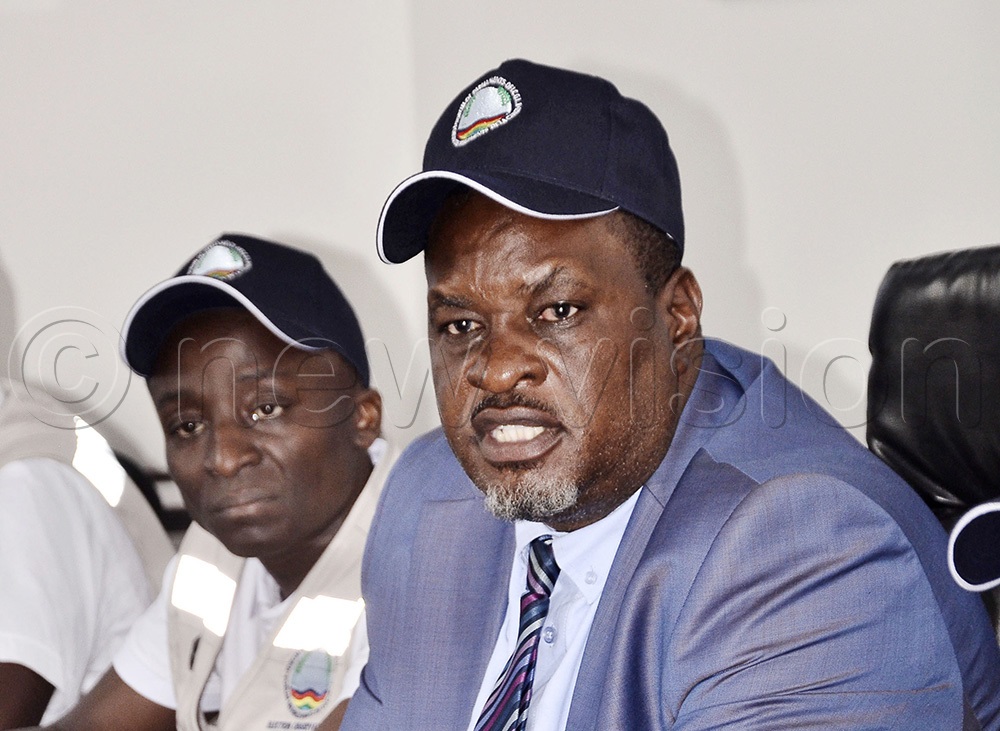
The Secretary general of the Forum of Parliaments of the International Conference on the Great Lakes Region, Dr. Deo Mwapinga (left) looks on as the group leader of the forum, Moses Frank Moyo speaks during the official launch of 2026 Uganda election observation mission on 9th January 2026 at Munyonyo. (Photo by Ronnie Kijjambu)
“The Forum of Parliaments has deployed this Electoral Observation Mission to observe the January 15, 2026, general elections in Uganda in accordance with regional, continental and international democratic standards,” said Moyo.
He described Uganda’s electoral history as having gone through periods of democratic experimentation, military rule and one-party dominance, followed by a gradual return to multiparty politics.
Uganda has since held multiparty elections in 2006, 2011, 2016 and 2021, cycles that demonstrated increased political competition but also persistent challenges in achieving fully credible democratic processes.
This year, polling will begin on January 15 with the presidential and parliamentary elections. From then on until February 6, Ugandans will elect leaders for other different positions, including special interest groups, district/city local government, as well as municipality/city division chairpersons and councillors.
According to the Great Lakes mission, the 2026 elections are a critical milestone for maintaining Uganda’s political stability, particularly following the reintroduction of multiparty politics in 2005 after a national referendum ended the Movement system. Since then, general elections have been held every five years — a development the Forum says has contributed to national stability and improved economic prospects.
The Zambian legislator emphasised that the outcome of the 2026 polls will be closely watched across the African Great Lakes Region and beyond, given Uganda’s central role in regional peace and security.
He commended Uganda for its active participation in regional peace initiatives and for hosting large numbers of refugees from conflict-affected countries within and outside the region.
The FP-ICGLR Election Observation Mission comprises 26 high-profile legislators and experts drawn from member states. Ahead of deployment, the forum conducted a Pre-Election Analysis Report assessing Uganda’s political, legal and socio-economic environment, as well as the country’s preparedness to conduct the polls.
“The analysis situates the elections within Uganda’s historical electoral trajectory and highlights persistent challenges related to democratic governance, electoral credibility and public trust,” said Moyo.
As part of its activities, the mission will conduct briefings and orientations for observers and hold consultative meetings with key stakeholders, including the Electoral Commission, political parties, faith-based organisations and civil society groups. These engagements aim to gather diverse perspectives on the state of preparedness for the elections.
The mission pledged that its assessment and recommendations would be objective and based on benchmarks set out in the Pact on Security, Stability and Development in the Great Lakes Region, Uganda’s Constitution and electoral laws, as well as international standards.
The forum announced that it will release its preliminary findings on January 17, 2026, at a press conference in Kampala, followed by a comprehensive final report to be shared with ICGLR organs, member parliaments and Ugandan electoral stakeholders.
'Comprehensive exercise'
In his address, Moyo appealed to political parties and state institutions to avoid confrontations, hate speech, and violence, urging them to engage in dialogue and cooperation to ensure that Ugandans freely choose their leaders.
“Free and fair elections conducted in a climate of peace and trust will benefit all citizens of Uganda,” he said.
Meanwhile, FP-ICGLR secretary general Dr Deo Osmund Mwapinga, a Tanzanian national, said the mission’s work goes beyond election day.
“We meet stakeholders, political parties, NGOs and faith-based groups. We also visit campaign rallies and polling stations on election day to observe how the process is conducted. It is a comprehensive exercise, not a one-time event,” he said.
The international delegation, comprising legislators from Zambia, Kenya, Angola and Tanzania, arrived in Kampala on Thursday and is expected to remain in the country until January 17.
The Kenyan delegation is led by Senator Hezena Lemaletian, accompanied by MP Mugambi Rindikiri and Clerk Abdirahman Maalim from the Kenyan Senate. The Zambian team also includes MPs Melesiana Phiri and Sibeso Sefulo.