
Govt lauded for adopting half of CSOs budget proposals
The CSOs say the development signals growing civil society influence on national resource allocation.
The dialogue provided a platform for continued engagement between civil society and government ahead of the 2026/27 budget cycle. (Photos by Rhyman Agaba)
________________
Civil society organisations (CSOs) have lauded the Government for positively responding to citizens' input following the adoption of half of their alternative budget proposals for the 2025/26 financial year.
The CSOs say the development signals growing civil society influence on national resource allocation.
According to the Civil Society Budget Advocacy Group (CSBAG), 36 out of 72 proposals submitted to Parliament, representing 50 per cent, were integrated into the final budget. The adopted recommendations span critical areas, including gender equity, climate resilience, and social sector financing.
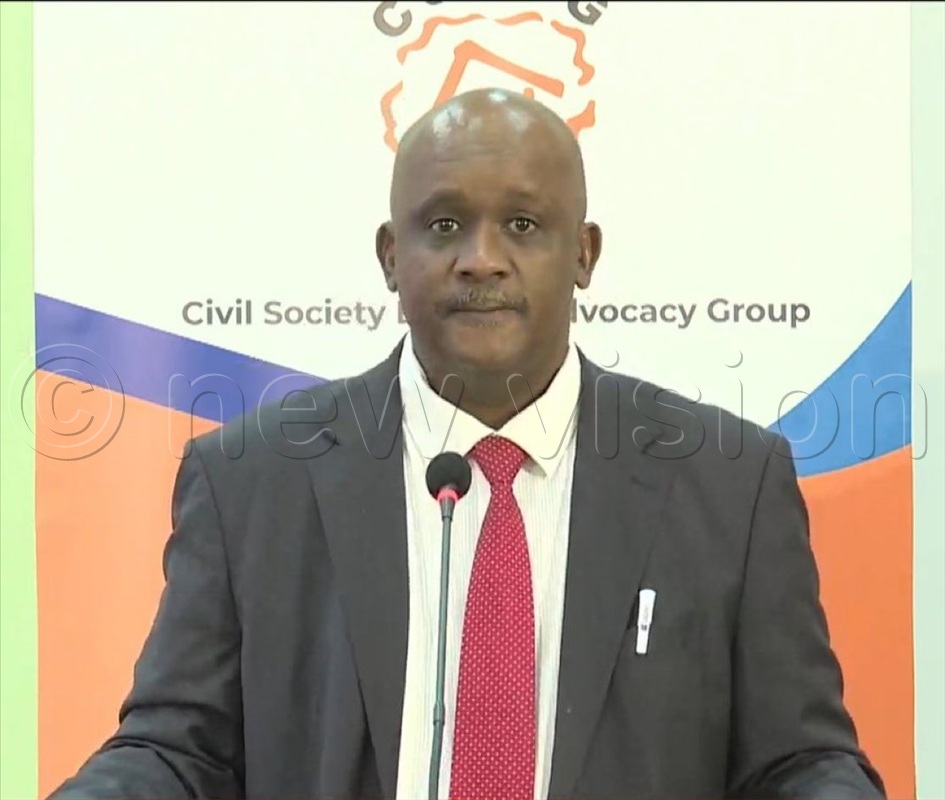
Speaking at a CSO pre-budget dialogue for Financial Year 2026/27 at Imperial Royale Hotel in Kampala on February 19, 2026, CSBAG executive director Julius Mukunda detailed the sectoral breakdown of adopted proposals.
"Agro-industrialisation had six out of nine issues adopted, representing 66.7 per cent," Mukunda said.
"Tourism and trade industry development achieved 57.1 per cent adoption, with four of seven CSO proposals incorporated."
The Development Plan Implementation Programme recorded the highest adoption rate at 71.4 per cent, with five of seven proposals accepted. Regional balanced development followed closely at 60 per cent, with three of five issues taken up by the government.
However, adoption rates varied significantly across sectors. The natural resources, environment, climate change, lands and water resource programme saw only three of eleven proposals adopted, representing 27.3 per cent. The human capital development programme achieved 44.4 per cent adoption, with four of nine issues accepted.
Under the National Development Plan IV framework, 11 of 24 CSO proposals were adopted, reflecting a 45.8 per cent success rate.
"This represents 50 per cent of the alternative budget proposals addressing gender equity, climate resilience, and social sector financing," Mukunda said, emphasising civil society's collective influence on national budget processes.
The dialogue organised by CSBAG in partnership with the MUBS Economic Forum and World Vision, convened under the theme: Repurposing the Budget for Economic Transformation and Sustainable Growth.
The Government strategy
"This year, 2025-2026, our obligation is shillings 4.99 trillion," Tagole said. He added that projected obligations for the coming financial year stand at shillings 4.2 trillion, "a reduction of shillings 804 billion."
Tagole outlined the Government's strategy to address domestic arrears, committing to clearance within three financial years at sh1.4 trillion annually. He noted that the Auditor General is conducting verification and will produce a comprehensive report.
World Vision's associate director for advocacy Irene Kagoya underscored the importance of investing in people as both a means and an end goal of development.
"The tenfold strategy recognises people and their productivity as a means of development and an end goal for the country's development aspirations," Kagoya said.
She highlighted Uganda's growth drivers while calling for sustained human capital investment.
"While the exponential economic growth in Uganda is based on agricultural industrial development, tourism, mineral-based development, science, technology, ICT, innovation, including creative arts, we urgently need to mainstream and invest in human capital development in each financial year if we are to meet the ambition of the $500 billion economy."
CSBAG, formed in 2004, brings together Civil Society Organisations at national and district levels to influence government decisions on resource mobilisation and utilisation for equitable and sustainable development. The coalition emerged from a collective desire to effectively participate in setting national budget priorities and influence government policy direction.
The dialogue provided a platform for continued engagement between civil society and government ahead of the 2026/27 budget cycle, with stakeholders emphasising the value of collaborative approaches to national planning and resource allocation.