
Fixing Uganda Airlines needs more than replacing CEO, says ex-minister Babu
“A change of the CEO alone is not a solution,” Babu said. “What Uganda Airlines needs is a small, highly skilled task force with experience in aviation operations, fleet management and route planning to revamp the national carrier.”
Uganda Airlines was relaunched in 2019 as the country’s flag carrier after decades of absence.
KAMPALA - Former minister Capt. Francis Babu has warned that replacing Uganda Airlines' chief executive officer (CEO) will not, on its own, resolve the national carrier’s long-standing challenges.
Babu has instead called for the creation of a specialised task force with strong technical expertise.
Speaking on February 3, 2026, in Kampala city amid leadership uncertainty at the airline, Babu said Uganda Airlines’ problems are structural and strategic, dating back to its relaunch in 2019, and therefore require deeper reforms beyond changes at the top.
Babu's remarks come shortly after transport state minister Fred Byamukama told New Vision that the decision to relieve Jennifer Bamuturaki of the position was made in June 2025 following a probe by the Uganda Airlines board, which conducted an audit and revealed massive rot in the institution.
The minister also said several other Uganda Airlines managers will not be spared and that they will not only be sacked, but will also face prosecution.
Byamukama’s revelation comes in the wake of an internal email that Bamuturaki circulated to staff on Monday afternoon informing them that the airline’s board would soon advertise the position of CEO, a clear signal that her tenure had come to an end.
“A change of the CEO alone is not a solution,” Babu said. “What Uganda Airlines needs is a small, highly skilled task force with experience in aviation operations, fleet management and route planning to revamp the national carrier.”
Uganda Airlines was relaunched in 2019 as the country’s flag carrier after decades of absence.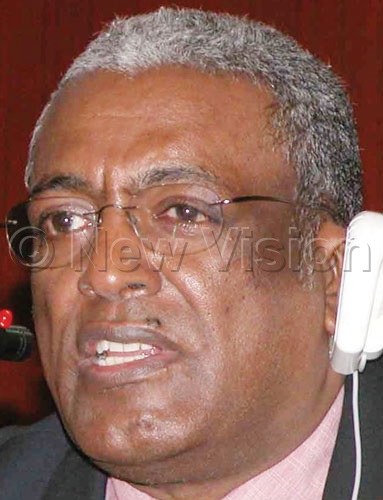
Capt Francis Babu
However, it has since faced persistent financial pressure, operational setbacks and internal management disputes. Recently, the airline’s board initiated a process to replace its top executive, citing the need for a new strategic direction.
Babu argued that many of the airline’s challenges were embedded at inception, pointing to what he described as weak strategic decisions that undermined its competitiveness in the regional aviation market.
“These gaps cannot be solved by credentialism,” he said. “You fix an airline with experience, technical knowledge and an understanding of how airlines actually work.”
He highlighted the airline’s small fleet size and high maintenance costs as major operational constraints, urging management to prioritise aircraft leasing over outright ownership.
“With the current fleet, maintenance costs are extremely high,” Babu said. “Leasing aircraft would significantly reduce these costs and give the airline flexibility as it grows.”
Babu also advised the airline to refocus on profitable regional routes before pursuing further expansion, noting that regional traffic offers more reliable and consistent passenger volumes.
“You must understand and prioritise regional routes first,” he said. “That is where consistent passenger traffic is, and that is how airlines in this region survive and grow.”
He further criticised the appointment of senior executives without aviation backgrounds, warning that such decisions have contributed to inefficiencies and waste of public resources.
“Appointing personnel from the business world without aviation skills and experience is a waste of resources,” Babu said. “An airline is not run like a general business. It is a highly technical operation.”