
Fishermen without permits face seven-year jail terms, says deputy CDF
Speaking during a security engagement meeting at Namayingo district headquarters on March 13, 2026, the Deputy Chief of Defence Forces, Lt Gen. Sam Okiding, said the mandatory work permits for fishermen operating on the lakes will help authorities identify legitimate fishermen.
Lt. Gen. Sam Okiding addressing fishermen during a community engagement meeting at Buduma Landing Site in Namayingo district on the enforcement of new fisheries regulations. (Photo by Betty Angatai)
___________________
Fishermen operating without valid work permits or using unregistered boats will face up to seven years in prison under new measures announced by the Uganda People’s Defence Forces (UPDF) to combat illegal fishing and restore declining fish stocks in the country’s lakes.
Speaking during a security engagement meeting at Namayingo district headquarters on March 13, 2026, the Deputy Chief of Defence Forces, Lt Gen. Sam Okiding, said the mandatory work permits for fishermen operating on the lakes will help authorities identify legitimate fishermen. This will also prevent individuals involved in illegal activities from accessing the lake.
“Any fisherman found operating without a valid work permit or using an unregistered boat will face a seven-year prison sentence,” Okiding said. He said permits will make it easier for enforcement teams to track fishermen and ensure compliance with fisheries regulations.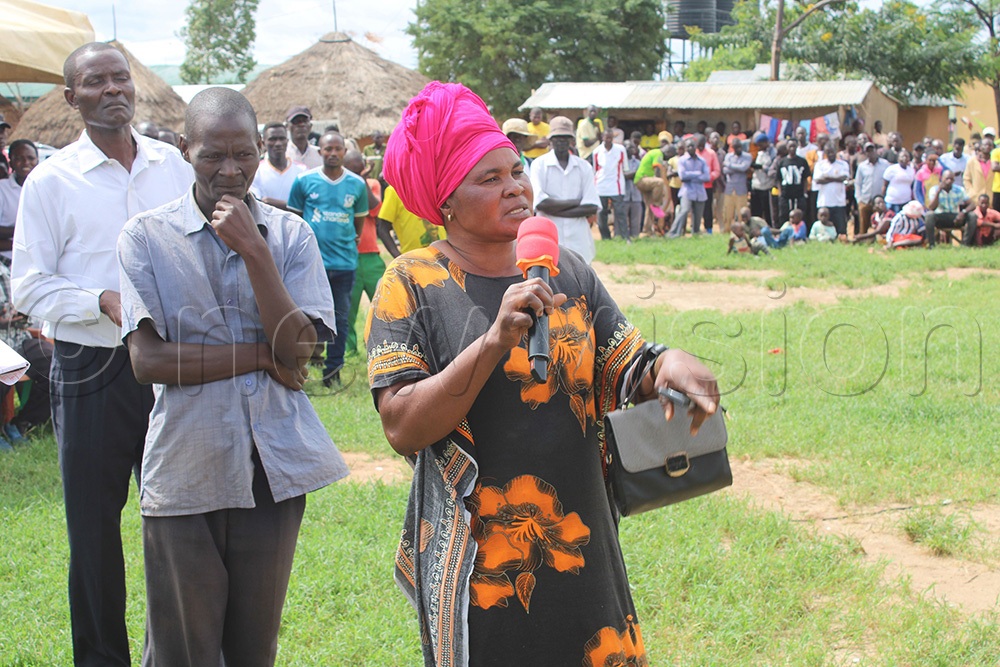
A fisherwoman shares her views during a community engagement meeting with the Uganda People’s Defence Forces at Budhuma Landing site, Namayingo. (Photo by Betty Angatai)
He said the enforcement drive was part of broader government efforts to eliminate illegal fishing practices that have contributed to the rapid depletion of fish stocks in major water bodies.
He said the registration process will involve verification by local landing site committees and fisheries officers to ensure that only genuine Ugandan fishermen are allowed to operate.
Okiding, however, emphasised that no individual will be allowed to register or operate more than 10 boats at a landing site.
“How can an individual have over 10 boats in a landing site. Where do you want others to go and fish?” he said, adding that the registration will start with those with very few boats at the site.
Okiding instructed district fisheries officers to oversee the closure of all illegal landing sites, while Resident District Commissioners were tasked with shutting down sand mining operations in the lake.
He noted that most illegal activities have contributed to environmental degradation and the destruction of fish breeding habitats.
Namayingo district, which is about 75 percent covered by Lake Victoria, currently has 51 gazetted landing sites. Fishing remains the main source of livelihood for many residents, although the sector has declined in recent years due to dwindling fish stocks and tighter enforcement measures.
Resident District Commissioner Eve Kwesiga said the situation on the lake has become worrying.
“There is no longer enough fish in Lake Victoria. Fishermen are now fishing water instead of fish,” she said.
While addressing fishermen at Buduma landing site in Bukana subcounty, Okiding warned against the use of the controversial ‘hurry-up’ method of catching mukene (silver fish) and fishing at night using lights. He said the practice attracts immature fish and disrupts natural breeding cycles.
Okiding also cautioned fishermen against fishing in breeding areas and constructing houses within the 200-metre buffer zone along the lake shores.
Lake Victoria supports millions of Ugandans through fishing, fish trade, boat building and other related businesses. However, illegal fishing practices have for years threatened the sustainability of the industry.
The government previously deployed military forces to enforce fisheries regulations after civilian enforcement efforts failed to curb widespread illegal practices.
Okiding said the country continues to lose significant revenue due to illegal fishing.
“In one inspection exercise, a sample taken from three boats revealed that immature fish worth about sh125 million had been harvested in just one day,” he noted.
He urged the district to form new fisheries management committees at the landing site, sub-county and district levels following the dissolution of the Association of Fishers and Lake Users of Uganda (AFALU) and Beach Management Units (BMUs) by President Yoweri Museveni.
At Buduma landing site, officials also revealed that the government is preparing to introduce seasonal fish holidays during key breeding months to allow fish stocks to recover.
In addition, a pilot programme to establish household fish ponds will be implemented in three districts. Under the initiative, residents will be provided with fingerlings and fish feeds supplied by selected companies, with repayment deducted after harvest.
The programme aims to restore fish stocks while boosting household incomes.
On cross-border fishing, Okiding warned that Kenyan fishermen will not be allowed to operate in Ugandan waters.
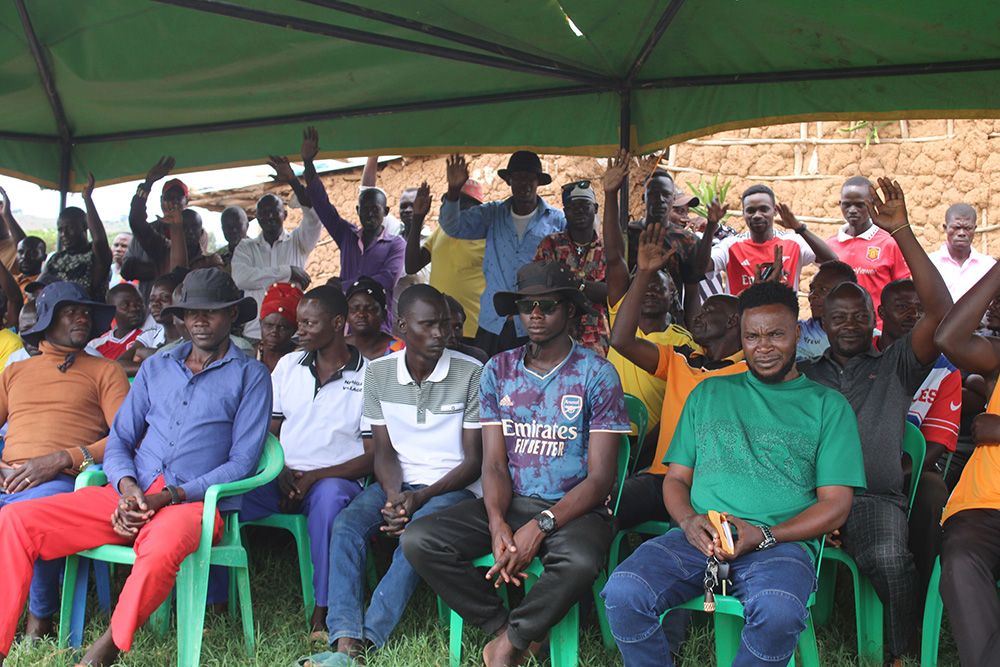
Fishers and fish traders attending a community engagement meeting by the Uganda People’s Defence Forces at Buduma Landing Site on enforcement of new fisheries regulations. (Photo by Betty Angatai)
“Those seeking to exploit our resources must fish on the Kenyan side of Lake Victoria. They also have the lake, why can’t they fish there?” he asked.
According to Okiding, strict enforcement combined with community-led interventions will help revive fish production and the fish processing industry.
“We once had 12 fish processing factories, but only six are currently operational,” he said.
Fishermen welcomed the reforms but urged the government to support them with alternative sources of livelihood.
“Government should support cage fish farming, restock the lake and help us diversify our incomes. Many youth are struggling because of these restrictions,” John Odoi, a fisherman, said.
They also asked authorities to regulate the importation of illegal fishing gear, which they said continues to enter the country through porous borders.