
Catholic bishops call for tolerance, mutual respect during and after 2026 elections
In their Christmas and New Year message, the Prelates condemn the violent attacks on Opposition supporters and some politicians by supposedly military and Police personnel, leading to injuries and, in a few cases, deaths.
The Chairman of the Uganda Episcopal Conference, the Rt. Rev. Prof. Joseph Antony Zziwa delivers the Christmas Message of the Catholic Bishops during the press conference at Uganda Catholic Secretariat, Nsambya, in Makindye Division on Wednesday, December 24, 2025. (Photo by Mathias Mazinga)
________________
The Catholic Bishops of Uganda have voiced their concern over what they are calling the increasing manifestation of violence during the ongoing political campaigns.
In their Christmas and New Year message, the Prelates condemn the violent attacks on Opposition supporters and some politicians by supposedly military and Police personnel, leading to injuries and, in a few cases, deaths. They then appeal to all Ugandans to be fully committed to peace to ensure national stability and unity.
The Catholic Prelates’ Christmas Message was delivered by Uganda Episcopal Conference chairperson (who is also the Bishop of Kiyinda-Mityana Diocese), the Rt. Rev. Prof. Joseph Antony Zziwa during a press conference at the Uganda Catholic Secretariat, Nsambya, in Makindye Division in Kampala on Wednesday, December 24 (2025).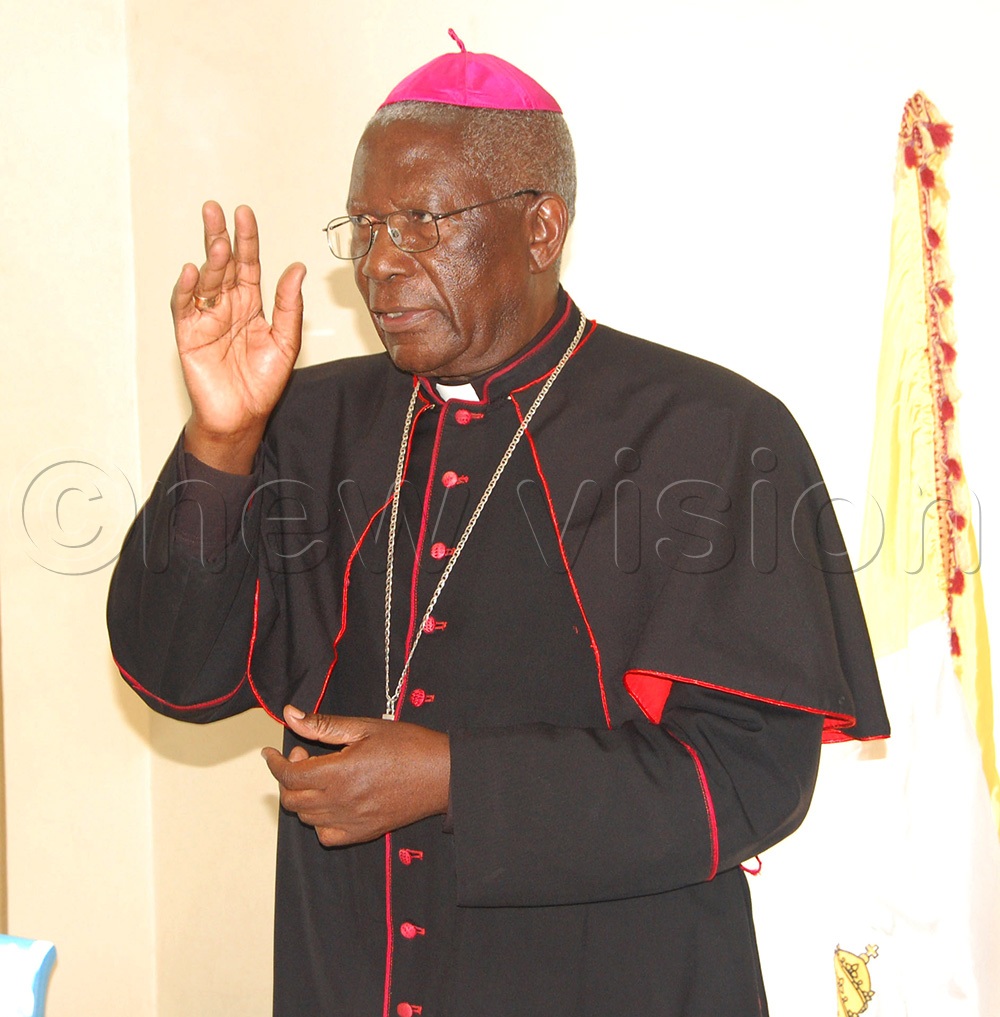
Below is the Message in Full (as presented by Bishop Zziwa)
On behalf of the Catholic Bishops of Uganda, I greet you in the name of Jesus Christ, the Prince of Peace.
We are about to complete another moment of active expectation of the coming of our Lord Jesus Christ. The Advent season is the time when we prepare ourselves to celebrate the birth of Christ on Christmas Day, which falls on December 25 every year.
We thank God for enabling us to reach this moment, despite the many challenges we may have encountered in our journey of faith and in our families, communities and country. Fortunately for us, Christmas provides the assurance that “God is with us,” Emmanuel (Is 7:14).
This year’s Christmas, like the one five years ago, is special because it coincides with the political campaigns leading to the General Elections in January 2026. During this time, the message of Christmas is even more relevant because it represents the order of things characterised by Justice, Peace and Reconciliation, illustrated by God’s loving action through Jesus’ coming.
Political campaigns, on the other hand, exert enormous strains on human relationships, personal and public resources, peace and security, and the national economy. They are by their very nature polarising.
In our Pastoral Letter, “The Truth Will Set You Free (John 8: 31-32),” issued in March 2025, we stated clearly our expectations regarding the forthcoming elections. We reiterated our concerns about recurring unethical and some criminal practices that have crept into our elections, both national and within political parties. We cited unequal playing field for contestants and violence orchestrated by politicians, their supporters and security agencies. We also highlighted the general anxiety, apprehension, uncertainty and hopelessness that has come with every election cycle in Uganda.
We are concerned that while the current campaigns were relatively peaceful at the beginning, they are becoming violent every passing day, largely due to the involvement of security agencies, including the army, thus casting doubts on the credibility of the entire electoral process. The people of Uganda are already being treated to scenes of violent attacks on opposition supporters and some politicians by supposedly military and police personnel, leading to injuries and, in a few cases, deaths.
There also seems to be attempts to limit the ability of some contestants to move and campaign freely. This is creating more hatred and enmity among Ugandans and lowering the trust the people have in the security forces. Above all, it contradicts the spirit of Christmas, which is reconciliation among men and women, with God and the rest of creation.
In that same pastoral letter, we discussed other social, economic and political challenges prevailing in the country, among them, illicit accumulation of wealth, jealousy, sectarianism, economic and social inequalities, and unemployment. We decried the erosion of religious and moral values in our country, leading to strained relationships at all levels, right from the family. In circumstances such as these, Christmas offers us the inspiration and opportunity for a new beginning in our relationship with God, neighbour and the natural environment.
Christmas signifies peace, love, reconciliation and personal conversion. Jesus demonstrated this love in its fullness in his own life and continuously reminded his followers to love one another. He told his disciples: “I give you a new commandment: Love one another; you must love one another just as I loved you. By this everyone will know that you are my disciples, if you love one another” (John 13:34-35). In the parable of the Good Samaritan, Christ calls us to a life of compassion to the wounded and strangers (Lk 10:25-37).
Similarly, Christ demonstrates the link between faith and forgiveness in the message of the gift of the temple. He said: “So then, if you are bringing your offering to the altar and there remember that your brother has something against you, leave your offering there before the altar, go and reconcile with your brother first, and then come back and present your offering” (Mt 5:23-24). Love is therefore presented not as some optional demand, but an imperative for all believers in Christ. The rewards are laid down in the story of the last judgement, where Christ identifies himself with those in need (Mt 25:31-46). In that story, the neighbours in need are the sick, the naked, the homeless, the hungry and thirsty, and the prisoners.
In the Old Testament, they include the widows and orphans. Isaiah, for example, reminds the children of Israel about their obligation towards these weaker members of society, as the true expression of faith in Yahweh (Is 58: 1-14).
In his Sermon on the Mount, Christ, among other things, called his believers to be peacemakers, merciful and pure in heart. He proclaimed: “…Blessed are the merciful: for they shall have mercy shown them. Blessed are the pure in heart: they shall see God. Blessed are the peacemakers: for they shall be recognised as children of God,” (Mt 5:7-9). Violence, hatred, jealousy, intolerance, avarice and other evils, therefore, represent a departure from the commands given by our Lord to his followers. They reflect a moral and spiritual malaise in the lives of individuals and society at large.
The events we are witnessing around the campaigns and other forms of human interactions call for repentance, forgiveness and conversion, knowing that God is always merciful and loving (Psalm 103, 145; Ephesians 2). The gift of His Son Jesus Christ was meant to reconcile us and the whole universe with Him, for as St. Paul says: “We are all aware that the whole creation, until this time, has been groaning in labour pains. And not only that: we too, who have the first-fruits of the Spirit, even we are groaning inside ourselves, waiting for the eagerness for our bodies to be set free.” (Rom 8:22-23). He relates these pains to the curses arising from the fall of Adam and Eve that subjected the whole creation to futility decay, corruption, and disorder not originally intended by God. These and many other vices are presented to us as acts of the flesh (Gal 5:19-21).
We therefore urge you, brothers and sisters, to practice love, peace and reconciliation in your relationships with one another so that we can realise a world and country which befits us because it befits Christ (Compendium of Catholic Social Doctrines: No. 580-583). He is our Saviour, God with us (Emmanuel). This is the true meaning of Christmas.
As we draw closer to polling day, we appeal to all stakeholders involved in the electoral process to play their roles in a manner that promotes the dignity of every Ugandan, regardless of his or her political affiliation.
We call on the Electoral Commission to demonstrate effective control of the electoral process, and security agencies to stick to their roles of keeping law and order and desist from violent acts that injure and kill voters. Such acts threaten our fragile democracy. We expect perpetrators to be made to account for their actions through internal disciplinary mechanisms or open courts.
As for political contestants, you are under both legal and moral obligations to conduct yourselves in a manner that does not intensify conflicts and confrontations. We urge you to abide by the rules laid down in the electoral statutes and lawful guidelines issued by the relevant authorities.
Finally, we appeal to voters to listen to the different candidates and make informed decisions. Voters should desist from any violent acts and accepting bribes, but instead, elect leaders who will serve them effectively.
We encourage you to turn up in large numbers to cast your votes for your preferred candidates.
We take this opportunity to thank God for leading us through the Jubilee Year, 2025, declared by Pope Francis in 2024. We believe you all made good use of this special occasion to renew and strengthen your faith and that of those around you. We thank the bishops for organising pilgrimages to different holy sites. May the grace you received during this period illuminate your paths as we enter the year 2026. May it make you true witnesses of Christ’s love.
We invite you to solemnly celebrate the conclusion of the Holy Year at your cathedrals and places of worship on Sunday, December 28, 2025. On January 6, 2026, Pope Leo XIV will lead the world in celebrating the liturgy in Rome to conclude the Holy Year.
We wish you a Merry Christmas and a blessed New Year.