
Busoga University steering committee finalises compensation process
Chaired by Prof. John Tabuti, the committee has set up a complaints desk at the Kamuli campus in Buwaiswa-Bukwenge cell, Kamuli municipality, to address grievances and verify claims from locals contesting ownership of the 98-acre plot.
Some of the residents who attended the meeting. (Photos by Tom Gwebayanga)
________________
The long-awaited full government takeover of Busoga University is edging closer to reality as the Interim Steering Committee finalises the compensation process for affected residents in Kamuli district.
This marks a step toward resolving the over 30-year land dispute that has plagued the university’s revival efforts.
Chaired by Prof. John Tabuti, the committee has set up a complaints desk at the Kamuli campus in Buwaiswa-Bukwenge cell, Kamuli municipality, to address grievances and verify claims from locals contesting ownership of the 98-acre plot.
The committee, which includes prominent academics such as Prof. Lydia Emuroni, Prof. Mary Ruhemba and Prof. Esther Biganja, is tasked with ensuring all encumbrances are cleared before the government assumes full control of the institution.
“We’re here to principally guide those with complaints of ownership of the university land,” Tabuti said.
“The government has taken over the revamping of Busoga University, which entails clearing all obstacles at campuses, including Kamuli,” he said claimants must present authentic documents to support their cases.
This development follows decades of legal battles between the university and local residents who argue that the land was unjustly acquired by the Church of Uganda, which authorised the university’s operations.
According to committee spokesperson Emuroni, some families who were born and raised on the land had already been compensated in previous years. However, outstanding claims remain unresolved, delaying the official handover.
The meeting, attended by Kamuli Resident District Commissioner Rose Birungi, urged the community to embrace the project rather than resist it.
“The university will bring immense value to Kamuli, neighbouring districts and the entire Busoga region,” Birungi said.
Prof. John Tabuti speaking to journalists.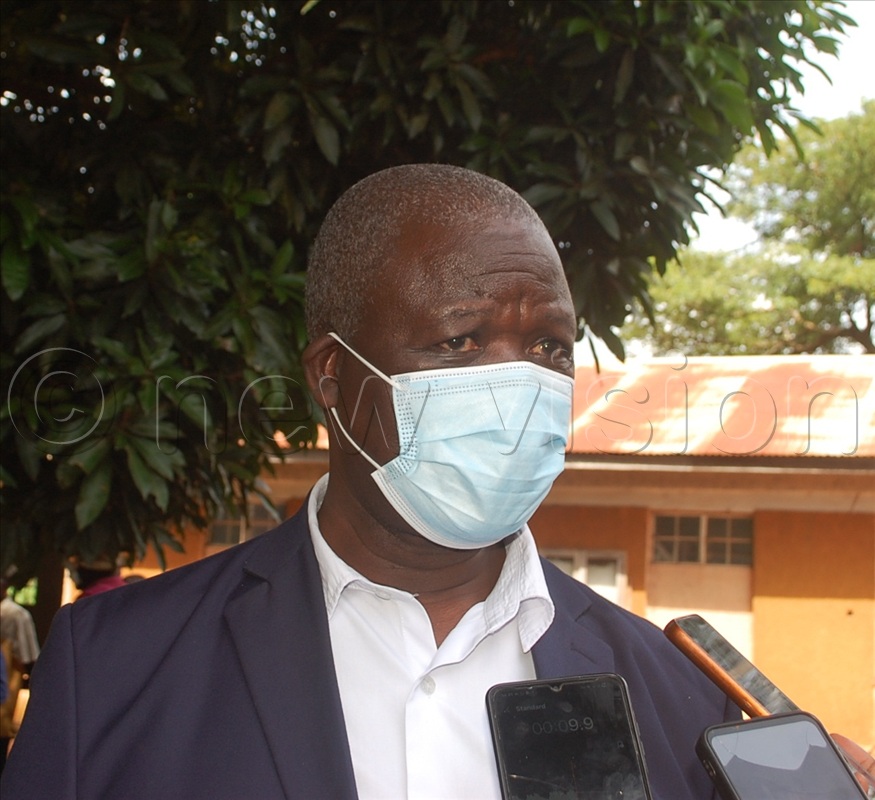
“Let us not fight but instead welcome this transformative development.”
Despite these assurances, affected residents have expressed dissatisfaction with the proposed compensation terms. Betty Bikobere Nairuba, 60, whose family claims ownership of 40 acres, criticised the plan to compensate only crops and fruit trees while excluding land.
“I was born and grew up on this land, and my parents never sold it to the Church or the university,” she said.
“This is broad daylight land grabbing.”
Other residents echoed similar sentiments. James Kiyingi Semuwulu, the Ssabataka of Bukwenge ward, supported the university’s revival but insisted that fair compensation must be provided to all affected parties.
Daniel Kawuba, another resident, questioned the legitimacy of the land title held by the Church of Uganda, alleging that it is not registered with the Uganda Land Commission. “Most complainants have refused to submit their credentials for this so-called compensation,” he added.
University authorities and the Church of Uganda maintain that they hold rightful ownership of the land, citing earlier compensations made to some residents. They argue that if their claim were invalid, prior settlements would not have occurred.
Originally established by the Church of Uganda as a teacher training college in the early 1990s, the institution evolved into Busoga University in 1999. However, it collapsed in 2017 after the National Council for Higher Education revoked its licence due to numerous irregularities, including unqualified staff, unaccredited courses and issuance of fake diplomas and degrees.
The stalemate prompted former Speaker Rebecca Kadaga and the Church of Uganda to request government intervention, leading to the current takeover initiative. With the committee now streamlining the compensation process, hopes are high that Busoga University will soon reopen its doors—ushering in a new era of education and opportunity for the region.