
Busoga Kingdom, UCC sign cultural content transformation pact
The pact was signed off by UCC’s Executive Director Nyombi Thembo, who signed the memorandum on behalf of the Commission, while Busoga Kingdom’s 2nd Deputy Prime Minister Al-Haji Osman Ahmed Noor signed on behalf of the Kingdom at the UCC headquarters in Bugolobi, Kampala, on June 2nd.
Busoga Kingdom's 2nd deputy Prime Minister Al-Haji Osman Ahmed Noor (L) greeting UCC's Executive Director Nyombi Thembo (R) at the UCC headquarters on June 2nd before signing the MOU between the two entities. Courtesy Photo
The Uganda Communications Commission (UCC) and the Kingdom of Busoga have signed a five-year Memorandum of Understanding (MoU) to accelerate digital literacy, build modern information and communications technology (ICT) infrastructure, and digitise cultural content.
The structural agreement, executed by top leaders from both institutions, marks a new era of using cultural pathways to onboard millions into the modern digital economy.
The pact was signed off by UCC’s Executive Director Nyombi Thembo, who signed the memorandum on behalf of the Commission, while Busoga Kingdom’s 2nd Deputy Prime Minister Al-Haji Osman Ahmed Noor signed on behalf of the Kingdom at the UCC headquarters in Bugolobi, Kampala, on June 2nd.
Driving grassroots digital onboarding
The new pact formally positions the Kyabazinga of Busoga as a vital mobilisation partner capable of driving technology initiatives directly to grassroots communities.
Recognised under Article 246 of the Constitution of Uganda, the Kingdom will utilise its immense cultural reach to sensitise subjects on digital safety and literacy.
Osman noted that Busoga Kingdom will provide the physical land and building infrastructure required to set up Business Innovation and Incubation Centres, computer hubs, and public access laboratories.
It will also deploy its partner media networks across the region to broadcast regular digital literacy guidelines and consumer protection awareness.
Thembo noted that in return, the UCC—under the regulatory mandate of the Uganda Communications Act Cap 103—will directly support the structural rollout of these centres.
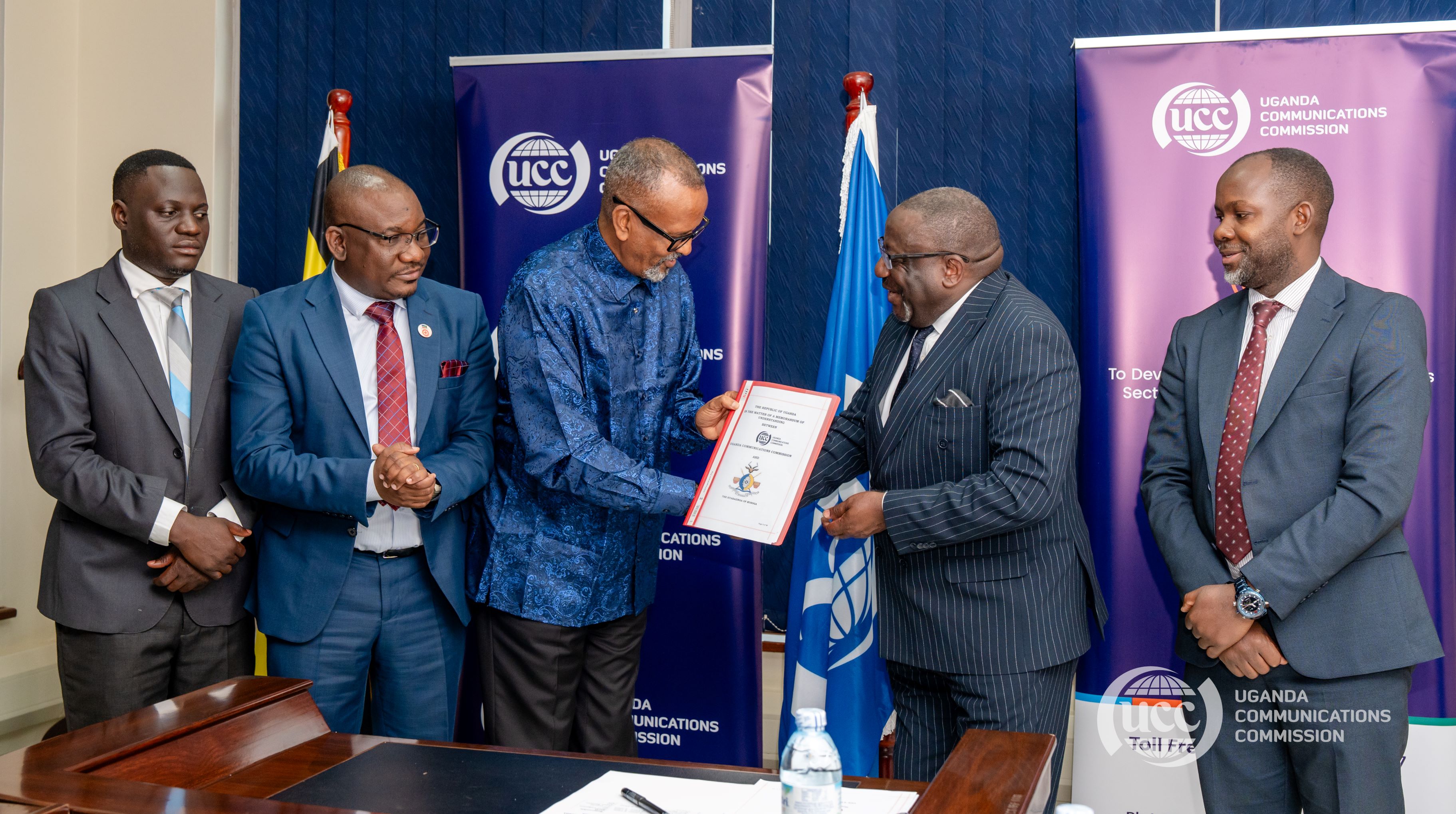
Busoga Kingdom's 2nd deputy Prime Minister Al-Haji Osman Ahmed Noor (C) and UCC's Executive Director Nyombi Thembo (2nd R) holding the MOU document after the signing ceremony at UCC headquarters in Kampala on June 2nd. Looking on is Busoga Kingdom's Constitutional Affairs Minister Alex Luganda (2nd L) and Busoga Kingdom's State Minister for Finance Ivan Kiirya (L) who witnessed. (Courtesy Photo)
He added that where possible, the Commission will supply hardware, connectivity, and equipment for computer labs in local schools and community centres recommended by the Kingdom.
He added that the collaboration reflects a shared commitment to expanding digital opportunities, empowering communities, and driving socio-economic transformation through technology.
Fostering regional innovation and heritage tourism
The agreement looks beyond basic digital skills, setting sights on long-term local entrepreneurship.
By leveraging the new incubation hubs, local citizens will receive training to utilise e-commerce portals, fintech (Financial Technology) systems, and software platforms tailored to improve regional welfare.
Furthermore, a unique preservation mandate has been embedded into the core objectives: both parties will work together to digitise and preserve the indigenous knowledge, historical artefacts, and rich cultural assets of the Busoga Kingdom to dynamically stimulate regional tourism.
The agreement has a formal duration of five years and is subject to extensions by written mutual consent. Progress will be monitored via a joint supervisory committee requiring bi-annual performance and status updates.
Delegates at the event included Busoga Kingdom’s Constitutional Affairs Minister Alex Luganda and Busoga Kingdom’s Minister of State for Finance Ivan Kiirya, who witnessed the signing.