
Broadcasters push for VAT threshold hike to sh1.5bn
Nahabwe said most broadcasters are barely staying afloat, making the existing VAT obligations unrealistic.
Innocent Nahabwe, president National Association of Broadcasters (right), with officials from the betting industry leave after appearing before the finance committee of parliament on April 13, 2026. (Photo by Maria Wamala)
________________
Broadcasters in Uganda have asked Parliament to significantly raise the Value Added Tax (VAT) threshold to sh1.5 billion, arguing that the current system is squeezing a sector already struggling with delayed payments and low profitability.
The proposal was tabled by the National Association of Broadcasters (NAB) during a meeting on April 13, 2026, with the Parliamentary Committee on Finance, Planning and Economic Development, as scrutiny of tax measures for the 2026/27 financial year continues.
Presenting the industry’s concerns, NAB chairperson Dr Innocent Nahabwe said most broadcasters are barely staying afloat, making the existing VAT obligations unrealistic.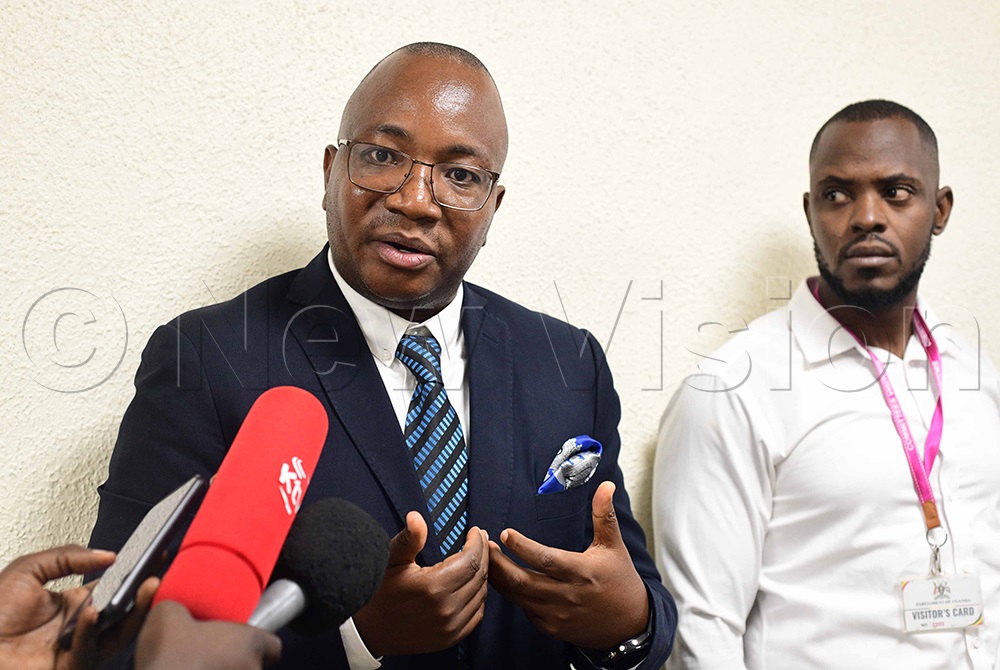
National Association of Broadcasters (NAB), chairperson Dr Innocent Nahabwe (left). (Credit: Maria Wamala)
“For members who own radio stations, we know that the majority, up to 70 percent according to a study by the Uganda Communications Commission, are not making money, they are not breaking even,” Nahabwe said.
He explained that the sector faces a unique cash flow challenge, where payments for advertising, the backbone of broadcasting revenue, are significantly delayed.
“Some say the earliest you can get paid after invoicing is 60 days. What it means is that you do work and invoice 90 days later. So practically nobody is paying for advertising on time,” he said.
Nahabwe noted that under the Electronic Fiscal Receipting and Invoicing System (EFRIS), broadcasters are required to remit VAT immediately after issuing an invoice, regardless of whether payment has been received.
“But EFRIS assumes that you have to pay VAT as soon as the invoice has been issued. We think that our sector is unique and that this uniqueness should be considered in the VAT threshold,” he said.
To address this mismatch, broadcasters are proposing a shift not only in the VAT threshold but also in the accounting approach applied to their sector.
“We are asking that the VAT threshold for broadcasters and media players, because of our unique nature, be moved from sh500 million cash accounting to sh1.5 billion cash accounting,” Nahabwe told the committee.
Beyond VAT, the broadcasters also raised concerns over regulatory obligations imposed by the Uganda Communications Commission (UCC), which require media houses to provide one hour of free airtime to government every week.
“It’s a forced delivery of value to government,” Nahabwe said, adding that this contribution is not recognised as a deductible expense when computing taxes.
MPs weigh in
Lawmakers acknowledged the concerns, with committee chairperson Amos Kankunda urging broadcasters to provide supporting evidence of tax enforcement practices.
“In your submission, give us the demand notes as evidence that the Uganda Revenue Authority is demanding you contrary to the law. Because an invoice is not out to attract a tax,” Kankunda said.
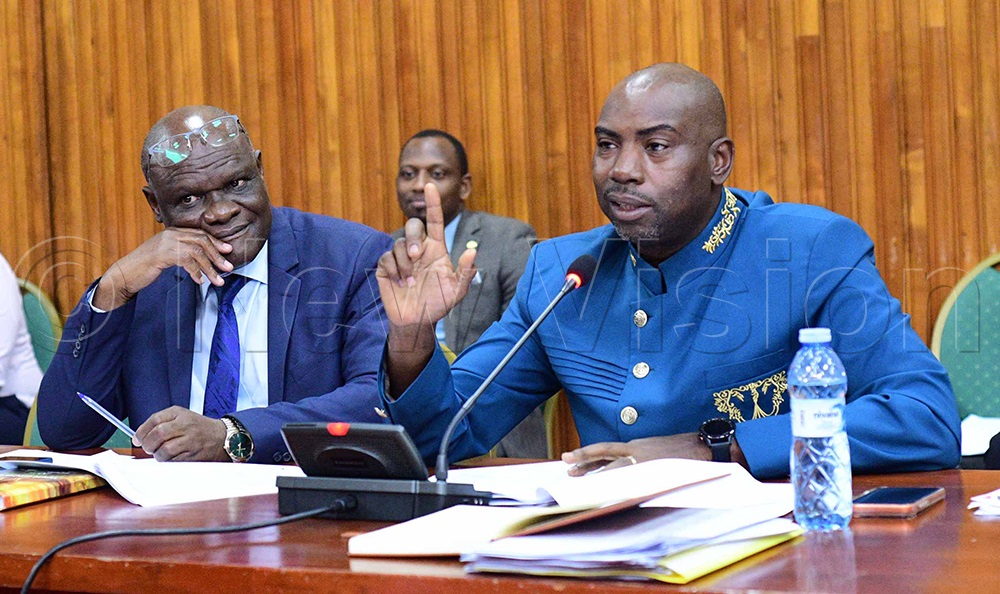
Dickson Kateshumbwa, MP Sheema Municipality. (Credit: Maria Wamal)
Dicksons Kateshumbwa declared a conflict of interest as a radio station owner but backed the broadcasters’ concerns, describing the sector as heavily indebted despite its public service role.
“Compel UCC that charges the licensing fees to offset the cost because it is one government. There is no free lunch. But I want to associate with your comments because, as one of the small broadcasters, this sector is laced with debt and yet it provides very good service to Ugandans,” Kateshumbwa said.
As scrutiny of tax measures for the 2026/27 financial year continues, the committee will today interface with other affected players, including the Uganda Manufacturers Association, the Federation of Small and Medium Enterprises, and the Uganda Alcohol Policy Alliance, among others.