
BRICS+ countries vow to combat terrorism amid geopolitical tensions
“BRICS+ countries confidently demonstrate their readiness to play a decisive role in the fight against terrorism, making a significant contribution to relevant global efforts based on respect for international law, including the principles and norms of the UN Charter in their entirety and interrelationship,” the statement said.
Yuriy Aleksandrovich (C), Deputy Secretary of the Security Council of the Russian Federation, giving opening remarks during the BRICS+ Counter-terrorism conference in Moscow, on December 3, 2025. (Credit: Hajarah Nalwadda)
Stephen Chwinya (R), Director Counter Terrorism at Uganda’s Internal Security Organization, speaking to Feng Qinghu, Consular of Department of Security Cooperation, Ministry of Foreign Affairs, China, during the BRICS+ Counter-terrorism conference in Moscow, on December 3, 2025. (Credit: Hajarah Nalwadda)
MOSCOW - A two-day BRICS+ counterterrorism conference concluded here on Thursday with countries vowing to join efforts in fighting the surging terrorism activities amid emerging geopolitical tensions.
A document issued at the end of the conference said that as the world faces a deteriorating geopolitical situation, the BRICS continues to strengthen its partnership with member states to address such priority issues as preventing and countering terrorism.
“BRICS+ countries confidently demonstrate their readiness to play a decisive role in the fight against terrorism, making a significant contribution to relevant global efforts based on respect for international law, including the principles and norms of the UN Charter in their entirety and interrelationship,” the statement said.
The forum brought together more than one hundred participants, including government representatives, counter-terrorism structures of international organizations, the United Nations, Shanghai Cooperation Organisation (SCO), Commonwealth of Independent States (CIS), and Collective Security Treaty Organisation (CSTO), as well as scientific and socio-political circles of BRICS+ countries assessed the terrorism and extremism threat in a modern world.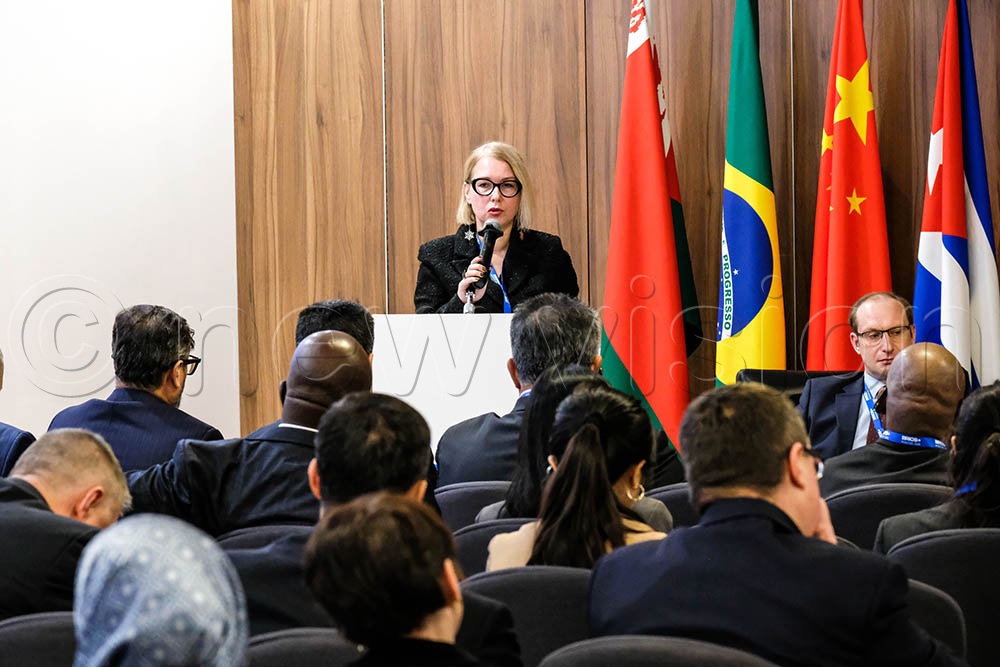
They discussed theoretical, methodological approaches, and practical measures for an effective response to these challenges based on domestic priorities.
“During the discussions, the need for complete elimination of international terrorist organizations, including ISIS and Al-Qaeda; preventing the use of extremist and terrorist groups as instruments of hybrid warfare and interference in the internal affairs of sovereign states; and addressing the problem of radicalization that leads to terrorism and extremism as a key tool used to destabilise the socio -political environment in various countries, was repeatedly emphasized.”
The experts noted that terrorist organisations continue to expand their geographic and propaganda influence. The organisations are also using advanced digital technologies and cryptocurrencies to finance their operations.
“Given the continuing potential risks of the use of nuclear and other radioactive materials for terrorist purposes, the importance of personnel training in the area of rapid response and investigation of relevant incidents, including through specialised exercises, was emphasised,” the statement said.
The experts said radicalisation of the public leading to terrorism and extremism was being driven by negative social, economic, and political factors. The growing spread of various destructive ideas, from pseudo-religious to far-right radicalism and neo-Nazism ideologies, including those promoting revisionism and falsification of history, was also noted as the other factor driving radicalism.
The BRICS+ countries decried the use of terrorist and extremist organisations as a geopolitical tool, including their support and financing in any form by both state and non-state actors.
“Conference participants expressed confidence that the effectiveness of the fight against terrorism and extremism directly depends on the willingness of states to engage in open and equal cooperation and to fully utilise existing international mechanisms to develop common principles, harmonised strategies, and measures in these areas,” the statement said.
The Russian Federation expresses its gratitude to all representatives of BRICS+ countries and international organisations who took an active part in the conference and reaffirms its readiness for close cooperation on a wide range of issues on the anti-terrorism agenda.