
Are marriages conflicted by religion and culture?
According to Maku, this difference in perspective often creates pressure within families. He said even though the church does not deny the matter of having children, it views marriage beyond giving birth.
Mike Chibita, President Bible Society of Uganda, addressing journalists during the Marriage conference 2026 at Hotel Africana on March 13, 2026. (Photo by Nancy Nanyonga)
______________
As some Ugandan couples choose peaceful separation rather than prolonged conflict, religious leaders and cultural voices are raising concern over what they describe as a growing clash between faith, tradition and modern realities in marriage.
While some view peaceful separation as a way of avoiding toxic relationships, some church leaders warn that the trend may reflect a weakening commitment to the spiritual foundation of marriage.
Some couples reportedly walk away from marriages citing cultural pressures, financial stress and irreconcilable differences.
According to Pastor Patrick Byekwaso Maku of Lugogo Baptist Church in Kampala, culture and the church are built on different values.
"The values of the church are built on scripture, which is God’s word given to us. Culture is built on the values of men and our ancestors whom we respect, but we must recognise that they were not perfect," he said on Friday, during a marriage conference at Hotel Africana on Friday.
Maku said while some cultural practices align with biblical teaching, others directly contradict it, particularly when it comes to the purpose and meaning of marriage.
“For instance, when you ask about the purpose of marriage, the church will tell you marriage exists to glorify God and for companionship. But in many cultures, the first answer you will get is that marriage is for giving birth to children."
According to Maku, this difference in perspective often creates pressure within families. He said even though the church does not deny the matter of having children, it views marriage beyond giving birth.
“Many people don’t value or invest in building that relationship as long as they are having children,” he said, also wondering why some cultural leaders would mount pressure on a young couple to have children, forgetting how they will be raised.
According to the pastor, the church teaches that whether you have children or not, marriage is complete, adding that children are a gift from God and if they do not come, still a couple can continue praying until they get.
Maku said differences also emerge in how conflicts within marriages are resolved, noting that in many cultural settings, when there is conflict, people listen to the man and not the woman.
“The church teaches that both are created in God’s image. We must listen to the man and also listen to the woman so that we can solve that conflict well."
'Peace and harmony'
Legal experts say the state also plays a key role in managing disputes that religious or cultural systems cannot resolve.
Weighing in, Justice Mike Chibita noted that Ugandan law provides a framework that applies to everyone regardless of religion or cultural beliefs.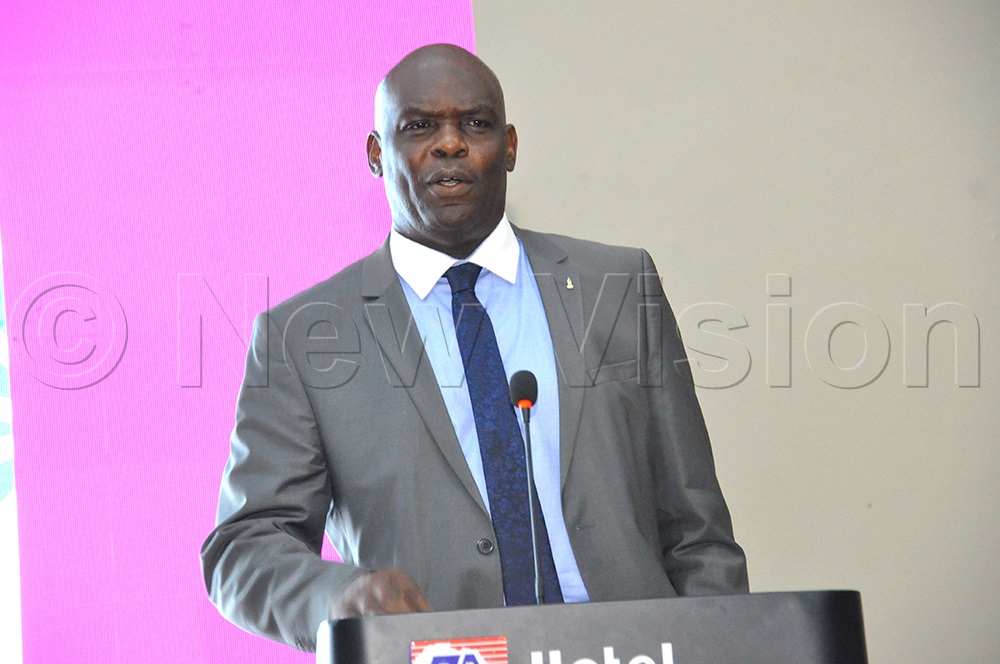
Mike Chibita, President Bible Society of Uganda, addressing journalists during the Marriage conference 2026 at Hotel Africana on March 13, 2026. (Photo by Nancy Nanyonga)
“The law works for everyone regardless of marital status, regardless of culture and regardless of religion. There are different laws of marriage applicable to different groups, but when it comes to law and order, the law applies across the board."
Chibita acknowledged that while some religions and cultures reject divorce, the law must provide solutions for couples whose marriages have irreparably broken down.
“In many religions, divorce is not encouraged, and in some cultures, it is not even recognised, but the law deals with all kinds of people and is interested in peace and harmony. It cannot force two people who cannot live together to remain together."
Chibita explained that courts increasingly rely on the principle of irretrievable breakdown of marriage when determining divorce cases.
“The courts have evolved something called irretrievable breakdown of marriage or irreconcilable differences. This is used to handle applications for divorce while ensuring that separation happens peacefully and property acquired together can be fairly divided."
While legal frameworks offer solutions when marriages fail, relationship experts say many conflicts can be prevented through emotional connection and communication.
'Hug 15 times a day'
Clinical psychologist Winnie Mary Fernandez Nakato Nabafumbo of Kampala Archdiocese urged couples to build intimacy through simple gestures of affection.
“We are encouraging couples that it is very important for partners to hug each other at least 15 times a day. I know it sounds like a lot in a busy world, but it is possible. When you wake up, say your prayers and hug your spouse. Before leaving home, you may realise you have hugged five times already."
According to Nakato, physical affection strengthens emotional bonds and reduces conflict, citing how hugging is healthy, building intimacy, bonding and emotional closeness in a relationship.
“When you hug someone, you are emotionally present in their life,” she said, warning couples against individualistic attitudes within marriage.
In a family, all properties are owned by both, not one person, even when the other person did not contribute.
Emily Kitto, the head of the laity for Kampala Archdiocese, said faith remains central to sustaining marriages despite growing pressures and encouraged couples to rely on prayer and communication to overcome difficulties.