
Alcoholism, negative cultural practices fuel GBV in Bidibidi settlement
During an intergenerational dialogue organised by the Communication for Development Foundation Uganda, the Refugee Welfare Council 2 chairman for Cluster 1 in Zone 2, revealed that of every ten GBV cases registered monthly in his office, at least five are linked to alcohol abuse.
Kenneth Saka, the OPM assistant settlement commandant for Zone 2 addressing the refugees during a dialogue meeting. (Photo by Adam Gule)
__________________
As Uganda commemorates the 16 Days of Activism to raise awareness against gender-based violence, refugees in the Bidibidi settlement in Yumbe district have expressed concern about the rising cases of GBV. They cite alcoholism and harmful cultural practices as major drivers of violence, particularly against women and girls.
During an intergenerational dialogue organised by the Communication for Development Foundation Uganda with support from UN Women under the Spotlight Initiative through the Ministry of Gender, Labour and Social Development in Zones 1, 2 and 4 of Bidibidi, Moses Lomere, the Refugee Welfare Council 2 chairman for Cluster 1 in Zone 2, revealed that of every ten GBV cases registered monthly in his office, at least five are linked to alcohol abuse.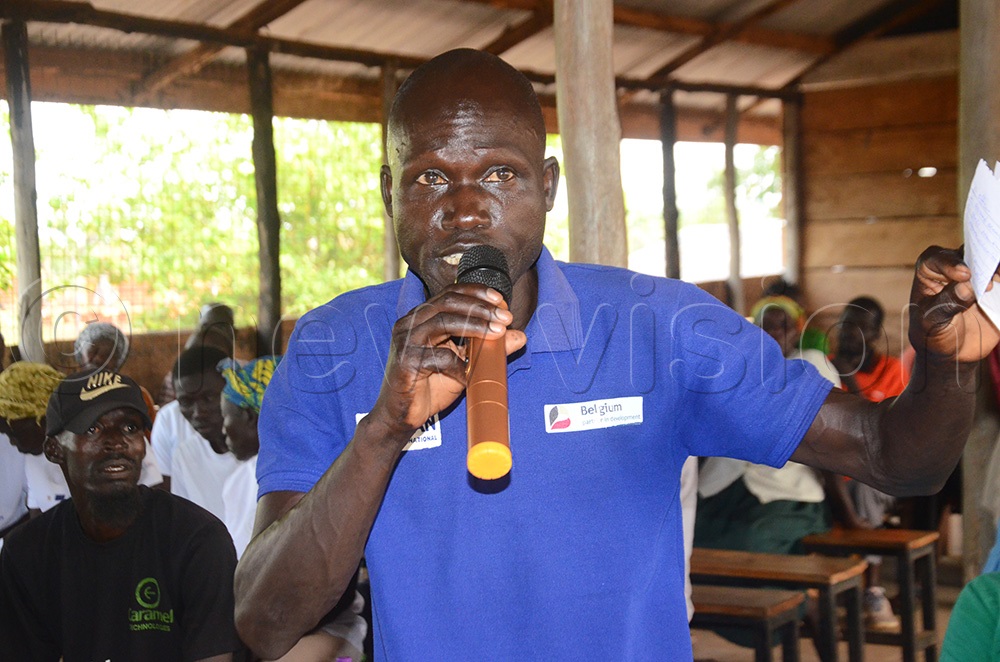
Moses Lomere, the Refugee Welfare Council 2 chairman for Cluster 1 in Zone 2, revealed that of every ten GBV cases registered monthly in his office, at least five are linked to alcohol abuse. (Photo by Adam Gule)
He explained that it is mostly men who engage in excessive drinking, leading to violence once they return home. He added that with food ratio cuts and food categorisation, the situation has worsened because men who are addicted to alcohol do not participate in crop production.
"Very early in the morning, some men are already at the drinking joints; they do not dig and even have nothing to raise money to support their families," he said.
Lomere added that when these men return home late at night, they demand food, and if none is available, it often leads to fighting.
Alice Giye, a resident of Village 6 in Zone 2, said that in some families, alcoholic men take food items, money and household belongings and sell them to buy alcohol. She suggested the need for continuous community dialogues on GBV to empower women to report cases and to help men who are perpetrators to reform.
She also called for a local by-law by subcounty authorities and the Refugee Welfare Council to regulate alcohol consumption in the settlement.
"There should be some law that specifies the time for people to start and end drinking. This will help to minimise the cases," she said.
Harmful cultural practices
Joyce Yangi, a resident of Village 10 in the Bidibidi settlement, said her 14-year-old daughter was forced into marriage after becoming pregnant for a 30-year-old man. She said that in Kuku culture, a girl who conceives while still at home is considered an abomination and is therefore married off immediately.
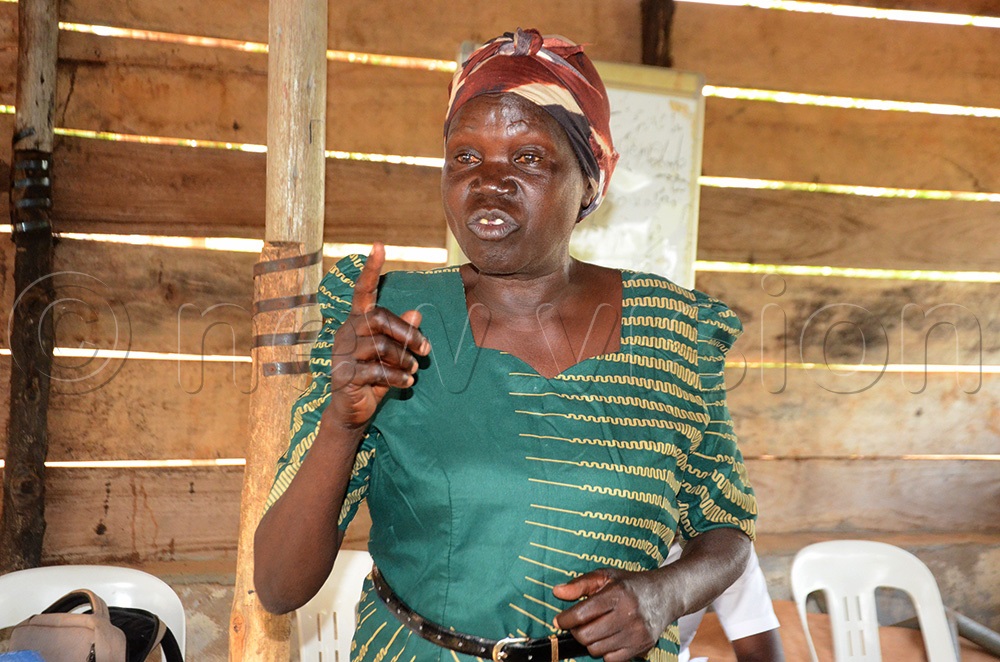
Joyce Yangi, a resident of Village 10 in the Bidibidi settlement, said her 14-year-old daughter was forced into marriage after becoming pregnant for a 30-year-old man. (Photo by Adam Gule)
According to Yangi, the culture also prevents her as a mother from reporting such cases to police or authorities.
"My 14-year-old was impregnated by a 30-year-old man, as per our culture, the elders decided to marry her off, and I was denied the opportunity to put my inputs because I am a woman," she said.
However, with advice from colleagues and some local leaders, she managed to register the case at the complaint desk, and it was later reported to police. Unfortunately, the man fled the settlement and returned to South Sudan, where he is hiding.
Yangi appealed to legal teams, local leaders and security personnel to strengthen referral mechanisms and speed up processes in similar incidents so that perpetrators can be intercepted before fleeing the country.
Florence Dawa, a teenage girl in Village 10, said young girls face pressure and intimidation from elders who want dowry. She noted that although girls are becoming more empowered and are refusing early marriages, elders increasingly take advantage of unintended pregnancies to hand them over for marriage.
Pastino Mamur, an elder in Village 6 of Zone 2, acknowledged that some cultural practices promote GBV. He said continued teaching and dialogue have helped communities understand the importance of educating girls alongside boys.
"Back in South Sudan, education was not for the girls because they are source of wealth. However, with the teachings and awareness we have got in the settlement, I think the practice is now in some selected communities," he said.
Mamur urged implementing partners to continue engagements and dialogues, especially those involving cultural and religious leaders.
Other drivers of GBV
Pastino said rampant night discos present a major challenge to the community. Due to the lack of restrictions and regulations, many young boys and girls do not sleep at home when there are discos in the area. He called on the Office of the Prime Minister and local government to regulate night discos.
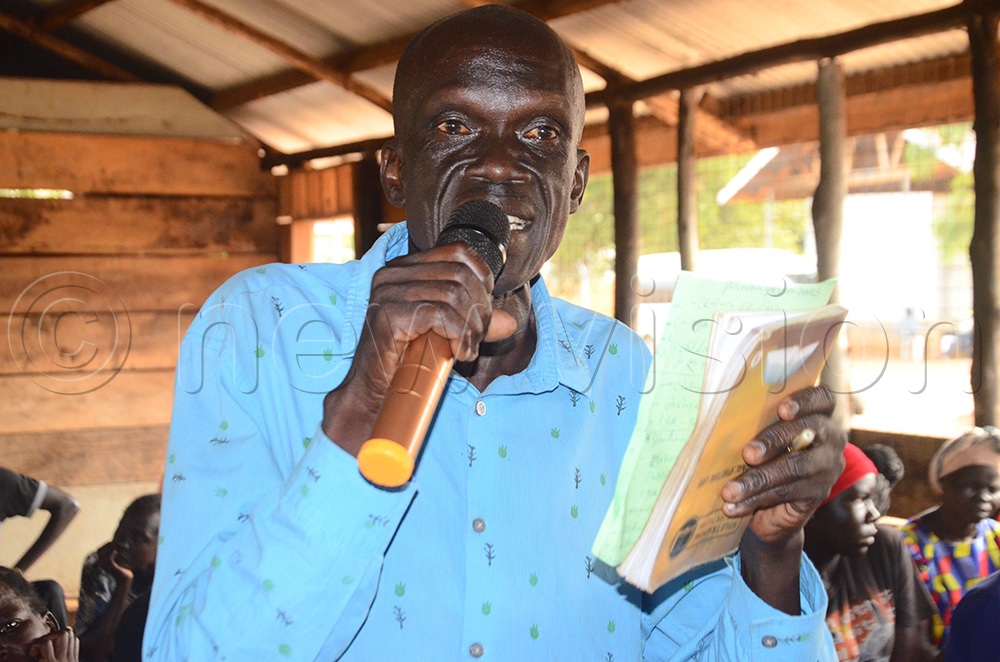
Pastino Mamur, an elder in Village 6 of Zone 2, acknowledged that some cultural practices promote GBV. (Photo by Adam Gule)
Stephen Lomoro, a resident of Zone 4, attributed high cases of teenage pregnancy and early marriage to what he described as indecent dressing among girls. He claimed that more than 70 per cent of refugee girls dress in ways that attract men.
Leaders respond
Hamid Yassin, the project officer for CDFU in Yumbe district, emphasised the need for collaborative interventions involving men, women, youth, cultural leaders and other stakeholders to challenge harmful practices and promote peaceful coexistence. He called for increased support to address psychosocial needs, livelihood opportunities and sensitisation campaigns aimed at reducing GBV risks.
Kenneth Saka, the OPM assistant settlement commandant for Zone 2, acknowledged the challenges. He urged parents to embrace positive parenting and maintain regular discussions with their children to prevent early sexual activity.
He affirmed the government's commitment to regulating night discos and improving systems for handling defilement-related cases. Saka also encouraged refugees to adopt positive cultural practices that support women's rights and promote peaceful families.
The 16 Days of Activism, observed from November 25 to December 10 each year, seeks to raise awareness and mobilise action to end all forms of gender-based violence.