
A decade of Harvest Money Expo: Growing knowledge, protecting wealth
Over the past decade, the Harvest Money Expo has evolved into a national agricultural classroom where farmers learn directly from policymakers, exporters and technical experts.
Expo-goers attending a coffee training session at the Harvest Money Expo. (Photos by Richard Sanya)
________________
As gates opened for the 10th edition of the Harvest Money Expo, one message rang clear across the exhibition grounds: knowledge is the most valuable seed a farmer can plant.
For a decade, the Expo, organised by Vision Group in partnership with the Embassy of the Netherlands in Uganda, has been more than a showcase of tractors, seedlings and livestock. It has served as a classroom for Ugandans determined to turn agriculture into profitable and sustainable businesses.
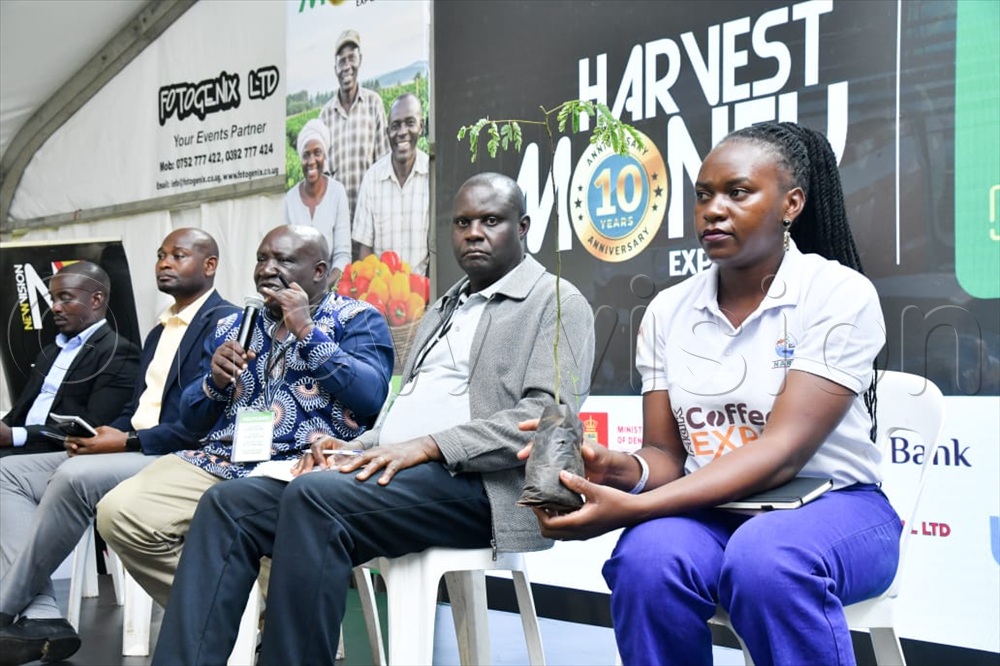
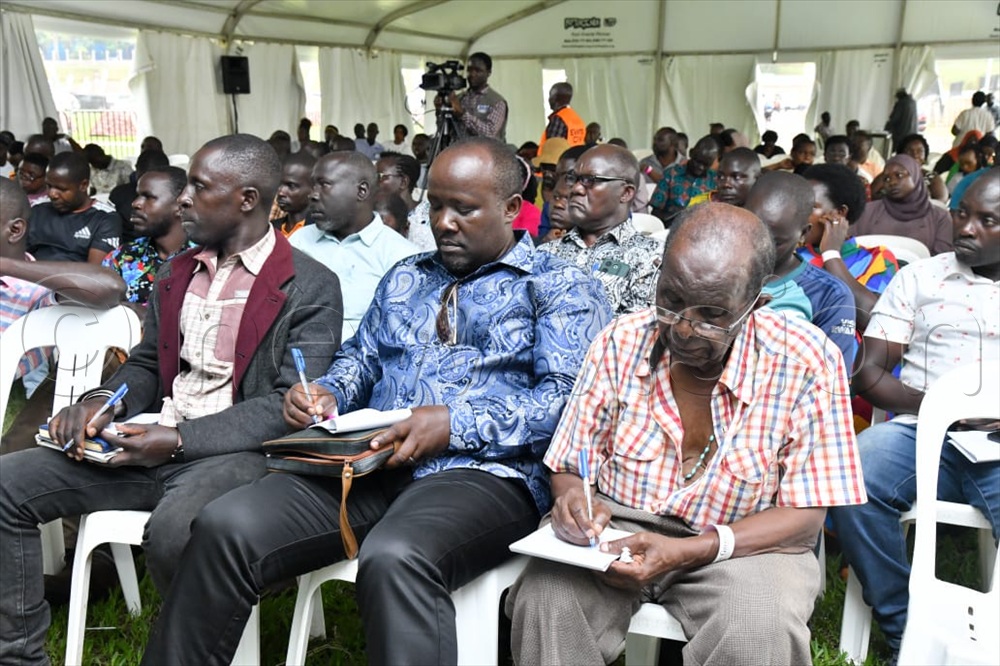
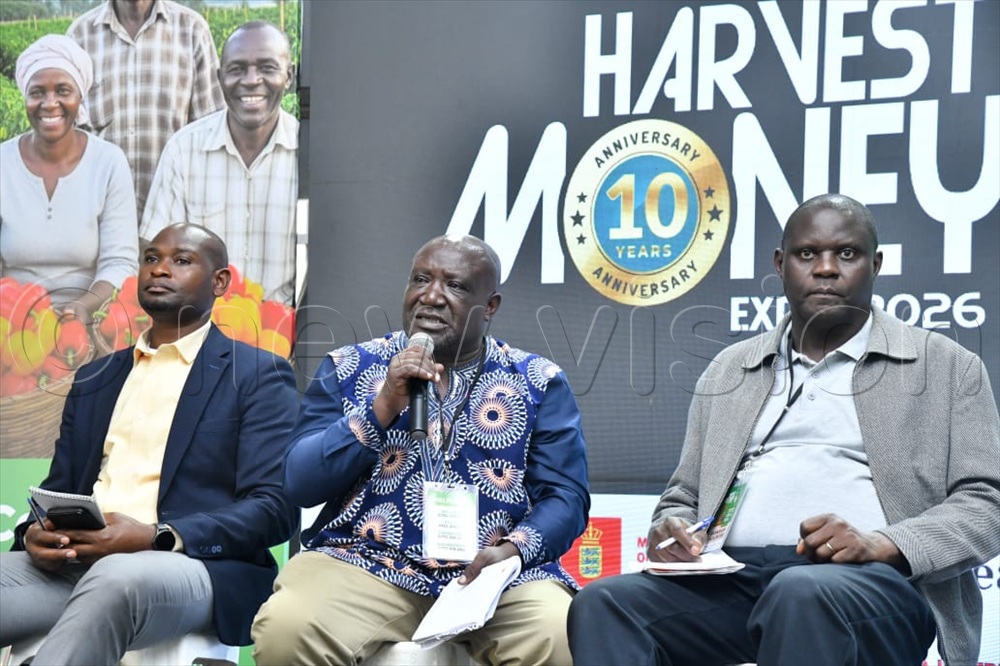
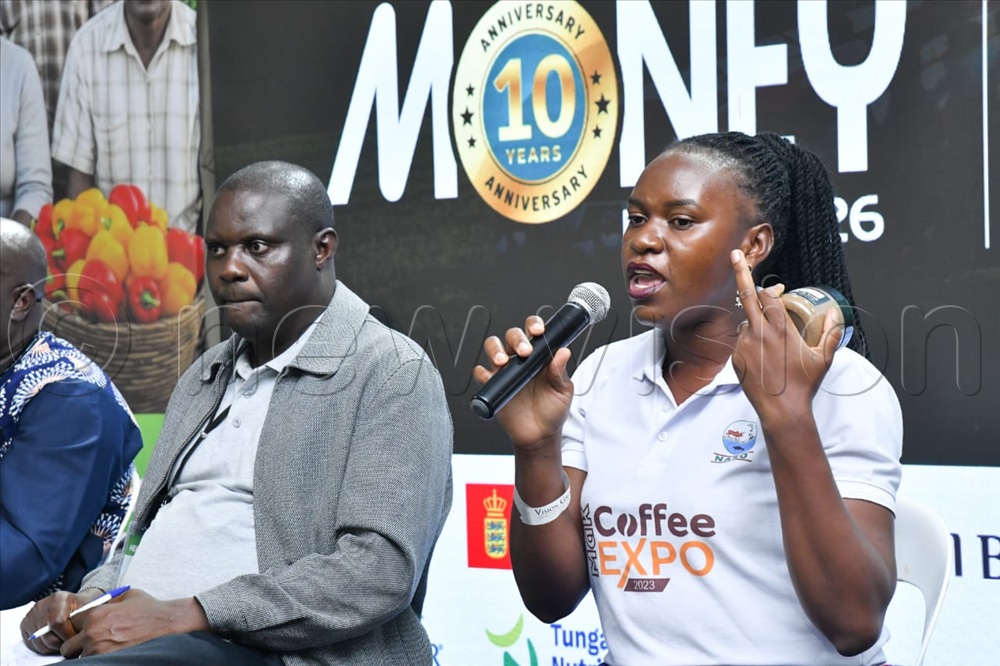
One of the most attended sessions on the opening day was led by Matia Mugerwa, an agriculture officer from the Ministry of Agriculture, Animal Industry and Fisheries (MAAIF). His presentation focused on the European Union Deforestation Regulation (EUDR) and what it means for Uganda’s coffee farmers. Mugerwa explained that EUDR is a European Union law targeting companies importing goods into Europe.
Since Uganda exports most of its coffee to the EU, farmers and exporters must comply in order to maintain market access. The regulation, adopted in 2023, will come into full enforcement after December 30, 2026.
Uganda grows two major types of coffee, Arabica and Robusta, with Robusta accounting for about 90% of production. Uganda ranks sixth globally in coffee production and is Africa’s leading exporter, shipping nearly 90% of its coffee abroad.
Coffee exports rose from seven million to 8.2 million bags between 2022 and 2025, with about 68% going to the European Union.
“If we lose the European market, our coffee business will be seriously affected,” Mugerwa warned.
Uganda has about 2.5 million coffee farmers, and over 12 million Ugandans depend directly or indirectly on coffee for their livelihoods. Coffee is grown in about 126 districts, with expansion planned in northern Uganda.
The country aims to increase production to 20 million bags annually by 2030. However, compliance with EUDR remains a challenge. Currently, only about 15% of Uganda’s coffee can be fully traced from farm to export, and only about 20% of farmers belong to organised groups or cooperatives.
Under EUDR, exporters must prove that coffee was not grown on land deforested after 2020. Satellite images from 2020 will be used as reference points, and exporters must provide geolocation data showing where the coffee was grown.
In response, the Government amended the National Coffee Act in 2025 and launched a nationwide farmer registration exercise. So far, about 1.5 million farmers have been registered out of an estimated 2.5 million.
Traders and exporters are also being registered to improve compliance. Digital platforms such as Farmerlink are being used to store farm maps and ownership records.
Farmers will receive identification cards to present when selling their coffee. Mixing compliant and non-compliant coffee could result in rejection in the European market.
“This is about protecting our market. We do not consume most of our coffee. We depend on exports,” Mugerwa emphasised.
Over the past decade, the Harvest Money Expo has evolved into a national agricultural classroom where farmers learn directly from policymakers, exporters and technical experts. The event equips Ugandans with the knowledge, networks and tools needed to compete globally while protecting their environment.
For those attending before Sunday, the lesson is clear: agriculture is no longer just about growing food; it is about understanding markets, meeting standards and building wealth responsibly.
The Expo is sponsored by Tunga Nutrition, Engineering Solutions, Uganda Development Corporation, aBi Development, Pearl Bank, Heifer International and Roke Telkom, the Ministry of Agriculture, Animal Industry and Fisheries (MAAIF), as well as the Uganda Revenue Authority (URA). Entrance is sh10,000 for attendance and an additional sh10,000 for training.