
Uganda’s first bone marrow transplant centre to reduce costs, referrals abroad
"Having our own bone transplant unit will reduce the costs that patients incur when they travel to India for bone marrow transplants," said the Minister of Health, Dr Jane Ruth Aceng.
Health Minister Ruth Aceng signing on placard during the launch of the first bone marrow transplant centre while Rotary International president Francesco Arezzo looks on. (Photos by Simon Peter Tumwine & Agnes Kyotalengerire)
________________
The nationwide fundraising drive to establish Uganda’s first Bone Marrow Transplant (BMT) Centre is expected to significantly reduce costly referrals abroad while strengthening national healthcare capacity.
"Having our own bone transplant unit will reduce the costs that patients incur when they travel to India for bone marrow transplants," said the Minister of Health, Dr Jane Ruth Aceng.
The International Rotary President Francesco Arrezo being welcomed by the excutive director JCRC Dr Cissy Kityo and President of Rotary Club of Kampala Springs, Robert Ssemtwemba.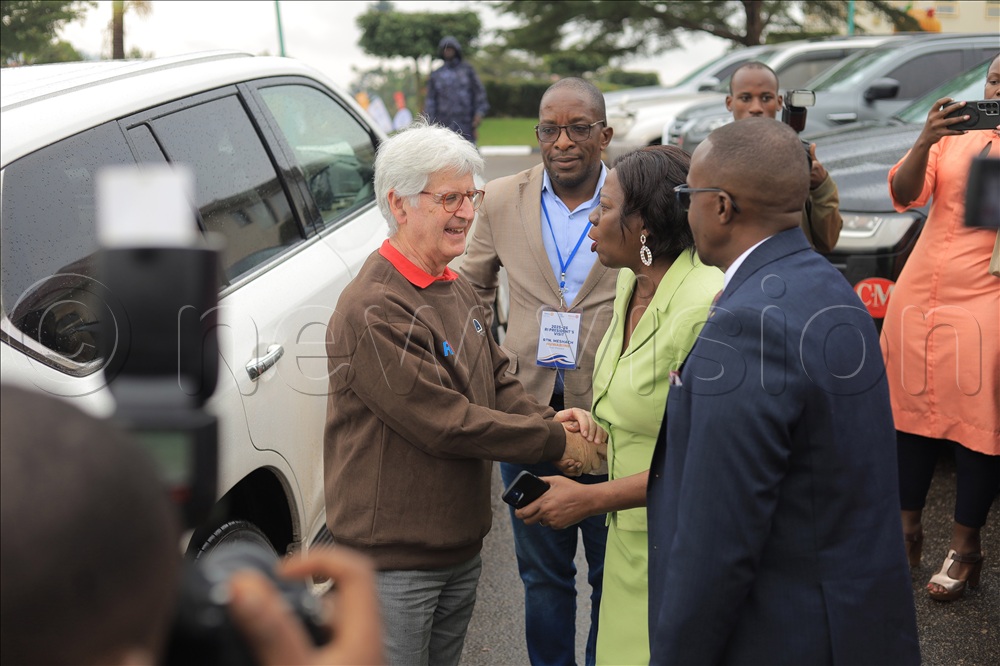
Dr Aceng further noted that a fully functioning bone marrow transplant centre will provide the post-transplant care that patients require.
The executive director of the Joint Clinical Research Centre (JCRC), Dr Cissy Kityo Mutuluuza, agreed.
She explained that when patients who have undergone bone marrow transplants abroad return to Uganda, they require continued post-transplant care. Dr Kityo estimated that the clinic is currently caring for 17 people who have had bone marrow transplants in India.
She added that since some members of the JCRC medical team are trained in India, surgeons there are confident in their ability to manage and support returning patients.
“This gives us an opportunity to look after these patients until we get our own bone marrow transplant operating," she noted.
Minister for Health Dr Jane Ruth Aceng welcomed by Dr Cissy Kityo the Executive director Joint Clinical Research Centre and the president Rotary club of Kampala Springs Robert Ssemuwemba.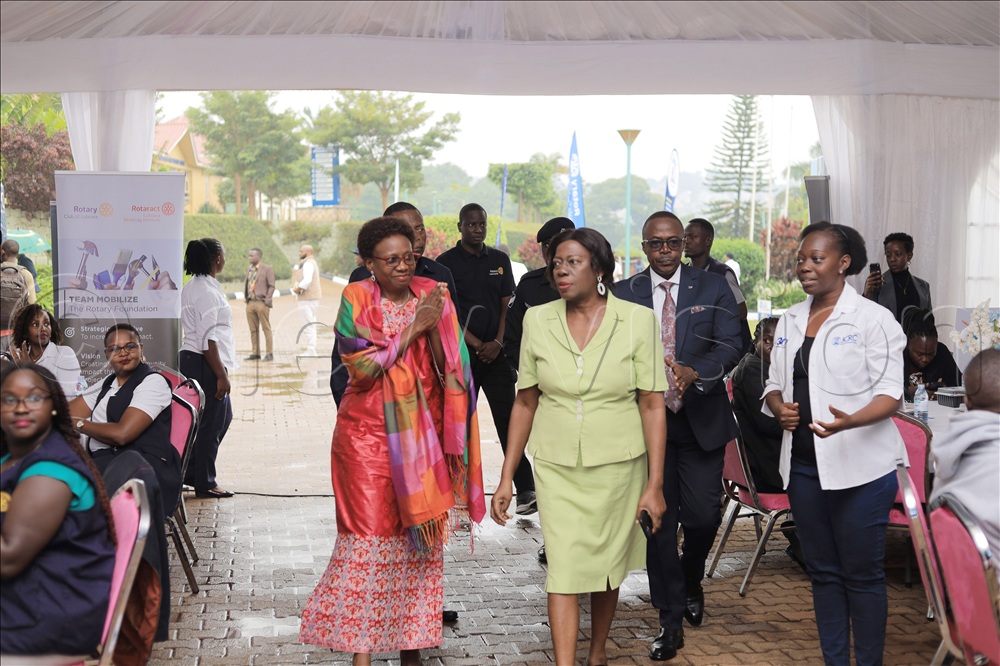
Estimates show that more than 30 Ugandans travel abroad each year for bone marrow transplants, incurring costs ranging from sh150 million to sh250 million, approximately $42,000-60,000, excluding travel and accommodation expenses.
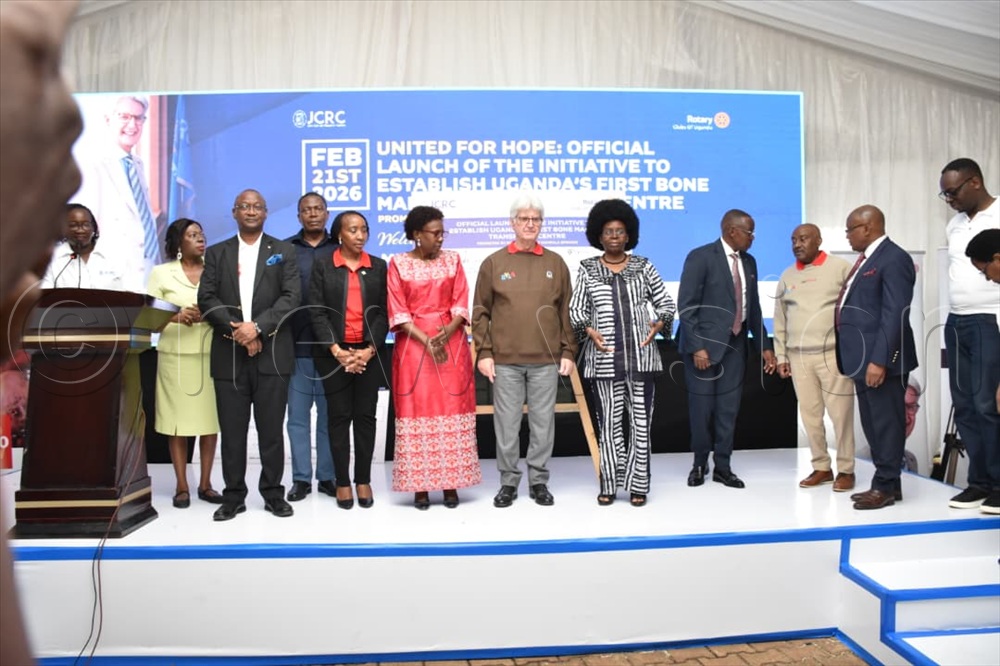
The Joint Clinical Research Centre, in partnership with Rotary Clubs of Uganda and Pearl Bank Uganda, launched a national fundraising initiative on February 21, 2026, to establish Uganda’s first Bone Marrow Transplant Centre at the JCRC Lubowa campus.
The initiative aims to raise a total of $4million equivalent to sh14.367 billion, and is being spearheaded by the Rotary Club of Kampala Springs.
Dr Aceng said the newly launched initiative will help to fast-track the initial establishment of the bone marrow transplant unit.
“The vision of government is not to have more and bigger bone transplant units,” she said.
Rotary International president Francesco Arezzo said establishing a bone marrow transplant centre in Uganda, and possibly the first in Africa, is necessary given that many patients currently seek these services abroad.
“I am happy to see that the community is contributing to the realisation of this transplant centre,” Arezzo noted.
He added that the Rotary community is committed to supporting the initiative.
Robert Ssemuwemba, president of the Rotary Club of Kampala Springs, said they will continue mobilising funds across their Rotary networks to ensure the success of the historic project.
Dr Kityo urged the public to support the initiative, emphasising the need for financial and broader support.
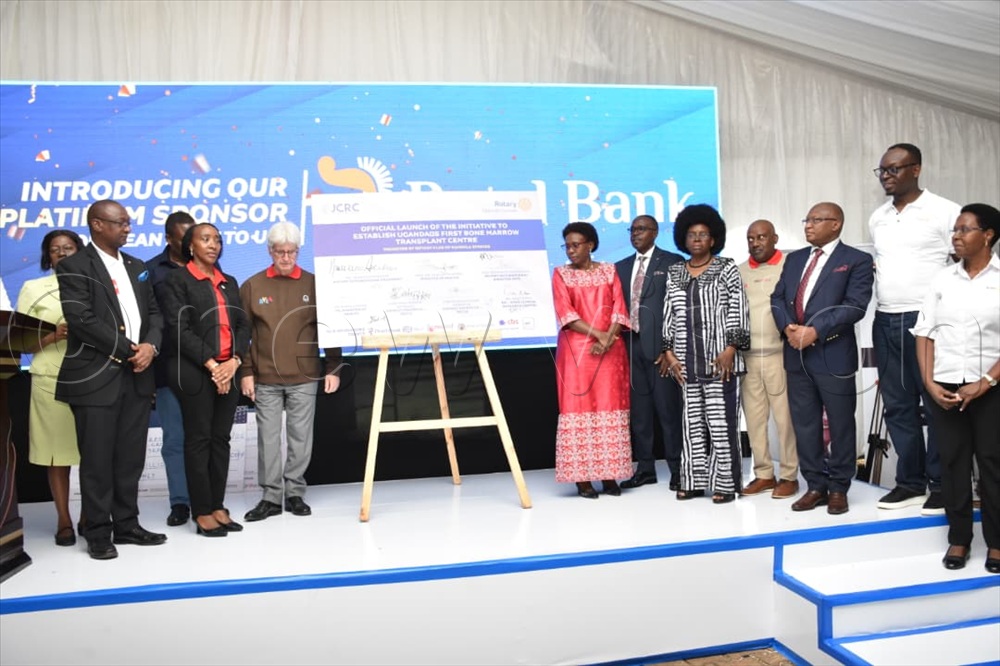
Pearl Bank’s managing director, Julius Kakeeto, said the partnership with JCRC is not merely a philanthropic endeavour but a strategic investment aligned with Uganda's national development framework, particularly the ATMS Strategy, Agro-Industrialisation, Tourism, Minerals, and Science and Technology Innovation.
"One of our Corporate Social Investment (CSI) pillars is health because we believe that a healthy nation is a wealthy nation, and we are pleased to form a 4-year strategic partnership with JCRC towards this noble cause,” Kakeeto noted.
Disease burden
Sickle cell disease remains a major public health challenge in Uganda. About 13.3 percent of Ugandans carry the sickle cell trait, while approximately 0.7 to 0.8 percent of the population lives with the disease. Each year, around 25,000 children are born with Sickle Cell Disease in Uganda.
Without comprehensive care, 70 to 80 percent of affected children die before the age of five. Haematological cancers, including leukaemia and lymphoma, also present a growing threat.
These cancers account for 40 to 50 percent of childhood cancers treated at major referral hospitals. Survival rates remain low due to late diagnosis and the lack of advanced treatment options, including bone marrow transplantation.