
Uganda introduces technology to detect deadly disorders at birth
Aceng said the technology comes at a critical time as Uganda works to expand newborn screening services nationwide, noting that the country is now pushing towards universal coverage.
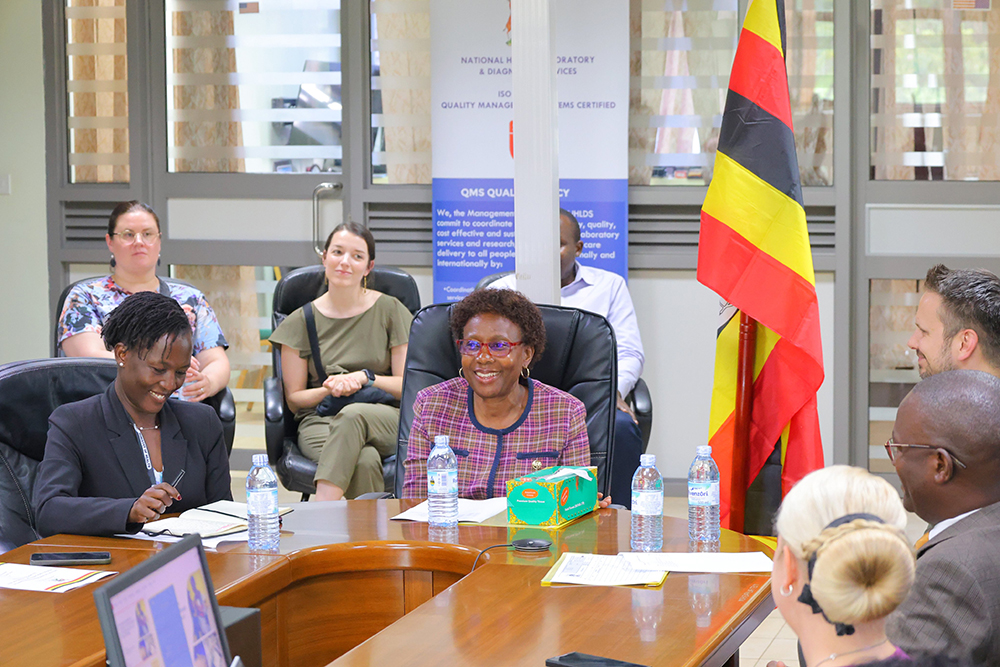
Health Minister Dr Jane Ruth Aceng (center) during the event. The new technology will help reduce turnaround times for results while increasing the number of babies tested, particularly as demand grows in high-burden areas. (Courtesy photos)
________________
Uganda has introduced advanced newborn screening technology aimed at detecting life-threatening congenital disorders at birth, improving survival rates for thousands of infants.
The new system, installed at the health ministry’s Department of National Health Laboratory and Diagnostic Services, automates a key testing process and is expected to boost the country’s capacity to screen babies for conditions such as sickle cell disease and detect disorders much earlier and more efficiently.
Speaking at the launch of this technology at National Health Laboratory and Diagnostic Services offices in Luzira, Kampala city, on April 28, 2026, Health Minister Dr Jane Ruth Aceng said the technology comes at a critical time as Uganda works to expand newborn screening services nationwide, noting that the country is now pushing towards universal coverage.
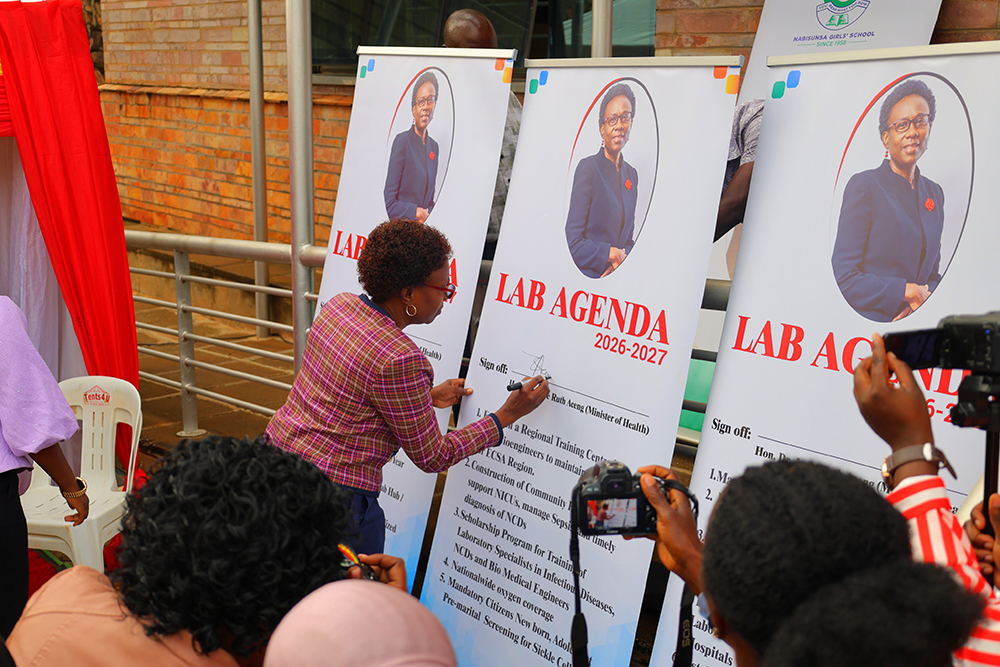
“With this capacity built at our laboratory and the efficiency it brings on board, Uganda’s newborn screening capacity has increased extensively,” she said.
“With this capacity built at our laboratory and the efficiency it brings on board, Uganda’s newborn screening capacity has increased extensively,” she says.
Aceng has, therefore, called for sustained investment to support the programme, including funding for essential reagents and equipment. She also urges partners to consider adding more machines capable of screening a wider range of conditions.
She noted that scaling up newborn screening could transform child health outcomes in Uganda by ensuring that affected infants are identified early and linked to care, including access to life-saving medicines and long-term treatment.
Developed by global diagnostics company Revvity, the machine is the first of its kind in sub-Saharan Africa and can test for more than 50 disorders using a single dried blood sample. Experts say early detection is key to preventing complications and deaths linked to conditions that often go unnoticed at birth.
Sickle cell disease remains one of the most pressing concerns. Since 2021, Uganda has screened 29,080 infants under a pilot programme, confirming 419 cases. Without early diagnosis and treatment, many affected children face severe health complications or early death.
The new technology will help reduce turnaround times for results while increasing the number of babies tested, particularly as demand grows in high-burden areas.
The rollout is part of a five-year pilot under the Consortium of Newborn Screening in Africa (CONSA), which is being implemented across seven countries including Kenya, Tanzania, Ghana, Nigeria, Zambia and Liberia. The initiative is supported by the American Society of Hematology and aims to strengthen early detection systems for sickle cell disease across the continent.
In Uganda, screening is currently carried out at two regional sites in Jinja and Lira, with plans underway to expand services. The Ministry of Health is also looking to centralise testing while introducing point-of-care options in areas with limited access to laboratory services.