
Scientists tipped on using research data to care for patients, policy making
Experts argue that when someone finds no medicine at a facility, it is often not due to a nationwide shortage but rather because decision makers have not paid attention to available data
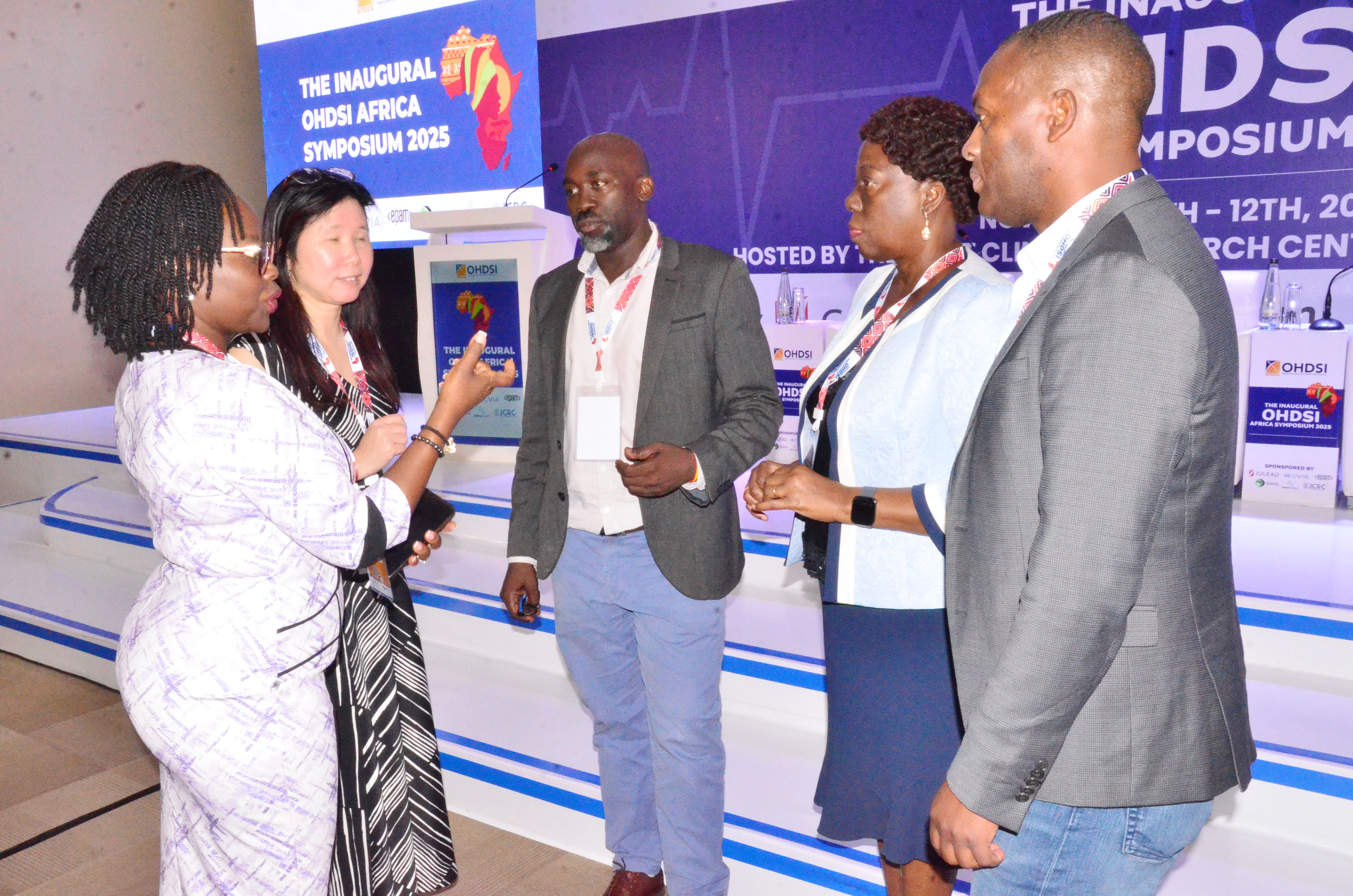
Assistant commissioner health services in charge of health information management Paul Mbaka (3rd right) with the JCRC executive director Dr Cissy Kityo (2nd right) and other delegates during the symposium. Photo by Agnes Kyotalengerire
The Ministry of Health has advised scientists to make better use of data collected through research and health facilities to improve patient care and support policy and decision-making processes.
“We want to find mechanisms on how health data can be packaged appropriately, in simple language to aid policy, decision-making processes for targeted population,” said Paul Mbaka, the assistant commissioner for health services in charge of health information management at the Ministry of Health.
Mbaka noted that scientists in Uganda generate substantial data and insight independently and in collaboration with external partners, yet much of it remains underutilised because it is too technical or framed in terms that policy makers who are not health experts struggle to understand.
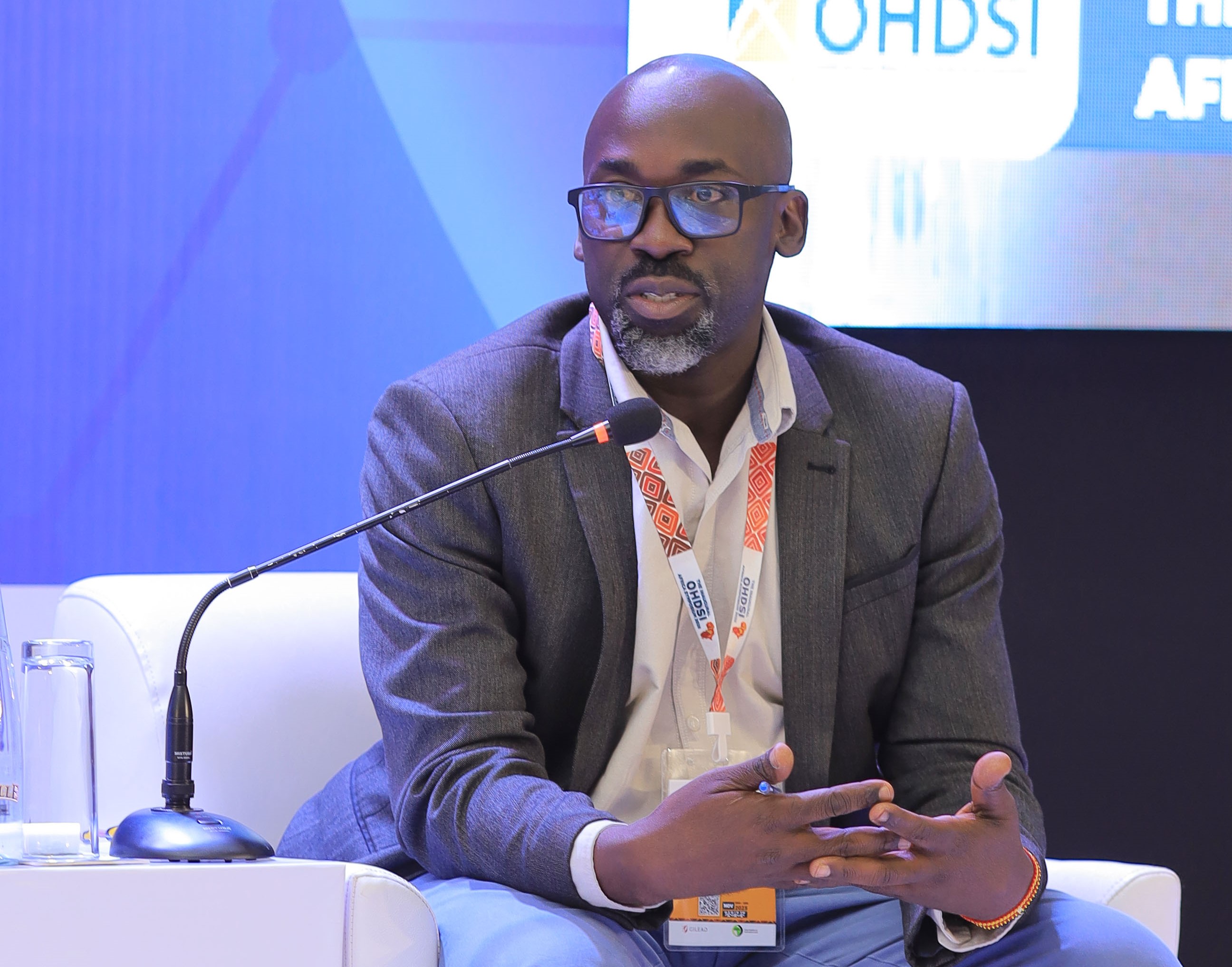
Paul Mbaka the assistant commissioner of health services in charge of health information management at the Ministry of Health addressing delegates at the OHDSI Symposium. Photo by Agnes Kyotalengerire
He added that the situation is worsened by the fact that recipients of the data often hesitate to admit that they do not understand it.
The executive director of the Joint Clinical Research Centre (JCRC), Dr Cissy Kityo Mutuluuza, agreed. She said that scientists routinely collect large amounts of data through clinical trials and during routine patient care but then store it in files instead of using it to inform the wider population.
She added that when scientists conduct clinical research but fail to communicate their findings through clear policy briefs, the evidence often fails to influence change. “When data is converted into a standard format, then data from Uganda can ‘speak’ to data from the US or South Africa,” she said.
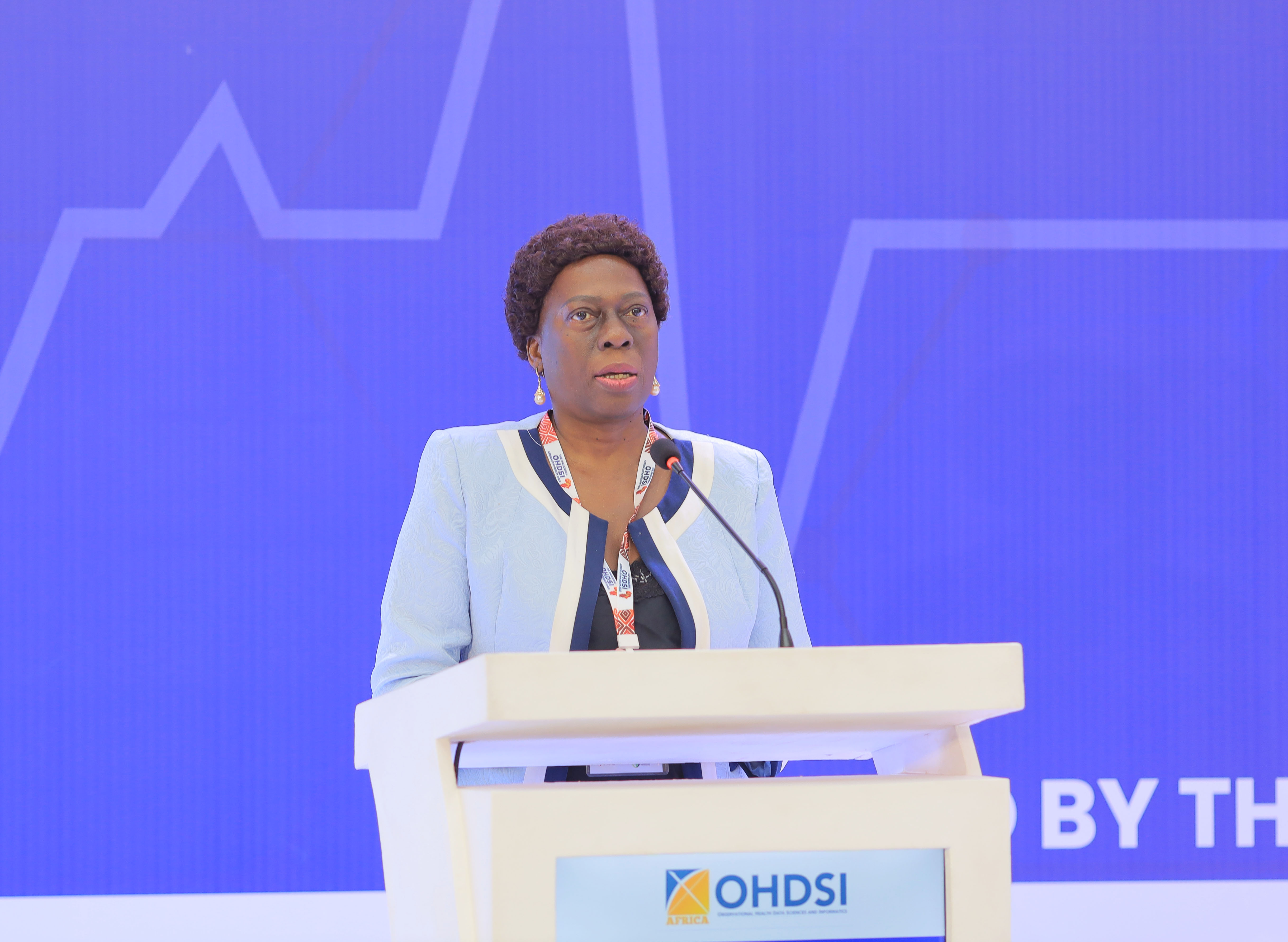
Dr Cissy Kityo the JCRC executive director addressing guests during the OHDSI Symposium. Photo by Agnes Kyotalengerire
Dr Kityo contrasted this with countries such as the United States, those across Asia, and those in Europe, where routine patient data is used to drive policy reforms.
According to Mbaka, the gaps created by poor data harmonisation are visible. He said it is common to find medicines expiring on shelves in one hospital while a nearby facility struggles with shortages. “If one facility realises that another has excess stock compared to the patient numbers, and then they would move the medicine to where the patients are,” he said.
He added that similar inconsistencies affect staffing, where one facility has too many workers while another is overwhelmed by its patient load. Accurate and timely data, he noted, would allow health managers to move staff where they are needed, redistribute medicines, restock sensibly and avoid over-supplying facilities with few patients.
Mbaka emphasised that this directly affects patients. He said that when someone finds no medicine at a facility, it is often not due to a nationwide shortage but rather because decision makers have not paid attention to available data. Acting on this information, he said, could quickly close service gaps.
He urged health workers, leaders and communities to embrace data analysis and use. “When communities understand the data, they know exactly what to ask for, where the problem is, and demand solutions that are practical and meaningful.”
Another OHDSI speaker, Agnes Kiragga, called urgently for tools that standardise data collected across borders. “Once it is harmonised, then we can answer many questions from many countries. For example, the role of climate on mental health. The prevalence of HIV in Cameroon, Senegal, Ethiopia, South Africa, might be collected in different formats. But when you standardise this data, we can answer a question,” Kirraga noted.
She said larger data sets allow for better estimates, explaining that small sample sizes often fail to provide reliable results. She highlighted large studies in Rwanda involving more than 50 hospitals, along with similar work at the JCRC in Kampala and Mubende, where different data sets were combined to explore issues such as pregnancy outcomes and laws affecting women living with HIV.
Addressing barriers to data sharing, Kirraga said many people view “data as gold”, which leads to fear that sharing it means losing control or missing out on potential financial gain. She said this fear must be addressed, as it remains one of the biggest obstacles. She also noted that a lack of proper structures for safe data sharing contributes to the reluctance.
She warned that informal sharing practices, such as sending data in Excel files, risk exposing confidential information. “Without proper safeguards, you can easily break confidentiality and expose personal information. We need systems and structures that allow us to share data safely and responsibly,” Kirraga noted.
She added that excessive restrictions on data custodianship prevent its usefulness, as people fear violating protection policies and therefore refuse to share it at all. “People need to know that it is okay to share data as long as it is done responsibly,” she said.
These remarks were made during the first Observational Health, Data Sciences and Informatics (OHDSI) symposium in Sub-Saharan Africa, held at Mestil Hotel in Kampala on November 18, 2025. The meeting, organised by the Joint Clinical Research Centre with support from OHDSI Global, attracted more than 150 delegates from across Africa, the United States, the United Kingdom, the Netherlands and Belgium.
Dr Kityo said the symposium aimed to extend successful approaches used in North America and other regions to help African scientists engage more effectively with health data. OHDSI, which began in 2014, has chapters in Asia, Latin America and the Pacific region, and Africa is now joining the network.
As part of capacity building, a group of researchers were trained at the JCRC on Monday (November 17) ahead of the symposium. Dr Kityo said the training and symposium aim to encourage more people to learn how to analyse and transform data, ensuring that the information collected is used more effectively.