
Resistant infections drain sh223.2b annually in healthcare costs
The impact is visible in hospitals, where drug-resistant infections acquired during care are costing the country an estimated $62 million (about shillings 223.2 billion) each year in direct medical expenses alone.
Ministry of Energy and Mineral Development state minister, Sidronius Opolot Okaasai. (Courtesy photos)
________________
Antimicrobial resistance (AMR) — when medicines no longer work against infections — is rapidly becoming one of Uganda’s most costly public health threats.
What was once seen as a distant scientific concern has evolved into a crisis that is reportedly draining billions of shillings from the health sector and putting thousands of lives at risk.
The impact is visible in hospitals, where drug-resistant infections acquired during care are costing the country an estimated $62 million (about shillings 223.2 billion) each year in direct medical expenses alone.
Beyond these hospital bills also lies an even heavier burden: lost productivity, shrinking household incomes, prolonged illness, higher treatment costs and growing strain on fragile systems such as waste management and occupational safety.
A costly disease burden
According to Dr Henry Kajumbula, Chair of the Uganda National AMR Subcommittee, the financial implications are stark. For example, he says treating resistant tuberculosis costs ten times more than treating drug-sensitive Tuberculosis (TB) -$3,722.3 (about sh13.4m) compared to $396.1 (about shillings 1.4 million).
For families already grappling with transport costs, unemployment and medicine shortages, he notes such price differences can be catastrophic.
In addition, Dr Kajumbula says resistant infections also inflate costs beyond human health. In the agricultural sector, where livestock is a backbone of rural livelihoods, resistant, he said mastitis alone results in losses of more than shillings 300,000 per month per case.
In a country where agriculture and informal labour underpin household survival, he notes these recurring losses accumulate into entrenched economic strain.
Dr Kajumbula describes AMR as a poverty trap, warning that by 2050, global Gross Domestic Product (GDP) could shrink by one per cent due to antimicrobial resistance.
For low-income countries like Uganda, he says the projected hit could reach between 5 and 7 per cent.
The implications, he said, are sweeping reduced family incomes, compromised workforce productivity and declining animal production as livestock pathogens also become resistant.
For Uganda, he says this translates into slower economic growth, weaker labour output and deeper cycles of poverty.
AMR-linked deaths
In 2019, Uganda recorded an estimated 7,100 deaths directly attributable to antimicrobial resistance and a further 30,700 deaths associated with the condition.
Two years later, in 2021, the country registered approximately 5,700 deaths directly linked to AMR and another 27,000 associated fatalities.
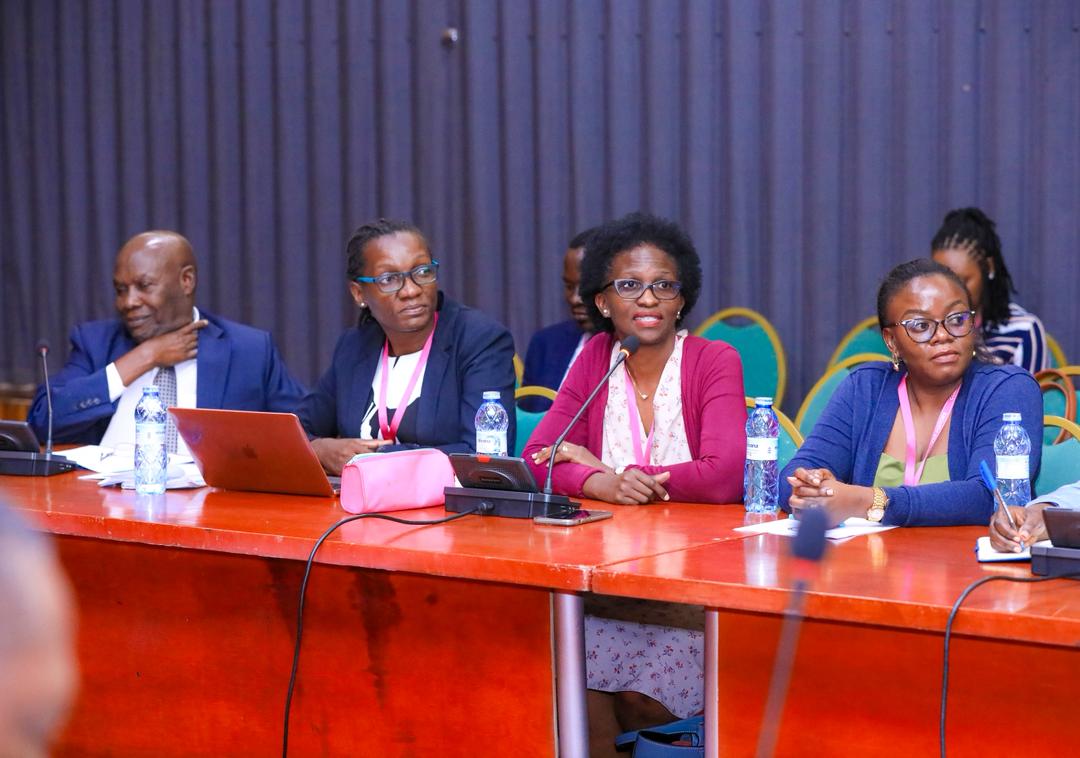
According to the Global Research on Antimicrobial Resistance (GRAM) Report, Uganda had the 40th highest mortality rate associated with AMR among 204 countries and territories globally in 2019.
Behind those figures, experts warn, lies a crisis that now rivals, and in some estimates surpasses, traditional killers such as tuberculosis (TB), HIV and malaria.
Global crisis
The global scale of the problem underscores Uganda’s vulnerability. According to Dr Kajumbula, antibiotic-resistant bacteria were directly responsible for 1.27 million deaths worldwide in 2019. That same year, AMR caused more deaths than TB, HIV or malaria.
Sub-Saharan Africa bears the heaviest burden, with an AMR-attributable mortality rate of 23.7 deaths per 100,000 people, significantly higher than other World Health Organisation regions, where rates range between 13 and 14.4 per 100,000 persons.
What is AMR?
Dr Patricia Alupo from the Makerere University Lung Institute described AMR as a global health threat that disproportionately affects low and middle-income countries such as Uganda.
In simple terms, she explained, antimicrobial resistance occurs when viruses, bacteria, fungi and parasites no longer respond to medicines designed to kill them. “The very medicines we rely on to kill germs stop working because the germs have ‘learned’ how to survive them,” she said.
The result, she says, is longer illnesses, more complicated treatments and higher medical bills, all of which compound economic stress.
How workers get exposed
At a hardware shop in Namanve, Mukono District, a truck grinds to a halt, and men in faded overalls jump onto its back. One by one, they hoist 50-kilogram bags of cement onto their shoulders.
With each drop, a pale cloud bursts into the air, hanging thick and stubborn. The men cough, blink rapidly and wipe dust from their eyes with bare hands. None wears a mask.
At Kafunda Mukasa Market in Kampala, mounds of rotting waste lie heaped along the roadside, fermenting under the open sky. Garbage collectors rip through plastic bags with bare, ungloved hands as flies hover thickly overhead.
Small, unnoticed cuts on their fingers come into direct contact with decomposing food scraps, mixed household refuse, and discarded medical waste.
Meanwhile, upcountry, at informal mining sites, artisanal miners squeeze into narrow, poorly ventilated pits without protective gear. They inhale dense clouds of dust before returning to overcrowded camps where tuberculosis is rife, a daily routine that quietly compounds their risk of infection.
Kajumbula describes these cleaners and waste handlers as special targets and unintentional spreaders of AMR and notes that when they fall sick, many buy antibiotics over the counter, a few tablets here, an incomplete dose there, just enough to return to work.
These scenes, he notes, represent the frontline of antimicrobial resistance through daily exposure to pathogens, limited access to diagnostics, incomplete treatment courses and weak infection prevention.
He says that in Uganda, 78.7 per cent of urban households do not segregate their waste, exposing sanitation workers to needle-stick injuries from improperly discarded medical sharps.
“Cleaners frequently move between high-risk hospital wards and general areas, potentially transferring multidrug-resistant organisms on their hands or equipment,” he notes.
A study in nine Ugandan cities found that 61 per cent of sanitation workers had to buy their own personal protective equipment (PPE).
At Mulago Hospital, although 58.3 per cent of cleaners had good knowledge of infection prevention and control, only 30.8 percent practiced it correctly, often due to lack of resources.
The economic impact of such systemic gaps, according to Dr Kajumbula, is cumulative, with preventable infections increasing healthcare costs, extension of hospital stays and keeping breadwinners away from work.
Waste management gaps
Dr Charles Ayume, Chairperson of the Parliamentary Forum on AMR, also raises enforcement gaps. He asked why National Environment Management Authority (NEMA) does not bring to book garbage collection companies that do not provide their workers with personal protective equipment (PPEs).
“Whenever I am driving to work, I see people moving on trucks with waste or garbage with no PPEs. But you are there NEMA, what are you doing? Why not reprimand these people and ensure they put on PPEs?” he asked.
He also warned that mining camps could become epicentres of disease transmission if not regulated. In response, however, Dr Innocent Achaye, Manager for Chemical and Radiation Safety at the National Environment Management Authority (NEMA), says that PPE alone is insufficient to tackle AMR-related issues.
“We know that the PPEs are very important, but they are not the best protection per se. For me I think we should set the foundation for waste management by having a waste treatment facility. We don’t have any licensed treatment facility where waste handlers are supposed to transport the waste for proper disposal,” he notes.
He adds that what currently exists are informal waste management facilities, and that NEMA recently halted licensing municipal waste handlers due to the absence of a proper waste treatment destination.
“First of all, it must have proof that the waste will be transported to a waste treatment facility where it will be effectively disposed of, which we don’t have one as a country,” he says.
Without proper treatment infrastructure, he says, resistant organisms circulate through communities, increasing disease burden and treatment costs.
Lung disease burden
Data from the Lung Institute for the period 2024–2026 shows that 564 cases were chronic obstructive pulmonary disease (COPD), accounting for 4.13 percent of all recorded cases.
Pneumoconiosis accounted for 53 cases (0.39 per cent), while lung fibrosis accounted for 47 cases (0.34 per cent).
Over five years, 331 cases of lung fibrosis were recorded. Of these, 53.2 per cent were female. According to the data shared by Dr Patricia, the most affected age groups were 40–49 years (21.1 per cent), followed by 30–39 years (20.8 per cent) and 50–59 years (15.4 per cent).
She also revealed that the most common symptoms reported were cough (78.2 per cent), difficulty in breathing (52 per cent), wheezing (34.1 per cent) and chest pain (30.8 per cent).
Linking exposure to resistance
Dr Alupo outlined two pathways linking occupational exposure to AMR. The first involves direct contact with resistant organisms, leading to colonisation of the skin, respiratory or gastrointestinal tract.
“Limited healthcare access may prompt self-medication and incomplete antibiotic courses, increasing the risk of selecting resistant strains and facilitating household and community transmission,” she said.
The second pathway, she says, involves respiratory symptoms being mistreated with antibiotics. “Inadequate PPE and poor infection prevention measures lead to exposure, followed by inappropriate or incomplete antibiotic use, selecting and spreading resistant strains,” she notes.
Culture of self-medication
Dr Kajumbula notes that in areas such as Nagongera and Namuwongo, nearly 70 to 75 percent of households have administered antibiotics to family members without proper medical guidance.
He says weak surveillance systems, easy access to antibiotics without prescription and limited diagnostics encourage misuse.
On his part, Dr Rogers Kisame, a healthcare expert from Baylor Uganda said that creating massive awareness regarding AMR and the related risks can go a long way in helping affected communities in preventing the risks.
“I think that also, in supporting the fight against AMR, awareness is very key. We have very clear strategies for awareness that have worked internally in health, in agriculture and other sectors. This can also be applied as a subsection within special health and safety program and mining areas,” he said.
Additionally, Kisame raised the issue of access to diagnostic facilities to serve these mining communities, saying the lack of these facilitate the people to self-medicate.
“There is need to have these facilities in such prone communities to ensure that they have access to microbiology services for diagnostics before they self-medicate,” he said.
Ministry of Energy and Mineral Development state minister, Sidronius Opolot Okaasai, highlighted the Occupational Safety and Health Act, 2006 obliges industry actors to ensure worker safety, including hazard control measures, PPE use and monitoring of exposures.
He said the ministry has undertaken training and awareness campaigns on best mining practices and intends to strengthen local government capacity to monitor AMR risks at mining sites, while fostering coordination with the health ministry and NEMA.
Policy recommendations
At the workplace level, Dr Alupo recommended mandatory PPE provision, formalisation of informal waste sectors and regular IPC training.
At the health system level, she called for strengthened antimicrobial stewardship, occupational AMR surveillance and improved access to regulated antibiotics.
She also urged the integration of occupational health into national AMR action plans and greater cross-sector collaboration involving health, labour and environment sectors.