
Parents urged to monitor children’s oral health
“Oral health begins at home. Parents must guide children to brush twice daily with fluoride toothpaste and limit sugary foods that contribute to tooth decay,” Ochieng said.
Experts say poor oral health among children often results from excessive consumption of sugary foods and inadequate brushing habits. (Photos by Ivan Tsebeni)
________________
Parents have been urged to take a more active role in monitoring their children’s oral hygiene to prevent dental diseases that continue to affect millions of children worldwide.
The call was made on Monday (March 16) during the commemoration of World Oral Health Day held at Nakasero Primary School in Kampala, where health advocates, education leaders and corporate partners gathered to promote better oral hygiene practices among schoolchildren.
Speaking at the event, Luck Ochieng, the managing director of Unilever Kenya and Uganda, said parents and guardians play a critical role in ensuring that children develop healthy habits such as brushing their teeth regularly and reducing sugar consumption.
“Oral health begins at home. Parents must guide children to brush twice daily with fluoride toothpaste and limit sugary foods that contribute to tooth decay,” Ochieng said. “When families prioritise oral hygiene, we protect children from pain, infection and other complications that can affect their learning and wellbeing.”
According to the World Health Organisation (WHO), oral diseases affect nearly 3.5 to 3.7 billion people globally, making them among the most common health problems worldwide. Untreated tooth decay in permanent teeth is the most prevalent health condition globally, while more than 530 million children suffer from tooth decay in their primary teeth.
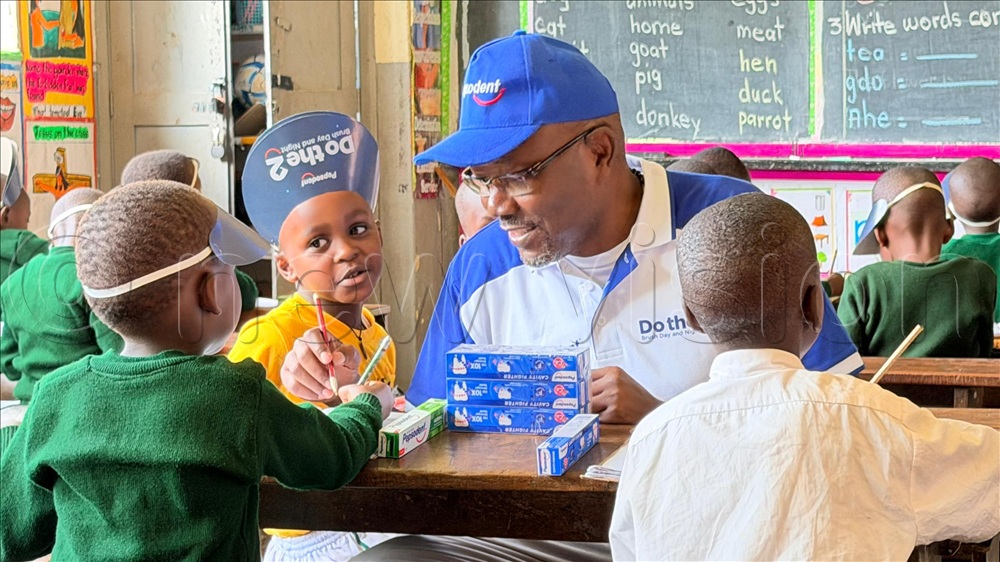
Experts say poor oral health among children often results from excessive consumption of sugary foods and inadequate brushing habits. The WHO estimates that 60 to 90 percent of schoolchildren worldwide have experienced dental caries, underscoring the scale of the problem.
Ochieng said initiatives such as the World Oral Health Day campaign are intended to raise awareness and encourage preventive practices among families and schools.
“As a company that produces oral care products, we believe we have a responsibility to support communities through education and awareness,” he said. “Our partnership with schools helps ensure that children understand the importance of oral hygiene early in life.”
Also speaking at the event, Grace Nandawula, communications officer at Unilever Uganda, said awareness campaigns are essential in promoting preventive dental care, particularly among young learners.
“Many dental diseases are preventable if children adopt simple daily habits such as brushing twice a day and visiting a dentist regularly,” Nandawula said. “Through these school outreach programmes, we want to empower pupils with knowledge that they can also share with their families.”
She added that poor oral health not only affects physical well-being but can also interfere with school performance.
“Children with untreated dental problems often experience pain, difficulty eating and even trouble concentrating in class,” she noted. “By promoting oral hygiene, we are supporting both their health and their education.”
At the school level, educators welcomed the initiative, saying it helps reinforce health messages taught in classrooms.
Angella Kisolo, the deputy headteacher of Nakasero Primary School, said schools also play a role in shaping healthy habits among learners.
“We encourage our pupils to brush their teeth every morning and evening, but the support of parents is equally important,” Kisolo said. “When schools, parents and partners like Unilever work together, we can significantly reduce dental problems among children.”
She also called for more health awareness programmes in schools to help children understand the importance of personal hygiene.
Globally, experts say oral diseases are largely preventable, yet they remain a major public health challenge. Studies show that untreated dental cavities affect more than 2.5 billion people worldwide, while gum disease affects about one billion adults.
Health professionals say early prevention through proper brushing, reduced sugar intake and regular dental check-ups remains the most effective way to combat dental diseases.
As the World Oral Health Day celebrations concluded, participants emphasised that improving children’s oral health requires joint action from parents, schools, health professionals and the wider community.
The Nakasero event was a precursor to the national celebrations slated for March 20, 2026, at the health ministry headquarters in Kampala.