
North Ankole Diocese committees to disseminate HIV prevention messages
Specifically, Bishop Muhoozi said he is going to sensitise the public about the dangers of HIV, how it is spread, and how to avoid the disease during the upcoming confirmation tour program scheduled for May, 2026.
The Bishop of Ankole Diocese, the Rt Rev Alfred Muhoozi addressing a team of officials from Uganda AIDS Commission (UAC). (Photo by Agnes Kyotalengerire)
__________________
The Bishop of North Ankole Diocese, Rt. Rev. Alfred Muhoozi has agreed to disseminate HIV prevention messages during his pastoral work.
Specifically, Bishop Muhoozi said he is going to sensitise the public about the dangers of HIV, how it is spread, and how to avoid the disease during the upcoming confirmation tour program scheduled for May, 2026.
“HIV prevention will be one of the topics I will talk about during my sermon in the 77 churches I will visit to confirm believers,” he said.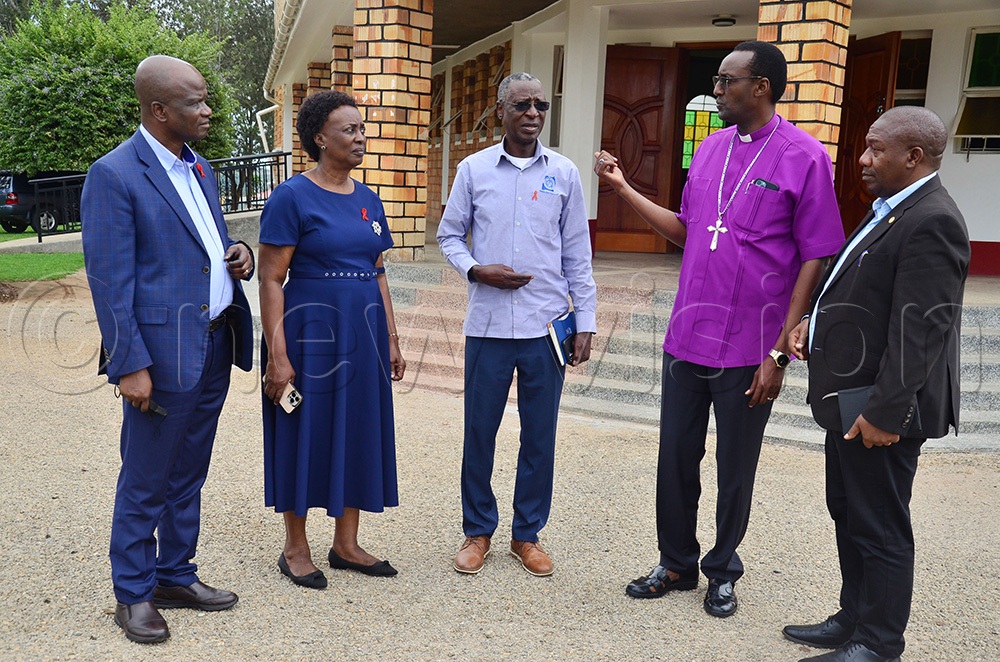
The Bishop of Ankole Diocese, the Rt Rev Alfred Muhoozi, having a chat with officials from Uganda AIDS Comission (UAC). (Photo by Agnes Kyotalengerire)
Bishop Muhoozi, who described HIV/AIDS as a time bomb, told Uganda Aids Commission (UAC) officials to encourage more bishops and boards of trustees in Uganda to join the HIV sensitisation move.
The health coordinator of the North Ankole Diocese, Seith Abaho, said the church is already using its structures throughout all platforms to sensitise the community about the deadly disease HIV/AIDS.
In addition, the diocese’s health department resolved to use the last Sunday of the month to talk about HIV-related issues. They set up a committee to coordinate parish health committees within the parishes, Abaho noted.
This was when Uganda AIDS Commission officials, led by the board chairperson, Can. Dr Ruth Senyonyi and Director General Dr Nelson Musoba visited the North Ankole Diocese in the Kiruhura district as part of the activities of the board oversight visit to the Ankole region on Wednesday, 12.2026.
Kiruhura is among the districts that are severely hit in the Ankole sub-region, with a prevalence of 11.2%, which is way above the national prevalence of 4.9%, according to the 2025 National HIV estimates.
This is followed by Mbarara City, which is at 9.9%; Bushenyi district, with an HIV prevalence of 8%; Mbarara district, with a 7.5%; Sheema district, at 7.1%; Rwampara, with a 6.9%; Ibanda, at 6.2%; and Ntungamo, at 6.0%.
The population of Kiruhura is about 200,000 people, which means that it is less than 5% of the total population of Uganda. Now that they have 10% of the people living with HIV in Uganda, which means the burden of HIV is much higher.
Dr Musoba said three things will determine that Uganda ends AIDS by 2030 and closes the tap of new HIV infections. One of them is to ensure that people are tested and those found to be HIV positive are started on treatment.
However, the coverage of people who are HIV-positive and started on treatment (antiretroviral therapy) in Kiruhura district stands at 87%, which is lower than the UNAIDS target of 95%. This simply means that of the 15,800 people living with HIV in the district, only 13,746 people have been started on treatment.
The worrying bit is these are adults who are sexually active, which means that the infection is being passed on, Dr Musoba noted.
Of those (87%) taking the treatment, only 80% are taking it well and suppressing the viral load, which is low against the national target of 95%.
Based on these poor clinical indicators, Dr Musoba implored Bishop Muhoozi to mobilise and sensitise the Kituhura community.
“The community trusts their religious leaders, and if you speak to them, they will listen and change behaviour," he noted
The strategic information and planning officer at the Uganda AIDS Commission, Dr Vincent Bagambe, said the agency (UAC) came up with the toolkit of messages, including a pastoral letter. The idea was that the church has a locked-in audience, where every Sunday and Saturday, people sit for a minimum of an hour listening to sermons.
In this regard, Dr Bagambe said that using the pastoral letter, the religious leaders can pick some of that message that relates to the summons of the day. Consequently, this will be a contribution to the protection of the congregation’s health.
He urged the diocese to use its platform to ensure copies of the pastoral letter are circulated through the structures of the church up to the village level to ensure prevention messages are disseminated.
Dr Bagambe said the bishop is an influential voice and also has a constituency that he leads, through which HIV prevention messages can be delivered.
The director of partnerships at the Uganda AIDS Commission, Tom Etti, said several avenues can be used to mainstream HIV activities into church structures.
Etti said disseminating HIV prevention messages will create an impact in communities amidst financial constraints following President Trump's stop order.
He said HIV prevention messages can be disseminated through events such as weddings, singles' fellowships, and youth conventions that attract several young people.
The UAC board chairperson said the church has a crucial role in the national HIV and AIDS response by encouraging people living with HIV to take their medication as required—adherence.
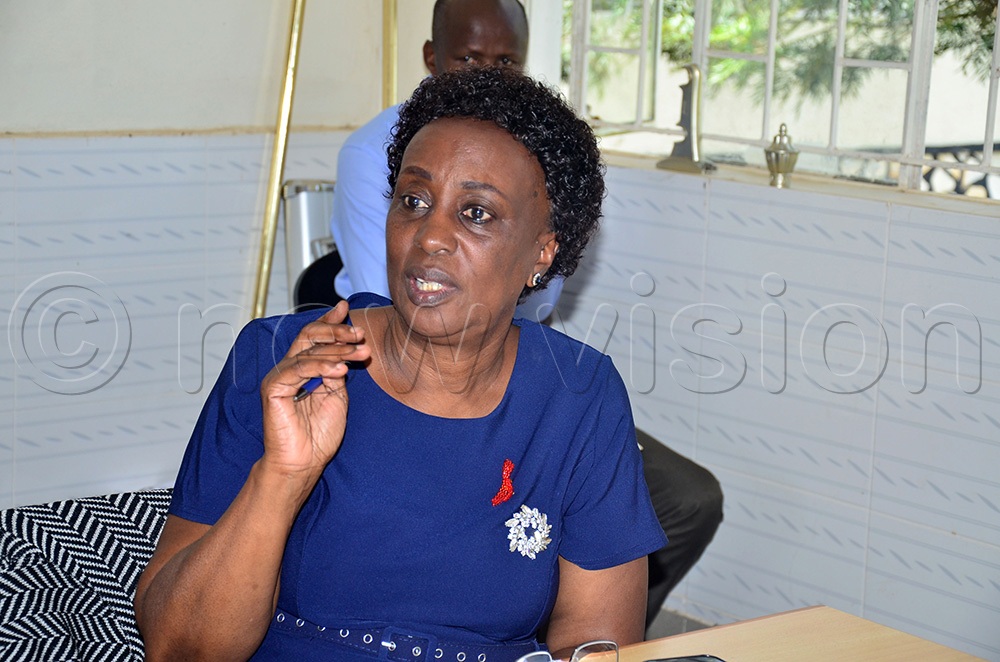
UAC board chairperson Dr Ruth Senyonyi said the church has a crucial role in the national HIV and AIDS response by encouraging people living with HIV to take their medication. (Photo by Agnes Kyotalengerire)
Dr Senyonyi faulted the Pentecostal church leaders who pray for people living with HIV and later tell them to stop taking such interventions, claiming that they have healed them.
She said the church is one of the areas that is driving stigma and discrimination towards people living with HIV.
“As people preach, they blame people living with HIV because they assume everybody got it from risky sexual relationships,” she noted, and added, "When people are stigmatised, they cannot seek HIV testing services and not take their medicines."
As part of the oversight visit, the team also held a meeting with the Kituhura district officials, which was chaired by the Resident District Commissioner of Kituhura, George Bakunda.
The officials briefed the UAC team about the districts, the high HIV prevalence, and the alarmingly high new HIV infections in the districts.
Social and cultural issues, low viral suppression, and low antiretroviral coverage, coupled with lack of medication adherence, were high on the list of drivers. The meeting discussion also focused on a number of solutions.
The officials later visited Rushere Health Centre IV, where they engaged with health workers on challenges encountered with the integration of HIV treatment and care services.
HIV burden
Uganda continues to grapple with high rates of new HIV infections. In 2024 alone, 37,000 new infections were recorded nationwide.
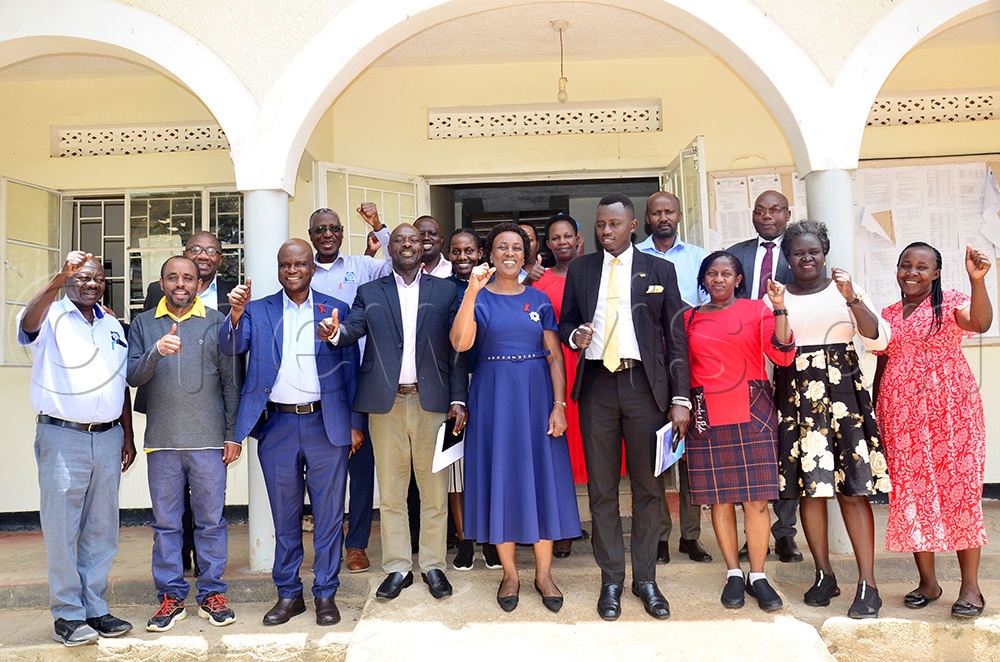
Uganda Aids Commission (UAC) Board Chairperson Dr Ruth Senyonyi poses for a group photo after meeting Kiruhura district officials. (Photo by Agnes Kyotalengerire)
Young women aged 15-24 remain disproportionately affected, accounting for 78% of infections among adolescents. Four out of every five young people newly infected are girls and young women.
However, the overall HIV prevalence has slightly declined from 5.1% in 2023 to 4.9% last year. Annual AIDS-related deaths have also dropped significantly, from 54,000 in 2010 to 20,000 in 2024.
Approximately 1.5 million Ugandans are living with HIV, with about 1.3 million currently on antiretroviral therapy.