
How congestion in health centres is suffocating postnatal care
“The biggest challenge we have is inadequate space to accommodate all these mothers, so sometimes we may discharge them not because we are unable to handle the mothers, but because space is an issue,” she says. Egessa adds that besides space, the facility lacks beds for mothers to give birth and rest after delivery. She says some mothers and babies risk getting infections when they sleep on the floor where everyone passes.
Patients and caretakers in one of the wards at Butebo Health Centre IV in Butebo district. (Credit: Ibrahim Ruhweza)
BUTEBO - As you enter Butebo Health Centre IV in Butebo district, eastern Uganda, the cries of newborn babies fill the air. Among the proud fathers was Amos Alenyo, who was given the opportunity to hold his newborn for the first time.
His face lit up with excitement as he cradled the little one. But his joy was short-lived when nurse Irene Koote interrupted the tender moment.
“Alenyo, sorry, we need that space for another person. You can begin preparing to go home. In case of anything, keep us in the know,” she said.
Alenyo said the state of postnatal services is so poor that mothers are being discharged before full recovery. In his case, his wife had delivered only about two hours earlier.
The World Health Organisation (WHO) recommends that healthy mothers and their newborns remain at a health facility for at least 24 hours after a vaginal delivery, provided there are no complications.
Before discharge, experts say health workers should assess the mother’s post-partum bleeding, recovery and general health condition, as well as the newborn’s health and ability to breastfeed.
WHO officials also recommend at least three additional postnatal contacts: 48–72 hours after birth, between seven and 14 days, and during the sixth week after birth.
“We request the Government, through the Ministry of Health, to extend more facilities for children and women. We are badly off,” Alenyo appealed.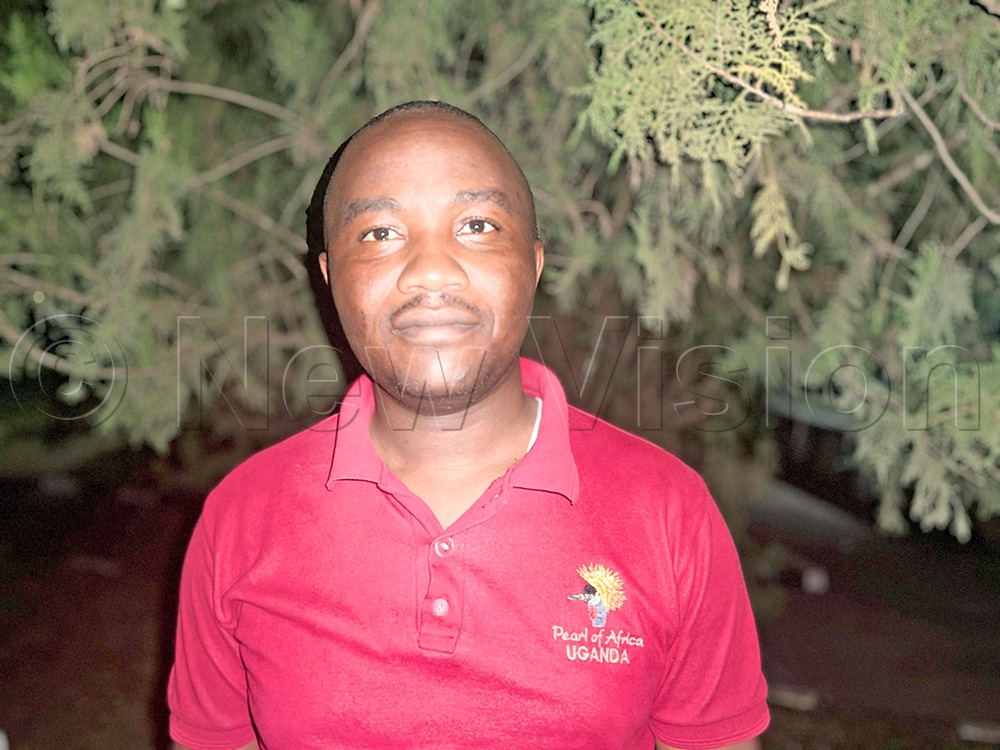
The acting district health officer, Manafwa, Dr Ephraim Naho.
Deliver and leave
A further investigation at Butebo Health Centre IV found that every ward was full to capacity, and mothers who had just delivered admitted that they are often asked to return home to give way to others coming in.
A similar situation exists at Mulanda Health Centre IV in West Budama. Harriet Margaret Egessa, a nursing officer at the health facility, also admits that inadequate space leads to congestion at the facility where she works.
“The biggest challenge we have is inadequate space to accommodate all these mothers, so sometimes we may discharge them not because we are unable to handle the mothers, but because space is an issue,” she says.
Egessa adds that besides space, the facility lacks beds for mothers to give birth and rest after delivery. She says some mothers and babies risk getting infections when they sleep on the floor where everyone passes.
At this facility, a ward that should accommodate about 10 beds is squeezed to host more than 20. To Egessa, this is close to an atomic bomb given the fact that infections among mothers and babies can spread easily.
In the 2025/26 financial year alone, West Budama Constituency has lost more than three mothers who died soon after childbirth. It is also reported that some babies died during their first week at their respective homes.
Mulanda Health Centre IV is the largest health facility in the constituency, serving a catchment population of about 25,000 people. It handles roughly 200 deliveries every month, or about 2,400 annually.
Status elsewhere
In Manafwa district, Bugisu sub-region, the acting district health officer, Dr Ephraim Naho, said poverty remains a major barrier to maternal healthcare.
“About 70% of our people are poor and struggle to afford even basic hospital-related expenses,” he said, adding that Manafwa records about 650 deliveries every month, roughly 7,800 annually.
About 600 of those require caesarean sections, yet the mothers are not given ample time to stay at health facilities for easy monitoring. Across Bugisu sub-region, overcrowding in maternity wards has become routine, according to Naho.
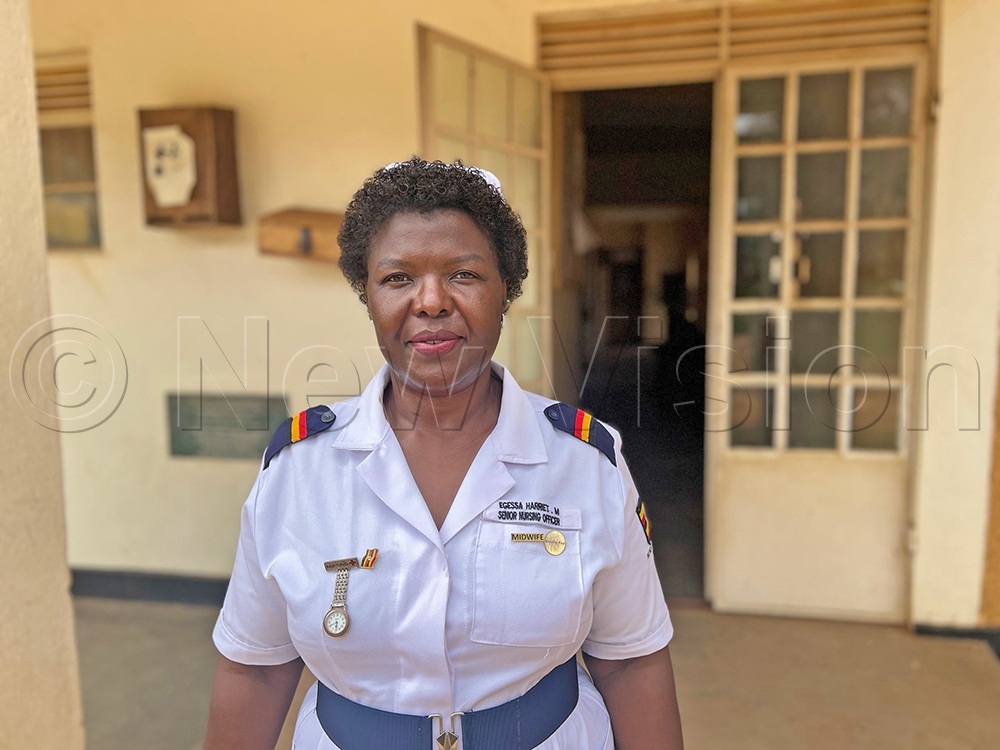
Harriet Margaret Egessa, a nursing officer at Mulanda Health Centre IV in West Budama.
He says postnatal care remains a big challenge because expectant mothers lie on the floor due to shortages of beds.
“It is not the dignity any woman deserves when giving life,” Naho said. In Kyenjojo district, Julius Akora, a data entrant at Kyenjojo district general hospital, said the situation is extremely tough as the hospital receives patients from all parts of the district.
“Some mothers are forced to wait outside before delivery. You fi nd them sleeping in corridors, while others are under tree shades,” Akora said.
“Due to congestion, mothers are forced to go home immediately after delivery. This affects mothers who sustain wounds during delivery,” Akora said, adding that at least five mothers return to the health facility after failing to properly manage their post-partum wounds, with the majority returning when the wounds are beginning to rot. Kyenjojo has only one general hospital.
The facilities in Kyarusozi and Bufunjo sub-counties are health centre IVs, while Katooke, which is being pushed to become a district, has only a health centre III. Akora said this is why most patients rush to a bigger facility, which also lacks adequate facilities to handle the large number of patients.
The aftermath of early discharge
A doctor working at a health centre IV in Buliisa district, who preferred anonymity for fear of backlash, said when mothers leave the hospital before recovery, they face complications such as severe post-partum bleeding.
This can lead to death if immediate medical attention is not provided. Even when patients are allowed to come with their mattresses, the size of the wards cannot accommodate them comfortably.
“At some point, I see conflicts here. You have operated on a mother and ask her to leave so that space is created for another one. They take it personally. It is hard to ask them to go and they are right,” he said.
The doctor added that when local government minister Balaam Barugahara visited the district, patients told him that they were chased from the wards after delivery, yet this is done only to create space for others.
“Some babies are born already tired, so they need to be monitored. Because of space constraints leading to congestion, we tend to let them go, but we fear the baby could die,” he said.
The doctor said immunisation is another major challenge. Newborns are expected to be immunised, but once mothers are discharged, it becomes difficult to trace them. He added that some mothers who get complications rarely return to the health facility, but instead turn to traditional practitioners. After some time, most of them die.
Govt’s take
Uganda has 80 districts without a government hospital, according to the Minister of Health, Dr Chris Baryomunsi. Of the country’s 146 districts, only 66 have government hospitals, with 72 private hospitals distributed across them.
The permanent secretary at the health ministry, Dr Diana Atwine, said congestion in government health centres is caused by population growth against existing infrastructure.
She admits that although congestion is becoming a bigger problem, the Government is doing all it can to address it in the coming year.
“We are going to start expanding all the health centres IV to community hospitals so that they have more infrastructure to take care of the population in those constituencies,” she said.