
Govt says committed to sickle cell disease early detection, prevention
“This landmark initiative underscores the Government of Uganda’s commitment to early detection, prevention, and improved health outcomes for children affected by sickle cell disease,” Atwine said.
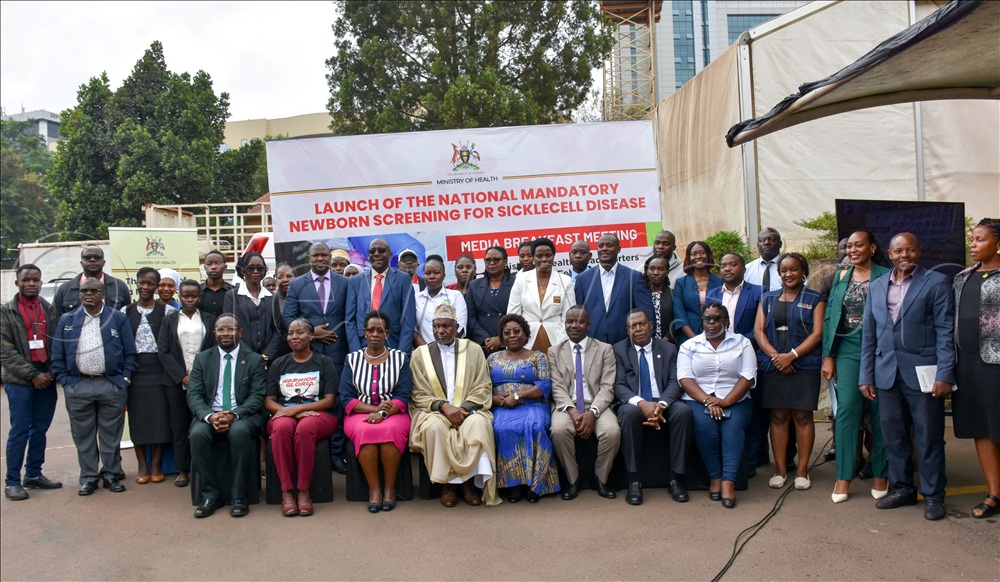
Ministry permanent secretary Dr Diana Atwine with Deputy Mufti of Uganda Sheikh Muhammad Waiswa during the event. (Photos by Bridget Ahurira)
________________
The Government, through the health ministry says it is committed to early detection and prevention of sickle cell disease in the country. It adds that it is also committed to improving health outcomes for children affected by sickle cell disease.
Ministry permanent secretary Dr Diana Atwine pledged today, February 9, 2026, as she officially launched the Nationwide Mandatory Newborn Screening for Sickle Cell Disease (SCD) during a media breakfast meeting at the ministry's headquarters in Kampala city.
Atwine was presiding over the event, which was also attended by the director general health service, the media, health workers, development partners and religious leaders.
“This landmark initiative underscores the Government of Uganda’s commitment to early detection, prevention, and improved health outcomes for children affected by sickle cell disease,” Atwine said.
She highlighted the grave impact of SCD on child survival, revealing that out of about 200,000 children born with sickle cell disease, between 6,000 and 9,000 die before their fifth birthday, largely from preventable complications such as severe infections, anaemia and stroke.
Atwine emphasised that addressing SCD is central to Uganda’s efforts to reduce under-five mortality.
“If we are targeting the reduction of under-five mortality, we must deliberately target sickle cell disease,” she said.
She added that children with SCD are major consumers of blood, which also affects the availability of blood for mothers delivering, cancer patients and children with malaria.
Sickle cell disease is a genetic blood disorder caused by an inherited abnormality of haemoglobin. Children inherit the disease (SS) when they receive the sickle cell gene from both parents.
Those who inherit it from only one parent carry the sickle cell trait (AS), are generally healthy, but can pass the gene to their children. In Uganda, six to seven million people carry the sickle cell trait, with prevalence in the districts of Aleptong, Namutumba, Bundibugyo and Buliisa, among others, affecting nearly one in four residents.
Atwiine detailed government efforts, saying, “We have integrated sickle cell disease prevention, diagnosis, and care into the public health system. Wherever you go in our hospitals, children are screened, and those diagnosed with sickle cell disease are followed up.”
She noted the strengthened laboratory capacity with the introduction of rapid diagnostic tests (RDTs) and improved access to Hydroxyurea, now on the essential medicines list and increasingly available even in lower-level facilities.
Not DNA screening
“This is not DNA screening, as some reports have misleadingly suggested. This is sickle cell screening, and every child deserves to be tested and linked to care early,” Atwine said.
Dr Hope Fortunate Achiro, a mother who lost two daughters to SCD in 2024, delivered one of the most moving testimonies of the day.
“The cost of sickle cell disease is not only medical, it is emotional, social and financial. My children suffered repeated hospital admissions, severe pain, blood transfusions and intensive care. Their education and quality of life were severely affected,” she said.
“The financial cost was overwhelming, and the treatment locally and abroad cost over a billion shillings, much of it raised through public support. How many families can afford that?” Achiro urged parents to be proactive
Achiro noted that sickle cell disease tests love, families, careers and relationships. But it is a fight we can win. The good news is that sickle cell disease is preventable. It is cheaper and easier to prevent than HIV, malaria, or TB. Prevention requires awareness, testing, and informed decisions.
“Test before you love, know your status and encourage testing among children, teenagers, and adults. Religious leaders, please require sickle cell results just as you require HIV results before marriage.” She urged
Screening and long-term care
Professor Sarah Kiguli, the chairperson of the National Sickle Cell Task Force, stressed the need for follow-up care. She said that screening must go hand in hand with long-term care because sickle cell disease affects people across the lifespan, not just children. Early identification of affected infants allows life-saving interventions.
Religious leaders also committed their support. Deputy Mufti of Uganda Sheikh Muhammad Waiswa said, “Mandatory newborn screening is a national turning point, an act of compassion and justice that speaks to our shared values: The sanctity of life, the dignity of every child, and our collective responsibility to protect the most vulnerable.
“Faith institutions will help mobilise communities, educate congregations, and reduce stigma, ensuring families understand the importance of screening,” he said.
Premarital counselling
The health ministry emphasised premarital counselling and testing alongside newborn screening to prevent SCD. Countries like Egypt have successfully reduced the disease burden through mandatory premarital testing.
Atwine concluded with a call to action, as given in the story: “Sickle cell disease is genetic, and it is not curable except through bone marrow transplant, which is extremely expensive. Prevention is therefore the surest way forward.
“We must strengthen partnerships with the media, religious leaders, cultural leaders, and the public. This disease affects everyone. Together, we will reduce suffering, prevent premature deaths, and ensure that every child born with sickle cell disease in Uganda survives and thrives,” she said.
The nationwide newborn screening will ensure that all children born in Uganda are tested at birth using RDT kits, with results recorded on child health cards and follow-up care provided. Early interventions include penicillin prophylaxis, vaccination, hydroxyurea therapy, and caregiver education, significantly reducing complications and mortality.