
Govt issues guidelines as 20 districts report measles outbreak
“Uganda is currently experiencing an increase in the cases of measles, and the illness has been described as “a deadly virus and highly contagious infectious disease” spread mainly through respiratory droplets.
Charles Olaro, Director General of Health Services at the Ministry of Health Uganda, addresses the press during a briefing at the Uganda Media Centre in Kampala on April 30, 2026. Photo by Bridget Ahurira
__________________
At least 20 districts across Uganda have reported confirmed measles outbreaks between January and April 2026, the Ministry of Health announced today at the Media Centre, warning of a growing public health threat largely affecting unvaccinated children.
Addressing journalists at the Uganda Media Centre today, April 30, 2026, Health Services director general Dr Charles Olaro said the country is experiencing a worrying rise in infections of the highly contagious viral disease.
“Uganda is currently experiencing an increase in the cases of measles,” he said, describing the illness as “a deadly virus and highly contagious infectious disease” spread mainly through respiratory droplets.
The affected districts include Bulambuli, Kasanda, Amolatar, Kibaale, Ntoroko, Karenga, Amuru, Agago, Kagadi, Kiboga, Kyankwanzi, Kaabong, Kotido, Kween, Lira, Sembabule, Kikuube, Gulu, Kazo, Mubende, and Adjumani.
Olaro warned that measles spreads rapidly, noting that infected persons are contagious “from about four days before the rash appears,” making early detection difficult. He outlined key symptoms as fever, skin rash, cough, runny nose, and red eyes, urging parents to seek immediate medical attention if children present with such signs.
He said that although Uganda has made progress in immunisation, rising from 79% coverage in 2016 to about 90% in 2024, the country remains below the 95% threshold required to prevent outbreaks. Campaign coverage stood at 94.3% in 2019 and improved to 96% in 2022.
However, gaps persist.
“The uptake of the second dose of measles rubella vaccine… remains very low, with only 64% coverage in 2025 compared to 92% for the first dose,” Olaro said, adding that full protection requires two doses administered at nine months and 18 months.
According to the ministry, 75% of measles cases are among children under five years, with many either unvaccinated or having received only one dose.
“Only 33% have received one dose, which is not adequate for protection,” he said.
The outbreak follows a severe year in 2025, when 66 districts reported confirmed cases totalling 10,163 infections and 60 deaths. Notably, 31% of those deaths occurred in the Karamoja region.
12-measles-related deaths
In 2026 so far, 12 measles-related deaths have been recorded in Kagadi, Kikuube, Adjumani, Bulambuli, and Karenga districts. These deaths have been linked to underlying conditions such as malnutrition, delayed health-seeking behaviour, and lack of vaccination.
Olaro said a national risk assessment indicates that nearly half of Uganda’s districts are at moderate to high risk of measles transmission. He attributed the current outbreaks to “low population immunity due to suboptimal vaccination coverage,” limited awareness about the second vaccine dose, hard-to-reach populations, vaccine hesitancy, weak surveillance systems, and delayed care seeking.
He also warned of severe complications, noting that measles can lead to pneumonia, diarrhoea, and long-term neurological damage among survivors.
“These are all preventable if we get children vaccinated,” he said.
Response efforts
Principal Health Officer Immaculate Ampeire said response efforts are already underway, but face capacity challenges in some districts. 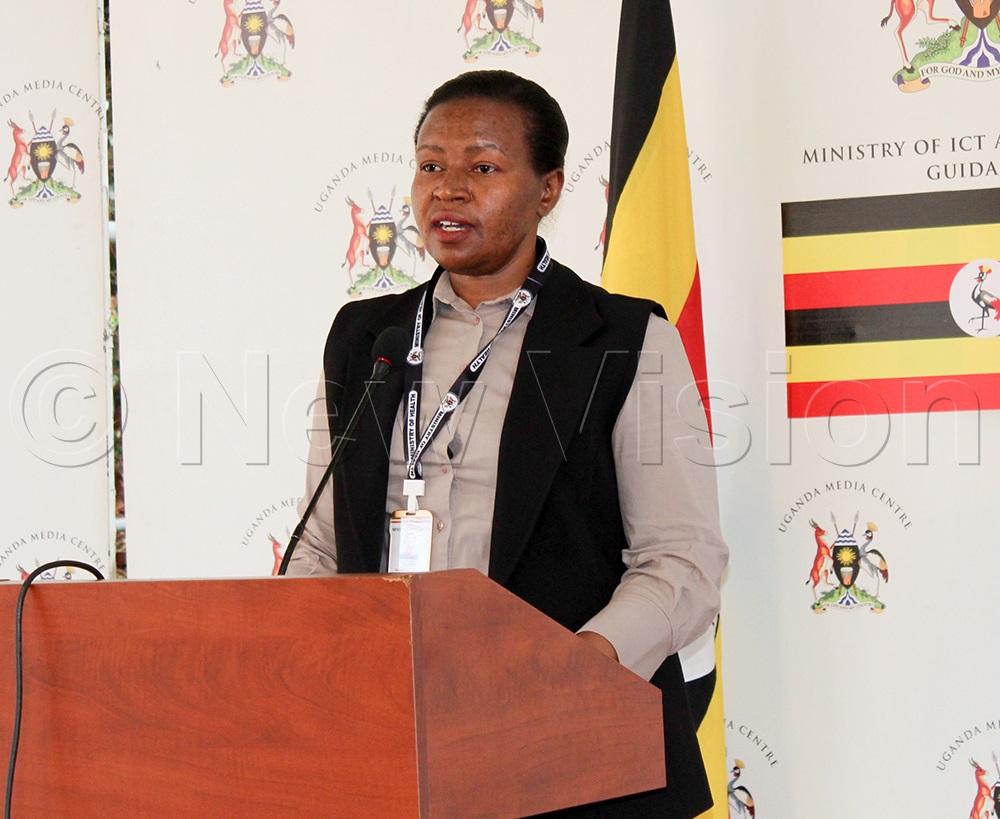
Immaculate Ampeire, Principal medical officer at the Ministry of Health Uganda, addresses the press during a briefing at the Uganda Media Centre in Kampala on April 30, 2026. (Photo by Bridget Ahurira)
“We have activated the national emergency operations centre and the regional emergency operational centres to support the districts,” she said.
Ampeire noted that targeted interventions, including vaccination of children aged nine to 59 months, surveillance strengthening, and case management, are ongoing. Health facilities have also designated isolation spaces to curb transmission.
“We have seen that for every measles case, they infect 15 additional persons at risk,” she said, encouraging the need for strict infection prevention measures.
Despite the ongoing response, officials say a broader intervention is needed. 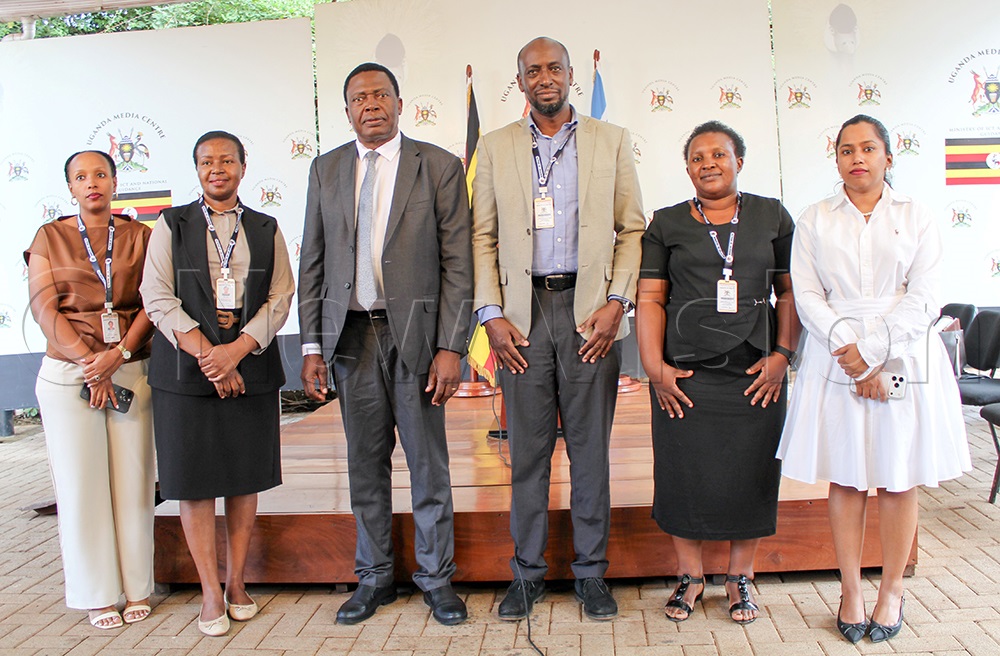
(L-R): Loretah Mutoni, Communications Specialist; Immaculate Ampeire, Principal Medical Officer; Charles Olaro, Director General of Health Services; Patrick Ajuna, Senior Medical Officer; Munganga Maria, Senior Nursing Officer; and Aburahmi Kananathan, Technical Assistant at the Ministry of Health Uganda, during a press briefing at the Uganda Media Centre in Kampala on April 30, 2026. (Photo by Bridget Ahurira)
County-wide immunisation
The ministry, therefore, announced a nationwide measles-rubella immunisation campaign scheduled for October 1-5, 2026. The campaign aims to vaccinate all children aged 9 to 59 months, regardless of their previous vaccination status, with support from partners including GAVI, WHO, and UNICEF.
“We shall give these children vaccines again, irrespective of what we are doing now,” she said, stressing that the campaign will complement ongoing outbreak response efforts.
Olaro called on parents and caregivers to ensure children receive both doses of the vaccine.
“A single dose of immunisation is not protective. Every child must receive two doses to achieve full protection,” he said.
He urged communities, leaders, and partners to intensify mobilisation efforts, warning that failure to close immunisation gaps could allow the outbreak to spread further.