
Community-based strategies credited as over one million vaccinated in anti-malaria campaign
According to the health ministry, Uganda’s routine immunisation programme recorded strong performance in 2025, with coverage for most vaccines exceeding 90%, reflecting growing public confidence and expanded access to life-saving vaccines.
Uganda’s routine immunisation programme recorded strong performance in 2025, with coverage for most vaccines exceeding 90%. (Photo credit: GAVI)
______________
Community-based strategies have been credited for aiding Uganda in vaccinating over one million children against malaria within just months of introducing the vaccine.
The development mark the world’s largest malaria vaccine rollout and a major turning point in the country’s fight against one of its deadliest diseases.
According to the health ministry, Uganda’s routine immunisation programme recorded strong performance in 2025, with coverage for most vaccines exceeding 90%, reflecting growing public confidence and expanded access to life-saving vaccines.
The malaria vaccine was introduced in April 2025 across 107 high-burden districts, targeting areas that carry the heaviest share of malaria infections and deaths, particularly among children under five.
In an exclusive interview, Uganda National Expanded Programme on Immunisation (UNEPI) programme manager Dr Michael Baganizi said over one million children have already received the first dose of the malaria vaccine, representing 101% of the target population.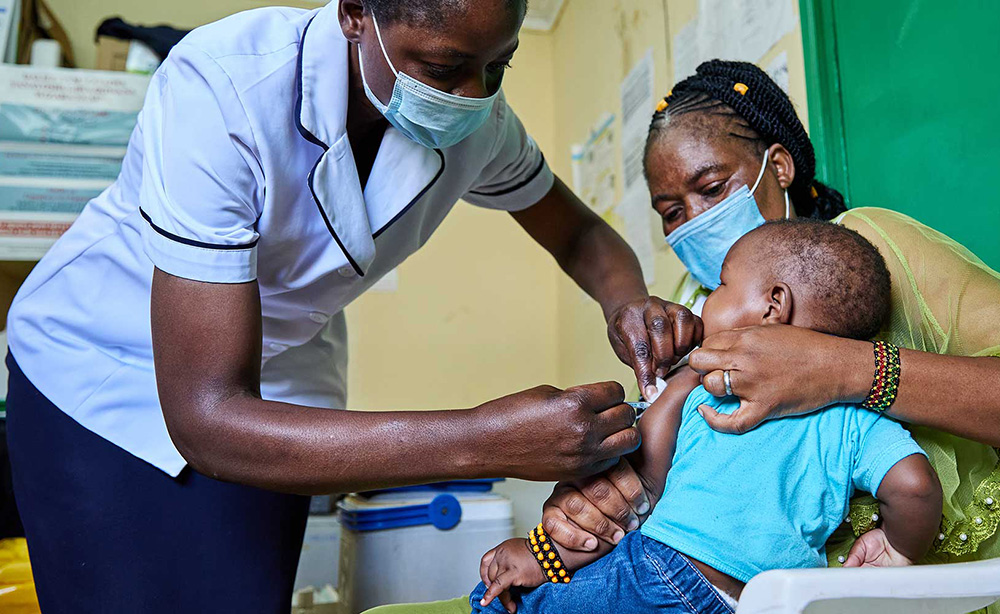
“This is the largest malaria vaccine introduction globally. The vaccine is given in four doses at six, seven and eight months, with a final dose at 18 months, and completing all doses is essential for effective protection,” Dr Baganizi said.
Ministry data shows that 67% of eligible children have received the second dose, while 47% have received the third. Health officials say follow-up mechanisms are being strengthened to reduce missed doses.
According to Baganizi, the milestone is attributed to community-based strategies involving village health teams (VHTs), community health extension workers (CHEWs), and religious and cultural leaders who are being scaled up to track children who miss appointments and encourage parents to complete the full vaccination schedule.
“Routine immunisation is one of the safest and most effective ways to protect children from serious diseases,” the Ministry said, urging parents and caregivers to ensure timely completion of all recommended vaccines.
Malaria admissions and deaths decline
The malaria vaccine rollout coincides with encouraging trends in malaria control nationwide, with hospitals recording a steady decline in admissions and deaths among children under five, a group that has historically borne the brunt of the disease.
Health ministry data shows that malaria admissions among children under five dropped from 390,911 cases in the 2022/2023 financial year to 302,949 cases in 2024/2025, a reduction of nearly 90,000 cases. Over the same period, deaths among hospitalised children declined from 2,321 to 1,249, representing an almost 50% reduction.
Dr Myers Lugemwa, the head of the Malaria Control Programme at the health ministry, said the gains reflect sustained investment in prevention, early diagnosis, effective treatment and, more recently, vaccination.
“These results show what is possible when prevention and treatment are strengthened together. The malaria vaccine is now adding another layer of protection for our most vulnerable children,” Lugemwa said.
Former Malaria Control Division chief Dr Jimmy Opigo said improvements in hospital management of severe malaria cases have also contributed to the decline in deaths.
“Hospitals are responding faster and more effectively to severe cases. We are also promoting preventive medicines because when parasites are cleared from people, mosquitoes have nothing to transmit,” he said.
In December 2025, the health ministry launched another wave of mosquito net distribution and has already started a nationwide campaign to distribute 25.8 million insecticide-treated mosquito nets free of charge to boost malaria prevention.
As of June 2025, insecticide-treated net coverage stood at 76% nationwide. Malaria incidence declined from 280 cases per 1,000 people in 2023/2024 to 260 per 1,000 in 2024/2025, a trend officials attribute to indoor residual spraying in West Nile and Bukedi, as well as seasonal malaria chemoprophylaxis in Karamoja.
Overall, the Health Sector Performance Report shows a 14.1 per cent reduction in malaria cases in the 2024/2025 financial year compared to the previous year. Despite the progress, officials acknowledge that low completion rates for later malaria vaccine doses could limit long-term impact if not urgently addressed.
Speaking on the malaria vaccine, health ministry permanent secretary Dr Diana Atwine emphasised the importance of completing all four doses to reduce severe illness and deaths.
She also highlighted the broader impact of immunisation, citing the vaccine as a key tool in preventing cervical cancer.
“If all parents and caretakers take our children for these vaccines, we will be a malaria-free country. Do not just do one uptake; go for all the doses. The vaccines are safe, and we are on top of that. Please use the normal old preventive methods like sleeping in a mosquito net and spraying, among others.” Atwine noted last week during a vaccine uptake press conference.