
Can gene drive technology help Uganda defeat malaria?
One of the biggest challenges is the adaptability of Anopheles mosquitoes. They are now biting earlier in the evening, resting outdoors, and developing resistance to insecticides, making traditional tools less effective. Even with 86% of households owning bed nets, malaria is still spreading.
Mosquito larvae are screened in a Petri dish in the Target Malaria lab. (Courtesy photo)
_________________
Malaria remains a major public health challenge in Uganda, even after years of progress. Between 2009 and 2018/19, the country reduced malaria prevalence among children under five from 42% to 9%, progress driven by the use of mosquito nets, spraying, and better access to healthcare and treatment.
But new data from the 2024–25 Malaria Indicator Survey by Uganda Bureau of Statistics shows a worrying reversal: prevalence has risen to 21%. In some regions, the situation is even more severe, reaching 59% in Lango, 46% in Acholi, and 44% in Teso.
One of the biggest challenges is the adaptability of Anopheles mosquitoes. They are now biting earlier in the evening, resting outdoors, and developing resistance to insecticides, making traditional tools less effective. Even with 86% of households owning bed nets, malaria is still spreading.
Scientists at institutions like the Uganda Virus Research Institute are now exploring new approaches, including gene drive technology. This technology aims to spread specific genetic traits through mosquito populations, either reducing their numbers or making them unable to transmit malaria.
Gene drive is not a replacement for existing tools, including sleeping under a mosquito net and indoor spraying, but it could become a powerful addition, especially because it is designed to be self-sustaining. However, it also raises important questions about safety, ethics, and community consent.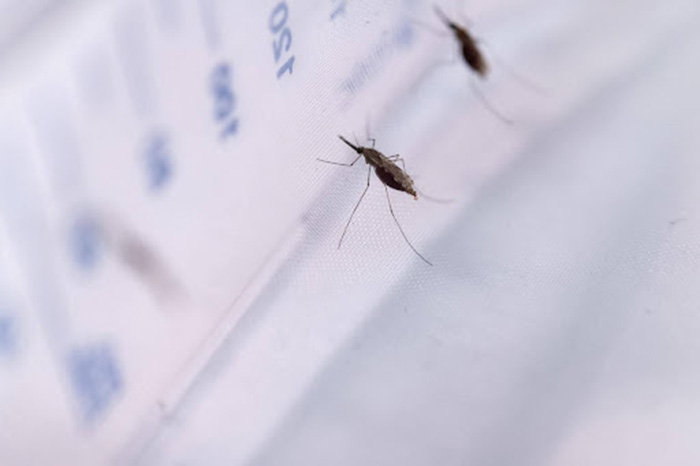
Anopheles mosquitoes in the Target Malaria lab. (Courtesy photo)
Gene drive technology has generated significant interest, but it has also raised questions.
Dr Jonathan Kayondo, Principal Investigator, Uganda Virus Research Institute, joined the New Vision podcast on X Spaces on Tuesday evening to address the most common questions and what it could mean for malaria prevention in Uganda.
What is gene drive?
Gene drive is a naturally occurring biological process that is being harnessed into the technology. In living organisms, gene drive increases the chance of inheritance of certain genes or traits. Gene drive is being researched to be a complementary tool to fight malaria in Africa, working alongside bed nets, insecticides, drugs and vaccines. By biasing the rate of inheritance of certain genes from one generation to another, gene drive can spread a modification to be passed on to all the mosquito population.
A natural mechanism for preferential inheritance of genes or traits during reproduction.
Consider a gene for horns in cattle occurring in two copies, one with horns and another without horns.
Ordinarily, without gene drive (preferential inheritance), if a bull comes in with both copies in his body, it can pass on one or the other to its offspring half the time. Half of the offspring could have horns, and the other won’t.
However, if one of the copies is under gene drive, all the offspring will have horns. The 50/50 inheritance of traits is not applicable anymore and if this continues down the generation the trait can quickly spread.
You could decide a trait that enables the mosquito not to pick up a parasite or spread the trait of infertility
How would it stop malaria transmission?
There are two gene drive strategies currently under investigation among various research teams in the world: either to reduce the number of malaria-carrying mosquitoes, or to stop the parasite from infecting the mosquitoes.
At Target Malaria, we focus on the first approach. It is important to note that we do not target all mosquito species, but focus on the main malaria-transmitting Anopheles species.
We find a way to reduce their ability to reproduce using genetic methods.
Anopheles gambiae is one of the main mosquito species responsible for transmitting malaria in Uganda, and it commonly carries Plasmodium falciparum, the parasite that causes severe malaria in humans.
What stage is the science at today?
Gene drive mosquitoes are being researched in controlled laboratory settings in Europe and the United States. There are currently no gene drive mosquitoes in contained laboratory in Africa. Gene drive mosquitoes have so far never been released in the wild.
We hope to conduct gene drive field trials by 2030 in a malaria-endemic African country like Uganda.
Are there gene drive mosquitoes in Africa at the moment?
No release can take place without regulatory approval. At present, all gene drive research takes place in controlled conditions in the lab.
What are the biggest safety concerns?
What could go wrong with gene drive, and how are scientists and regulators working to prevent unintended consequences?
There are plants that rely on mosquitoes for pollination.
Some hypothetical unintended consequence could also be that modified mosquito is a better transmitter of something else that we don’t know. But usually, we do the safety studies as part of the development pathway, and we challenge them with many things we think they can transmit.
Because we are a consortium, we work with partners who have gone in-depth in understanding the ecological equation.
Target Malaria is one of the research projects developing gene drive mosquitoes. Part of a consortium of research institutions in Africa, Europe and North America, Target Malaria researchers and scientists are working to reduce the population of malaria mosquitoes, because fewer mosquitoes carrying malaria would mean stopping the transmission of the disease.
Who decides if it is used?
In terms of deploying it, it is a case-by-case. This is most likely going to be the Ministry of Health and vector control groups.
For commercial production, it is also designed in such a way that an individual can buy them for their compound.
Is gene drive the same as genetically modified crops?
No. While both involve genetics, gene drive research in malaria is focused on mosquito populations, not crops, not humans, and not livestock

Dr Jonathan Kayondo, the Principal Investigator at the Uganda Virus Research Institute. (Courtesy photo)
At this year’s 39th African Union Summit in Ethiopia, African Heads of State and Governments issued a unified call for a new era of malaria financing, warning that progress is at risk.
The 2025 Africa Malaria Progress Report shows that Member States accounted for 270 million malaria cases in 2024 - 96% of the global total. It cautions that without urgent and sustained investment, the continent could lose decades of hard-won gains.
The consequences of inaction have serious costs. The report indicated that a projected 30% reduction in funding could result in 640 million fewer insecticide-treated nets, 146 million additional malaria cases, and nearly 400,000 more deaths - three-quarters of them children under five. Economically, this would translate into an estimated USD 37 billion loss in GDP by 2030.
In response to these challenges, African researchers are studying complementary and innovative approaches to strengthen malaria control.
Will gene drive eliminate all mosquitoes?
No. There are more than 3,500 species of mosquitoes worldwide. Only Anopheles mosquitoes can transmit malaria and only three to four Anopheles mosquitoes are responsible for the most of malaria transmission in Africa. Gene drive research targets specific malaria-carrying species: An. coluzzii, An. gambiae, An. arabiensis, An. funestus. The goal is not to eliminate all mosquitoes, but to reduce the population of those species enough to stop the transmission of the disease.
From a malaria control perspective, you need a toolkit.
For example, there is an 86% household mosquito net ownership in Uganda and 83% pregnant women coverage but the new survey suggests these are not fully efficient.
Is gene drive technology safe?
At Target Malaria, safety is our priority. We perform studies in our laboratories and insectaries to ensure our technology is safe and effective.
Gene drive research follows international and national regulations, ethical review processes, and international guidance. Before any future use, extensive testing, risk assessment, submissions of regulatory dossiers and community engagement would be required.
All phases of our work and anywhere in the world complies with the biosafety laws of the countries where we conduct our research.
Why research gene drive at all, and why Africa?
Malaria remains a major public health challenge, especially in Africa. According to the World Health Organisation, malaria is the main cause of death for children under five and a huge economic burden on the countries where it is endemic (estimated at $ 16 billion a year).
Despite tools such as insecticide-treated nets, indoor spraying, vaccines, and medicines, malaria cases remain high. Insecticide resistance in mosquitoes and drug resistance in parasites are increasing concerns because they are rendering the current tools ineffective.
A new study published in the journal Nature projects that climate change could cause an additional 500,000 deaths and 123 million clinical cases of malaria in Africa over the next 25 years.
Researchers are exploring gene drive as a potential complementary tool, not a replacement, to strengthen existing malaria control efforts.
Target Malaria’s approach combines long-term, self-sustaining impact with precise targeting of malaria-transmitting mosquito species, offering a complementary tool that is not reliant on insecticides and is developed through a strong framework of regulation, transparency and community engagement in the countries most affected by the disease.