
Busoga leads bold push to eliminate malaria as Uganda shifts strategy
Dr Olaro noted that 75 percent of the disease burden currently overwhelming hospitals such as Iganga General Hospital Nakavule, could be managed or prevented at the household level.
The Director General of Health Services in the Ministry of Health Dr. Charles Olaro (front row 5th right) joined by other stakeholders in the fight against Malaria, posing for a group photograph with CHEWs while at celebrations to mark World Malaria Day at Bulamaji sub-county headquarter ground in Iganga district. (Photos by Donald Kiirya)
________________
In a landmark event that combined the commemoration of World Malaria Day with the graduation of over 100 Community Health Extension Workers (CHEWs), the Ministry of Health has issued a rallying call to Ugandans, particularly those in the Busoga sub-region, to transition from merely managing malaria to completely eliminating it.
Presiding over the function at Bulamaji subcounty grounds in Iganga district on April 24, 2026, on behalf of health minister Jane Ruth Aceng, Dr Charles Olaro, the director general of health services at the health ministry, emphasised that zero malaria deaths is no longer just a theme but a firm government commitment.
Marie Gorreti Zalwango (middle), a Malaria Specialist with the Makerere University Joint AIDS Program explaining malaria statistics in Busoga to the Director General of Health Services in the Ministry of Health Dr. Charles Olaro (right) during the inspection of stalls while at celebrations to mark World Malaria Day. 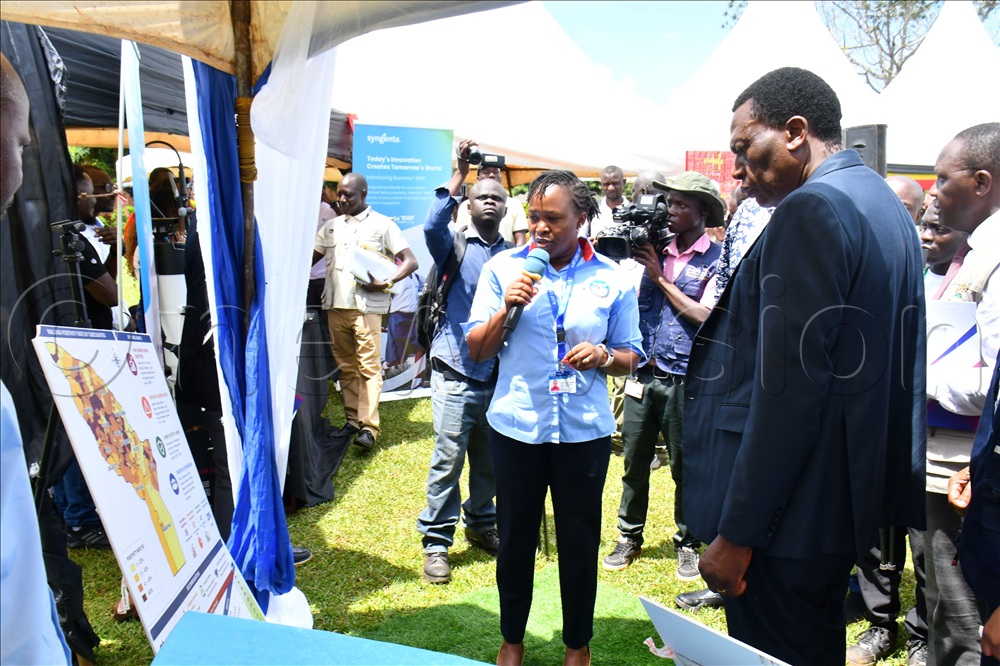
The celebrations, organised by the Ministry of Health in partnership with Busoga Health Forum (BHF), were held under the theme “Driven to End Malaria: Now we can, now we must.”
"Today is a double milestone, we are passing out 105 Community Health Extension Workers (CHEWs) who are the engine of our health system. Their chief responsibility is to respond to malaria and ensure no Ugandan dies from a preventable, treatable disease," Dr Olaro stated.
A holistic battle plan
The government’s strategy is shifting towards a bottom-up model, focusing heavily on primary healthcare and household-level intervention.
Dr Olaro noted that 75 percent of the disease burden currently overwhelming hospitals such as Iganga General Hospital Nakavule, could be managed or prevented at the household level.
To empower the new graduates, the Ministry announced the provision of a comprehensive toolkit, including tablets for real-time data reporting, medical supplies such as glucometers, blood pressure machines and malnutrition (MUAC) tapes, as well as bicycles to enable workers to reach every household in the sub-region.
Dr. Charles Olaro (middle), the Director General of Health Services in the Ministry of Health in a group photograph with pupils of Buckley High School while at celebrations to mark World Malaria Day at Bulamaji sub-county headquarter ground in Iganga district. 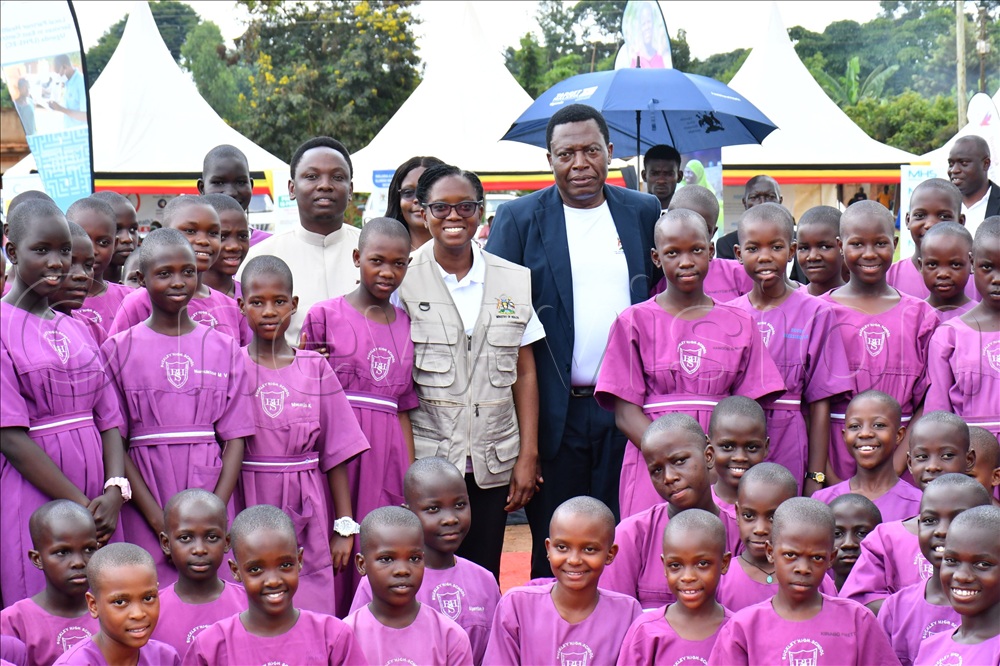
Dr Olaro urged communities to stop viewing health as solely a government responsibility.
The Busoga model
Addressing the gathering, Prof. Peter Waiswa, chairman of the Busoga Health Forum, said malaria elimination is no longer a distant ambition but a demonstrable reality.
He cited a breakthrough study conducted in Tororo district by the Infectious Diseases Research Collaboration and the University of California, San Francisco.
"In communities where indoor residual spraying (IRS) and new anti-malarial treatments were tested, the researchers were shocked—low birth weight among pregnant women reduced by 85%, while premature and neonatal deaths dropped by at least 90%," Prof. Waiswa noted.
He said tackling malaria would simultaneously address maternal and child health challenges, improve school performance and reduce poverty.
A royal call to action
Prof. Waiswa conveyed greetings from the Kyabazinga, William Gabula Nadiope IV, and the Inhebantu, Jovia Mutesi.
He said the Inhebantu has expressed a strong interest in championing a new campaign for improved livelihoods and health in Busoga, describing it as a powerful opportunity for transformation.
He also delivered a message from the Kyabazinga, who founded the BHF, highlighting the region’s unique geography, which both supports livelihoods and creates favourable conditions for mosquito breeding.
This paradox, he said, led to the formation of the Busoga Health Forum to bring professionals together to improve regional health outcomes.
Prof. Waiswa highlighted recent successes, including Busoga achieving the highest vaccine uptake in Uganda during the COVID-19 response, the treatment of over 12,000 people during a joint medical camp held alongside the royal wedding, and collaborations with Swedish partners to strengthen emergency care for children across the region.
To sustain momentum, he presented three key requests to the Ministry of Health, including government support to scale the Busoga malaria elimination model nationwide, the establishment of a second regional referral hospital in Busoga alongside a dedicated blood bank and the upgrading of Nalufenya Children’s Hospital, as well as the signing of a Memorandum of Understanding between the Ministry and BHF.
Former Vice President Dr Specioza Wandira Kazibwe, who serves as the BHF Malaria Champion and Presidential Advisor on Population and Health, called for a holistic approach.
She introduced a diverse team of stakeholders, from researchers and statisticians at Makerere University to RDCs and Members of Parliament, to demonstrate that malaria is both a social and economic challenge.
Dr Kazibwe said that through the Busoga Health Forum, she supported malaria interventions in the region, including a pilot comprehensive approach involving community engagement, indoor and outdoor spraying, mass testing and treatment, and mosquito surveillance in Nawaningi subcounty in Iganga District.
"Malaria reduced by over 90%, and most malaria in the subcounty now is imported from areas where we are yet to intervene," she added.
Former Vice President Dr. Specioza Wandira Kazibwe (middle) who serves as the Busoga Health Forum Malaria Champion and Presidential Advisor on Population and Health introducing Prof. Peter Waiswa (right), the chairman Busoga Health Forum, before guests, while at celebrations to mark World Malaria Day at Bulamaji sub county headquarter ground in Iganga district. 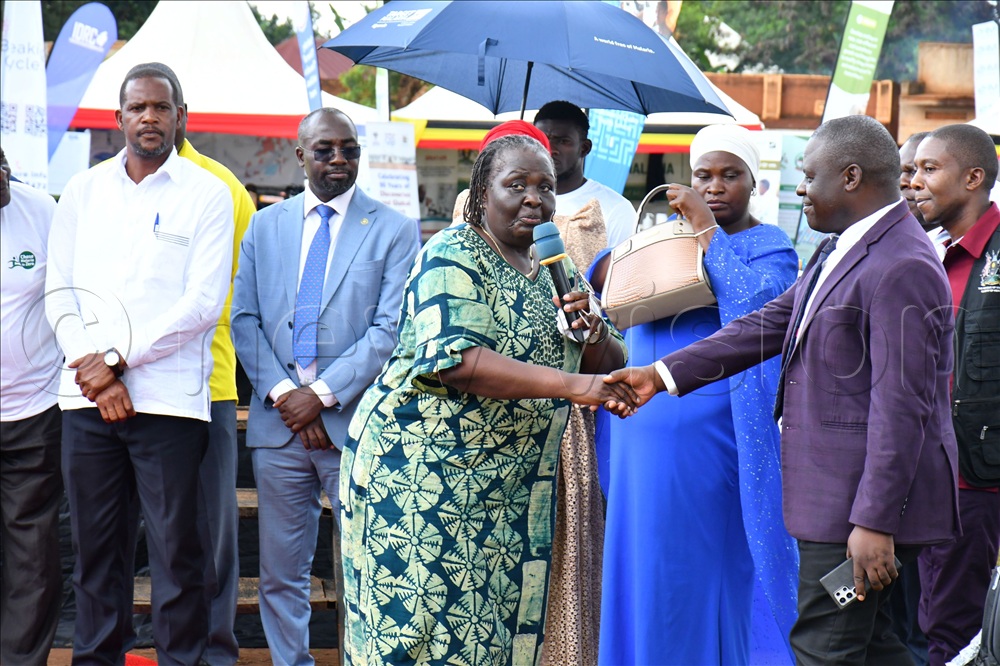
Marie Gorreti Zalwango, a malaria specialist with the Makerere University Joint AIDS Program (MJAP), said Busoga currently records some of the highest weekly malaria caseloads in Uganda.
Districts such as Iganga, Luuka, Kamuli and Kaliro remain among the top ten most affected nationwide.
Zalwango identified several challenges, including misuse of mosquito nets, environmental factors such as rice and sugarcane farming in swampy areas that create breeding grounds for mosquitoes, and vaccine hesitancy driven by myths and misconceptions among some mothers.
A global call to action
The World Health Organisation disease prevention lead, Dr Christine Musanhu, representing the WHO country director, Dr Kasonde Mwinga, said that while global progress has been made, including the delivery of 52 million vaccine doses since 2023, a funding gap of $45 billion remains for the 2026 to 2030 period.
"Ending malaria is truly within reach in our lifetime, but it requires increased domestic funding and collective responsibility. Zero malaria starts with me, and it starts with you," Dr Musanhu noted.
The ceremony concluded with a directive to the newly graduated CHEWs to champion malaria elimination, ensuring that no child suffers from fever for more than 24 hours without receiving professional care.
Various stakeholders, including non-governmental organisations involved in malaria control, showcased equipment and shared information on prevention and treatment.
Present at the event were Dr Richard Kabanda, commissioner for health services, health promotion and education at the Ministry of Health, Dr Daniel Kyabayinze, director for public health, Dr Joseph Okware, Dr Fred Semitala, executive director of MJAP, Dr Christine Musanhu from the World Health Organisation, cultural leaders, civil society representatives, Iganga district officials and residents, among others.