
Angagura HCIII gets new OPD block after 25 years but waste gaps persist
The new OPD block was funded by ARPE Limited, a company involved in the construction and operation of hydropower projects in northern Uganda.
Community members, health workers, ARPE Limited staff and Pader District local government staff during the handover of OPD block at Angagura HCIII in Pader District. (Credit: Johnisani Ocakacon)
_______________
Angagura Health Centre III in Angagura subcounty has received a new, fully equipped outpatient department (OPD) block after 25 years, a development expected to improve healthcare delivery and strengthen efforts to address nodding syndrome and other illnesses affecting communities in Pader district.
The new OPD block was funded by ARPE Limited, a company involved in the construction and operation of hydropower projects in northern Uganda. The project is part of the company’s corporate social responsibility programme supporting communities around the Aswa I and II dams in Angagura subcounty.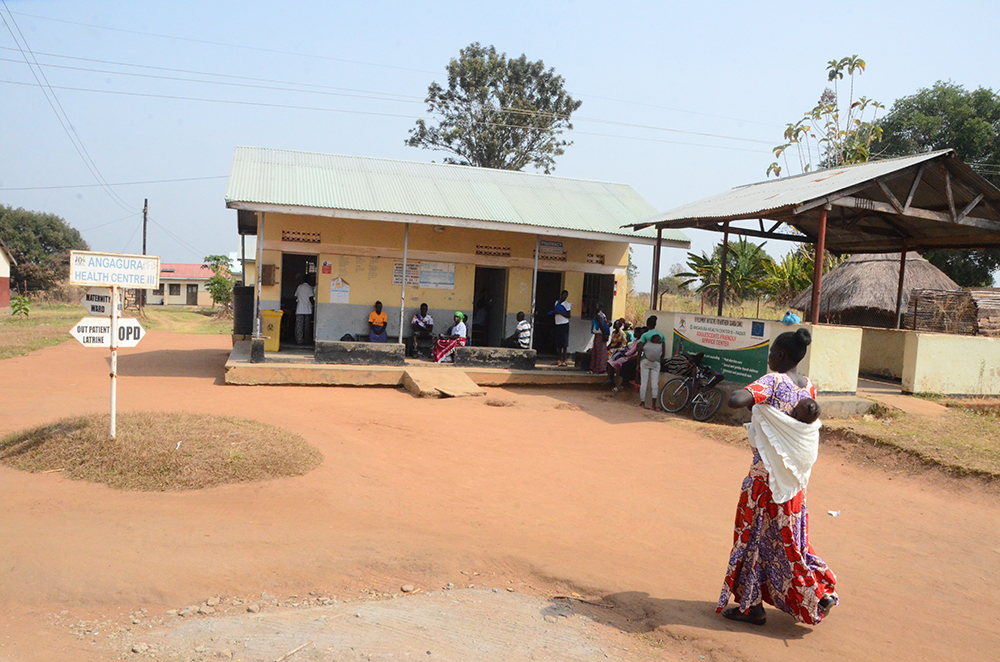
Old OPD block that was constructed by the government during the IDPs settlement camps that was serving catchment population of 12,000 in Pader District. (Courtesy)
The facility was officially handed over to the Pader district health department and Angagura Health Centre III during a ceremony held under the theme “Creating impact by improving health services.”
Joshua Ggoobi, the plant manager for Aswa I and II at ARPE, said the project cost sh150 million and covered both construction works and procurement of medical equipment to enhance patient care at the facility.
“The OPD is equipped with modern medical machines to help health workers fight common diseases in the community. That is why we agreed to construct a new OPD block at Angagura HCIII to serve people within a 10-kilometre radius of the Aswa project area,” he said.
Ggoobi said they opted to invest in a long-term project that would benefit mothers, children and adults who depend on the health centre, while also strengthening relations with the surrounding community.
“We have supported the facility with a CBT machine, sterilisation equipment, refrigeration units, air-conditioning equipment and other pharmaceutical machinery donated to Angagura Health Centre III,” he added.
He noted that the project will significantly improve access to healthcare for vulnerable communities.
Ggoobi further said the company has supported schools in the sub-county by constructing classrooms, donating desks and promoting girl-child education.
Samson Ocaya, the in-charge of Angagura HCIII, said the health centre had been operating from an old OPD block built about 25 years ago when residents were still living in internally displaced persons camps.
Ocaya said the facility serves a catchment population of more than 12,000 people, all of whom were previously treated in a small structure that made service delivery difficult. He noted that the facility screens more than 80 patients daily.
“This is a modern OPD block with well-equipped machines. I believe this health centre can grow into a referral facility with a first-class laboratory and complete blood count machines. In Pader, such machines are currently available only at Pajule HCIV,” he said.
However, Ocaya revealed that the facility still lacks an incinerator and a placenta pit, expressing hope that development partners would support their construction to improve sanitation and medical waste management.
He added that Angagura HCIII serves residents from Atanga subcounty, Atanga town council and parts of Cwero in Gulu district.
Ocaya said malaria cases have declined due to increased community awareness campaigns, while respiratory tract infections are now the most common illnesses recorded at the facility.
“Due to the overwhelming number of patients seeking treatment, drug supplies often run out, forcing patients to buy medicines from recommended drug shops,” he said.
Pader district health officer Dr Benson Oyoo urged health workers and the community to properly utilise the new OPD block to improve service delivery.
He warned health workers against misusing donated medical equipment and urged them to ensure it is used strictly for patient care.
“In case of any fault in the medical machines, we have medical engineers at Gulu Regional Referral Hospital who can repair them quickly. We want to ensure the machines remain functional to reduce the burden of patients travelling long distances for treatment,” he said.
Leaders react
Frederick Stephen Okello, the LC3 chairperson of Angagura subcounty, said the facility still faces challenges, including drug shortages, lack of staff accommodation and the absence of admission wards, despite the high number of patients.
Okello appealed to the government to upgrade Angagura HCIII to health centre IV status, citing the growing population and its strategic location along the Gulu to Kitgum highway.
Dickson Ojok, the area councillor for Angagura subcounty, said the lack of a placenta pit and an incinerator exposes the community to disease risks due to poor medical waste management.
“This health centre was originally built as a Health Centre II without an incinerator and a placenta pit. Medical waste is being exposed to the community. This must be addressed urgently to improve hygiene and sanitation,” Ojok said.
Pader district secretary for health, Philips Ojok Adonga, warned health workers against mistreating patients.
“It has been reported several times that some health workers are rude to patients. Stop this behaviour and follow your code of conduct and professionalism to improve healthcare services in the community,” he said.
Pader's chief administrative officer, Susan Adong, thanked ARPE Limited for supporting the district and urged both health workers and residents to properly utilise the new facility.
Community speaks out
Patrick Oringa, a resident of Angagura trading centre, said frequent drug shortages force patients to buy medicine from private drug shops, sometimes exposing them to risks.
Nighty Adong, another resident, said patients are often referred to Gulu Regional Referral Hospital during complications, but the new equipment is expected to reduce referral costs and improve healthcare services across Angagura subcounty.