
30 Danish medics in Uganda for medical research, tourism
The head of the International Legal and Social Affairs Department at the Ministry of Foreign Affairs, John Leonard Mugerwa, said cooperation between the two countries has spanned several decades and covers multiple sectors.
Margaret Mutembeya Otteskov, Uganda's Ambassador to Denmark addressing the Danish delegation in Kampala. (Photos by David Lukiiza)
________________
A team of 30 Danish medical specialists in tropical diseases is in Uganda for medical research and tourism, with the Ministry of Foreign Affairs attributing the visit to longstanding bilateral relations between Uganda and Denmark.
The head of the International Legal and Social Affairs Department at the Ministry of Foreign Affairs, John Leonard Mugerwa, said cooperation between the two countries has spanned several decades and covers multiple sectors.
“First and foremost, I would like to point out that the bilateral relations between Denmark and Uganda and the partnership that we have with them is longstanding. This partnership spans a number of sectors. We have agriculture, we have support in education, in health, in water and sanitation, development cooperation in general,” Mugerwa said.
Mugerwa made the remarks during a reception hosted by the Uganda Embassy in Denmark for the delegation of 30 Danish doctors held at Latitude Onomo Hotel in Kampala on January 10, 2026. The team is in Uganda for travel medicine seminars and field research in arbovirology and entomology.
“We also have a number of Danish companies which are investing and doing business in Uganda. So, when we have this delegation, which is being led from Denmark by our head of mission in Copenhagen, Margaret Mutembeya Otteskov and her team, it is part of the commercial and economic diplomacy focus that we are now looking at. And it's good that we have a team of doctors,” Mugerwa said.
He added that the specialists are expected to share expertise with Ugandan medical professionals in addressing tropical diseases, noting that Uganda continues to face a heavy burden of malaria and other communicable illnesses, as well as non-communicable diseases.
“So, we believe that this partnership will help us strengthen our health system and then also do some training and experience sharing, given many of these countries already phased out diseases like malaria, which we are still struggling with, and there's a lot to learn,” he added.
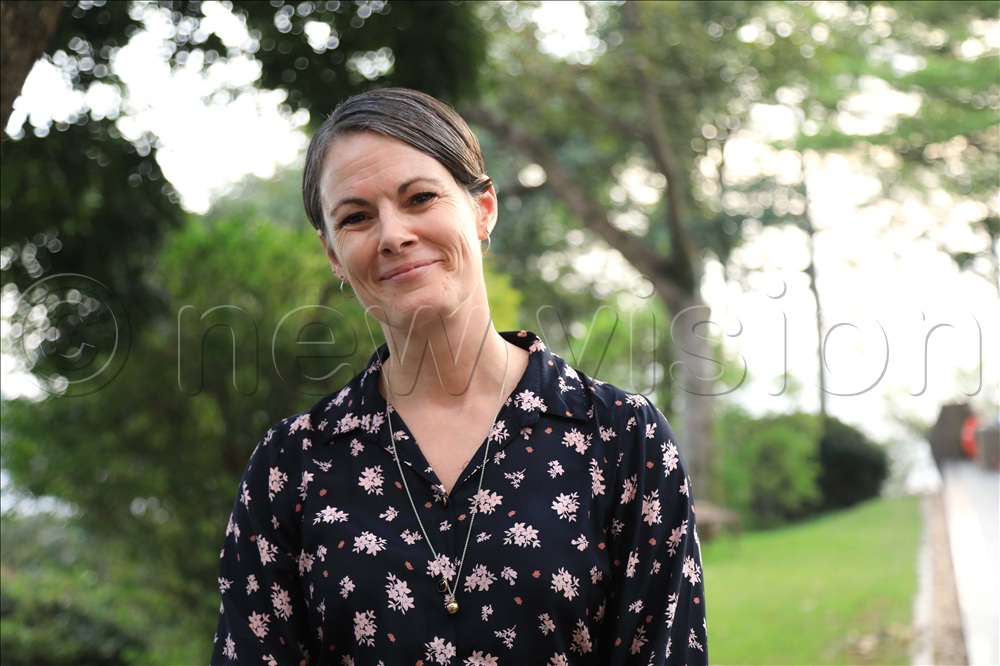
Ambassador of Denmark to Uganda H.E Signe Winding Alberg addressing the press during the Delegation meeting in Kampala.
During their 12-day tour, the team will also visit key tourism attractions, including Queen Elizabeth National Park and Bwindi Impenetrable National Park.
Uganda has identified tourism as a priority under its 10-fold growth strategy outlined in Vision 2040. The sector is projected to contribute at least 20 per cent of the targeted $500 billion gross domestic product within the next 15 years. According to government officials, partnerships of this nature are crucial to achieving that goal.
Mutembeya said the programme was arranged in collaboration with a German tour operator to expose Uganda’s tourism potential, particularly to Nordic and Baltic countries that have limited positive awareness of the country.
“When we talk about tourism, we have done a lot to bring the Nordics to Uganda to see the best, to see the positive part of Uganda, not the negative part of Uganda. We want them to come and physically enjoy the experience and see all the beautiful things about Uganda. Since they are also medical doctors, we all thought they should go and visit our health centres. With tourism being the biggest component in the whole arrangement, they will only visit Jinja Referral Hospital,” she said.
Dr Charles Olaro, the Director of Health Services, briefed the delegation on Uganda’s dual disease burden, which includes communicable diseases such as malaria, HIV and tuberculosis, alongside rising cases of non-communicable diseases like hypertension, diabetes and sickle cell disease.
Olaro said Uganda has the highest malaria incidence rate globally, recording 478 cases per 1,000 people annually.
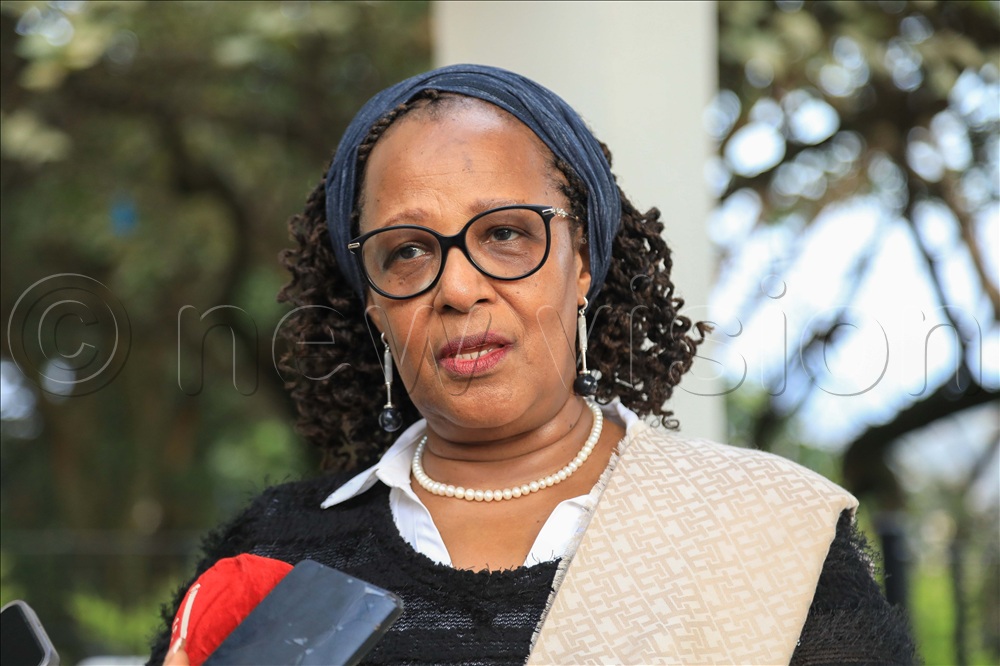
Margaret Mutembeya Otteskov Uganda's Ambassador to Denmark addressing Journalist during the delegations meeting in Kampala.
He added that more than 1.5 million Ugandans are living with HIV, with 94 per cent on treatment and 96 per cent achieving viral suppression.
According to Olaro, about 96,000 tuberculosis cases are reported each year, with HIV co-infection presenting a major challenge.
“Non-communicable diseases (NCDs) account for 30-40% of deaths, with hypertension affecting 1 in 4 Ugandans and diabetes affecting half a million. With Sickle Cells, six million Ugandans carry the gene, with 5,000 children born with the disease annually,” Olaro said.
“Uganda in the last 20 years has had several outbreaks of Ebola, and we have developed capacity. Now we can make a diagnosis, detect within 24 hours. And we can even do genomic sequencing within 24 hours. Like the outbreak which we had in January. We were able to see that it was not linked to the previous outbreak from Uganda,” Olaro said.
The chairperson of the Uganda Tourism Board, Juliana Kaggwa, said Uganda offers a rare combination of experiences that are difficult to find in one location elsewhere in Africa.
“So, the beauty of Uganda, because we sit on the equator and at the same time we boast of some of the highest locations on earth, like the peak of Mt Rwenzori, we have within there a wide range of biodiversity, whether it is animals or plants, the flora and fauna are unmatched by any other places in Africa. We are taking them on a very tight but very well-planned itinerary,” Kaggwa said.
Kaggwa said the Uganda Tourism Board’s ambitions go beyond the Vision 2040 target of five million tourists.
“If we want to contribute 20% of GDP by 2040, which is what is written into our National Development Plan right now and the Vision 2040, we are going to need a sizably bigger number than just five million tourists,” she said.
Bjarne Jensen, the director of Travel Advisory for Professionals and head of the delegation, said Uganda’s tourism potential could play a significant role in advancing the country’s development goals.