
Uganda risks losing identity if families abandon culture, says Ajarova
Ajarova said many young people are increasingly disconnected from their roots because parents are no longer intentionally passing on cultural values.
Uganda’s senior presidential advisor on tourism, Lilly Ajarova (4th left) in a group photo with other participants during the 20th anniversary celebrations of the Cross-Cultural Foundation of Uganda on Wednesday, May 20, 2026, at Hotel Africana in Kampala. (Courtesy)
______________
Uganda’s senior presidential advisor on tourism, Lilly Ajarova, has warned that Uganda risks losing its national identity if families and communities continue abandoning cultural values and traditions in favour of foreign lifestyles.
Speaking during the 20th anniversary celebrations of the Cross-Cultural Foundation of Uganda on May 20, 2026, at Hotel Africana in Kampala, Ajarova said many young people are increasingly disconnected from their roots because parents are no longer intentionally passing on cultural values.
“Our children these days are lost because we do not take the time to teach them our own culture,” she said.
“We let schools teach them international cultures, and then we are challenged by the characters of our own children.”
Her remarks came as cultural leaders, community museums, artists and heritage activists gathered to mark two decades of CCFU’s work in preserving Uganda’s cultural heritage under the theme: “Two decades of Safeguarding Uganda’s Heritage; Sustaining our Past, cultivating our future.”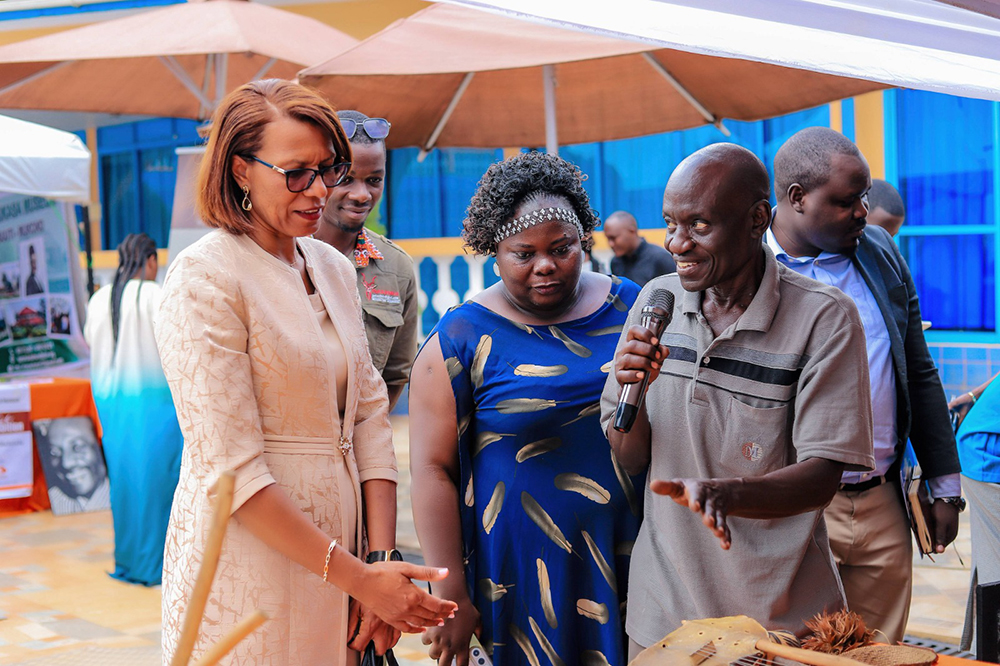
Uganda’s senior presidential advisor on tourism, Lilly Ajarova, listening to one of the exhibitors. (Courtesy)
Ajarova said culture should not be viewed merely as entertainment, ceremonies or artefacts, but as the moral foundation that shapes discipline, identity and social cohesion.
“Culture is more than performances or ceremonies. It is the moral compass of society,” she added.
“When we strengthen our cultural foundation, we strengthen the character of our nation.”
She further warned that growing imitation of foreign cultures was gradually eroding indigenous practices, including traditional food systems, dress and social values.
“When we visited some of the exhibitions and museums, we saw how our great-grandparents lived, what they ate and how organic their lives were,” she said.
“Today we are suffering from many diseases partly because we abandoned our traditional ways and want to imitate other cultures.”
The former tourism minister also challenged Ugandans to embrace and proudly market their culture locally before expecting international tourists to appreciate it.
“Let us not leave culture only for international tourists,” she said. “If we cannot tell our stories ourselves, it becomes difficult to attract the world.”
Ajarova revealed that global tourism trends increasingly show culture becoming one of Africa’s strongest tourism attractions alongside wildlife.
“For the last 10 years, tourism reports have consistently shown that people come to Africa mainly for wildlife and culture,” she said. “I will not be surprised if culture soon becomes the number one reason.”
She noted that Uganda’s cultural diversity remains one of the country’s biggest untapped tourism assets capable of creating jobs and driving economic growth.
Accordingly, Uganda earned nearly $1.7 billion (about sh6.4 trillion) from tourism in 2025, surpassing pre-pandemic performance, with the government now targeting massive growth under the National Development Plan IV.
“Uganda can only position itself as a distinctive global destination through our culture,” she said.
The anniversary celebrations attracted community museums, cultural enterprises and heritage groups from across the country, showcasing traditional attire, indigenous cuisines, herbal medicine, crafts and artefacts.
Unity in a divided world
CCFU executive director Barbra Babweteera said museums and cultural spaces are increasingly becoming important centres for dialogue and unity in a divided world.
“Museums are not merely spaces of preservation,” she said. “They are spaces of dialogue, education and inspiration.”
Babweteera said the exhibitions highlighted similarities among Uganda’s diverse communities, proving that cultural stories often transcend geography and ethnicity.
Exhibitors at the event also raised concern over declining appreciation for traditional practices, especially among younger generations.
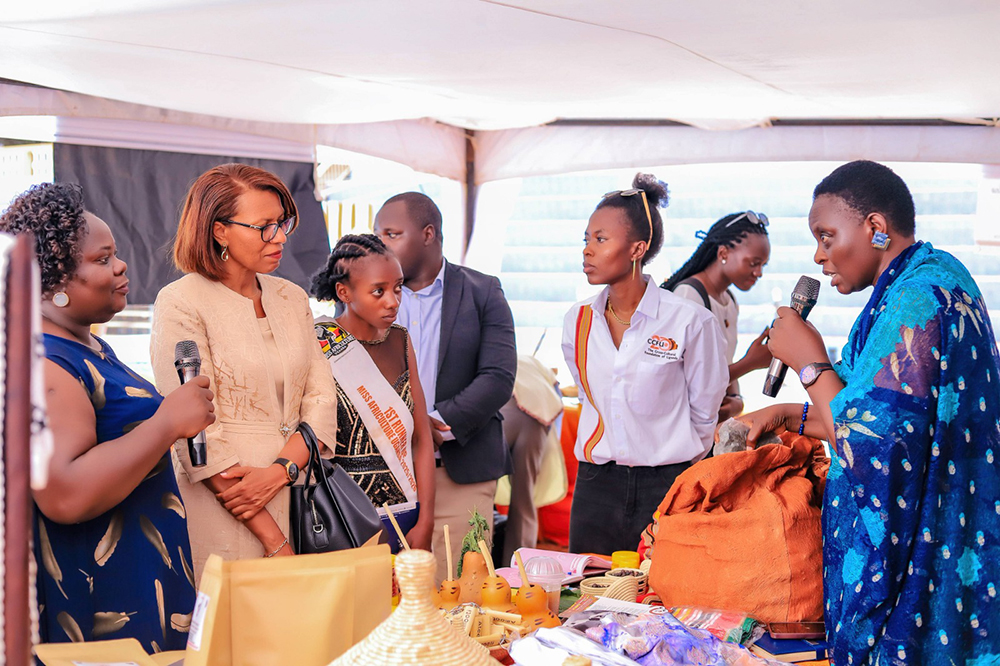
Alice Basemera, founder of the Koogere Foundation, takes visitors through cultural exhibits at her stall. (Courtesy)
Alice Basemera, founder of Koogere Foundation Uganda in Fort Portal, said many people still wrongly associate African culture with backwardness or satanism.
“Culture was dying because people neglected it,” she said. “Some thought culture was satanic, which is not true.”
Her organisation works with schools through cultural heritage clubs to teach children traditional values, dress codes, cuisine and storytelling while also creating income opportunities.
Basemera said cultural preservation should also be viewed as an economic activity capable of supporting livelihoods through traditional food, crafts and tourism.
However, she appealed for government and kingdom support to establish permanent cultural centres and museum spaces for preserving artefacts and indigenous knowledge.
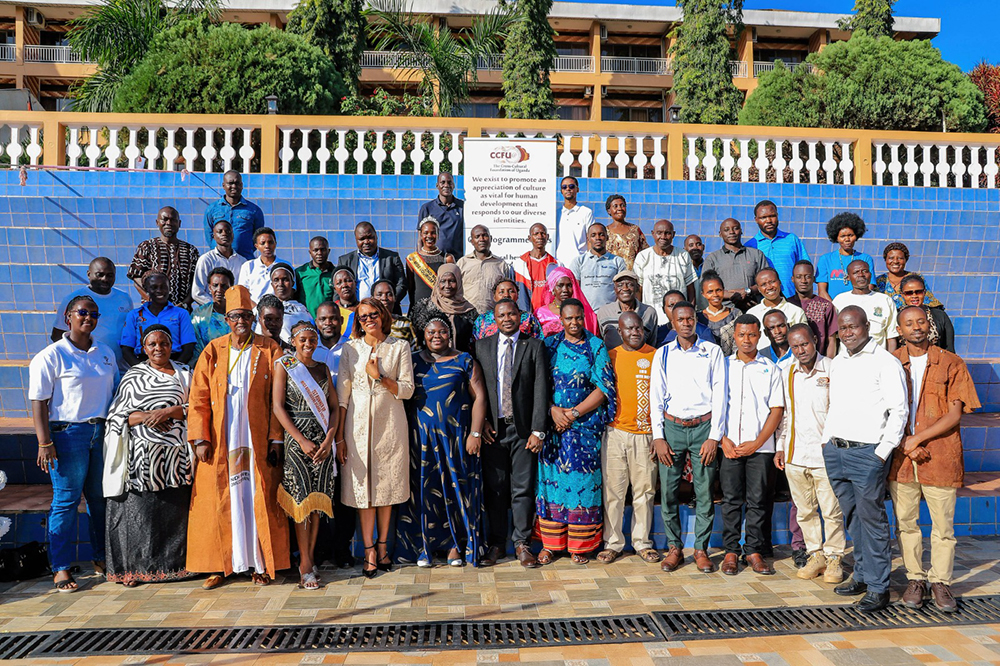
Uganda’s senior presidential advisor on tourism, Lilly Ajarova (5th left) in a group photo with other participants during the 20th anniversary celebrations of the Cross-Cultural Foundation of Uganda on Wednesday, May 20, 2026, at Hotel Africana in Kampala. (Courtesy)
Other exhibitors echoed similar concerns, saying cultural enterprises still struggle with limited funding, poor market access and negative perceptions towards traditional heritage.
Steven Kimuli Lubwama from Mukono said exhibitions such as the CCFU anniversary help cultural actors network and gain visibility.
Meanwhile, Dan Katwesige said westernised religious beliefs continue to fuel misconceptions about African traditions.
The event also featured the 7th National Heritage Awards, recognising individuals and organisations contributing to cultural preservation and promotion in Uganda.