
Uganda launches door-to-door mass malnutrition screening campaign
Health workers and village health teams (VHTs) have begun moving from household to household, using simple tools to assess children’s nutritional status and refer those found malnourished to nearby health facilities for treatment.
At the launch of the campaign in Kiryandongo district on Thursday (March 19), officials warned that cases of acute malnutrition, especially among children, have been rising in recent months. (Credit: John Musenze)
KIRYANDONGO - The Ugandan government has launched a nationwide door-to-door malnutrition screening campaign targeting children in refugee settlements and host communities, in a major shift aimed at detecting and treating cases early before they become life-threatening.
The campaign, rolled out by the Ministry of Health with support from partners including UNICEF, UNHCR and the World Food Programme, will cover 13 refugee-hosting districts and is expected to reach more than 20,000 children suffering from acute malnutrition.
Health workers and village health teams (VHTs) have begun moving from household to household, using simple tools to assess children’s nutritional status and refer those found malnourished to nearby health facilities for treatment.
Officials said the approach marks a departure from the traditional system where caregivers had to bring children to health centres often too late.
“This is a shift from what we have been doing,” said Samalie Namukose, Assistant Commissioner for Nutrition at the Ministry of Health. “We are not waiting for children to come to health facilities. We are going to the households, identifying cases early, and ensuring they get the care they need.”
The intervention comes as Uganda faces a worsening malnutrition crisis, particularly in refugee-hosting districts where pressure on health services has intensified due to a growing population and reduced humanitarian funding.
At the launch of the campaign in Kiryandongo district on Thursday (March 19), officials warned that cases of acute malnutrition, especially among children, have been rising in recent months.
“We are seeing a sharp increase in the number of children who are wasted across the country. The situation is more pronounced in refugee settlements and host communities," said Namukose.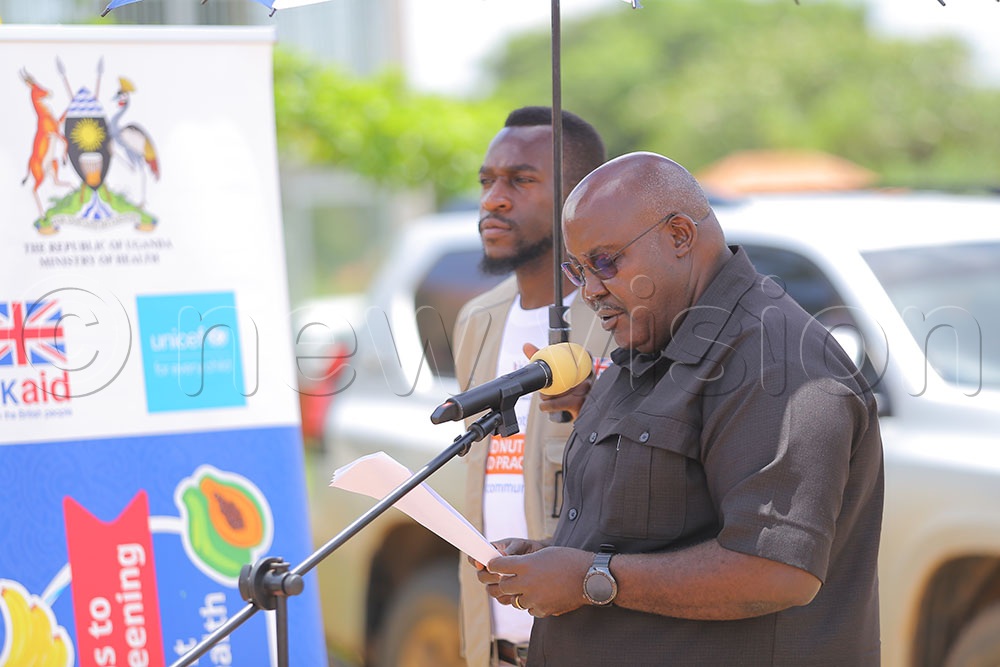
Kiryandongo Chief Administrative Officer, Anslem Kyaligonza, remarks during the mass malnutrition screening launch on March 19 at Kiryandongo district headquarters. (Credit: John Musenze)
'Burden is enormous'
Uganda hosts close to two million refugees, one of the largest refugee populations globally, placing additional strain on already limited health and nutrition systems.
In Kiryandongo, refugees account for more than 45 percent of the population.
According to acting district health officer Dr. Irene Nabitaka, the district has about 365,000 residents, including 165,000 refugees from countries such as South Sudan, the Democratic Republic of Congo, Sudan, Eritrea and Burundi.
“The burden on our health system is enormous. We have only 38 percent staffing levels overall, and just 30 percent in nutrition. We don’t even have a district nutritionist.”
Nabitaka said malnutrition remains one of the leading health concerns in the district, with a Global Acute Malnutrition rate of 8 percent, an alert level under international standards.
The situation is compounded by disease outbreaks such as measles and mpox, which continue to affect both refugees and host communities.
Nationally, the scale of malnutrition remains significant. More than 2.4 million children under five are stunted, reflecting long-term nutritional deficiencies that can lead to permanent physical and cognitive damage.
About 29 percent of children are affected, while anemia remains widespread among young children and women.
In refugee-hosting districts, the burden is even higher, with estimates showing over 114,000 children and 13,000 pregnant and breastfeeding women suffering from acute malnutrition.
Despite the need, access to treatment has been limited. According to the Ministry of Health, only 48 percent of severely malnourished children are currently receiving care.
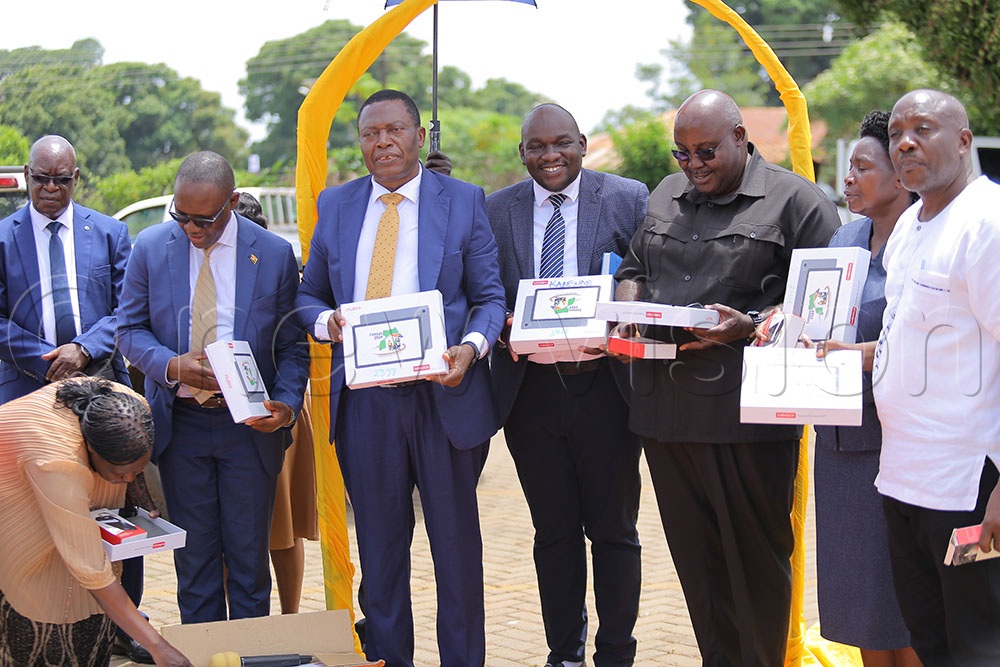
Director General Charles Olaro, together with health workers from the refugee communities, receiving tablets for the mass screening. (Credit: John Musenze)
“That means more than half of the children who need life-saving treatment are not getting it,” said Namukose.
The door-to-door campaign is intended to close this gap by bringing services closer to communities. Using Mid-Upper Arm Circumference (MUAC) tapes, VHTs can quickly identify malnourished children and refer them for treatment.
Children diagnosed with malnutrition will receive comprehensive care, including therapeutic feeding, vitamin A supplementation, deworming, immunization, and treatment for underlying illnesses.
The campaign is backed by $5.4 million (about sh19b) in funding and includes the procurement of therapeutic foods such as Ready-to-Use Therapeutic Foods (RUTF) and specialized formulas for severe cases.
Health facilities have also been equipped with additional staff and digital tools to improve data collection and response.
However, the intervention is being implemented amid significant challenges, particularly the withdrawal of donor support that has historically sustained many services in refugee settlements.
In Kiryandongo, several implementing partners have scaled down or closed operations following funding cuts, leaving gaps in staffing, food assistance and service delivery.
Chief administrative officer Anslem Kyaligonza said the reductions have had a direct impact on household welfare and nutrition.
“Food rations have been cut and cash support has reduced. When families do not have enough food or income, children are the most affected.”
Health officials said these funding gaps have contributed to rising malnutrition levels and increased pressure on health facilities. Despite the challenges, the government says it is committed to ensuring that the campaign reaches all vulnerable children and that no one is left behind.
Dr. Charles Olaro, the director general of health services, who represented health minister Dr Jane Ruth Aceng at the launch, said early detection is key to preventing severe illness and death.
“Children with severe malnutrition are at a much higher risk of illness and death if they do not receive timely care. This campaign will help us identify cases early and manage them before they worsen."
Olaro also emphasised the need for sustained efforts beyond the campaign period, urging health workers to integrate nutrition screening into routine care.
“Screening should not stop with this campaign,” he said. “We must continue to assess nutrition in our communities and health facilities.”
He added that community involvement will be critical to the success of the initiative, particularly in addressing stigma that may prevent families from seeking help.
“There are cases where parents hide malnourished children due to stigma. We must ensure that every child is reached and receives the care they need.”
The campaign will run for one month, but officials say it is part of a broader strategy to strengthen both treatment and prevention of malnutrition.
“We don’t want children to become malnourished in the first place. We are promoting breastfeeding, proper feeding practices and better nutrition at household level," said Namukose.