
Iteso cultural union launches gender, family guidelines to eradicate harmful norms
Presiding over the official launch of the guideline at King George Stadium in Tororo municipality on Tuesday, Emorimor Papa Iteso Paul Sande Emolot said the function marked a significant milestone in strengthening family life and protecting our community from harmful practices such as SGBV.
Emolot (C) in yellowish cultural attire with other cultural leaders and dignitaries cut masking tape to launch the book on Tuesday. (Credit: Fasustine Odeke)
The Iteso Cultural Union has launched gender and family guidelines aimed at eradicating harmful cultural norms and practices that perpetuate Sexual and Gender-Based Violence (SGBV) among the Iteso community.
The guidelines developed through financial support from the International Justice Mission (IJM) intend to preserve and protect the Iteso culture in line with human dignity, promote peace, equality, and harmony within families.
It also intends to clarify customary marriage practices to prevent misuse or misinterpretation, to ensure the coexistence and continuity of the family.
The guidelines will also strengthen community structures, support family welfare and protect women, men, and children from harm, besides aligning the Iteso culture with national and international human rights standards.
Presiding over the official launch of the guideline at King George Stadium in Tororo municipality on Tuesday, Emorimor Papa Iteso Paul Sande Emolot said the function marked a significant milestone in strengthening family life and protecting our community from harmful practices such as SGBV.
Emolot said for generations, some people have misinterpreted culture as a tool for oppression, particularly against women and girls, denying them the deserved opportunities, respect, and dignity.
“The culture of the Iteso, like that of our neighbours, has always attached great value to women and entrusted them with key responsibilities, especially in managing household resources and the family economy. Crops, produce, and the well-being of the household were, and remain, roles under the care of women, " he said.
He added, "There is no justification for denying women the rights and dignity that accompany these responsibilities. The Iteso tradition also supports justice and accountability for wrongs committed within the community. Acts such as rape, defilement, and domestic violence are condemned and subject to sanctions, both within customary structures and under the national legal system."
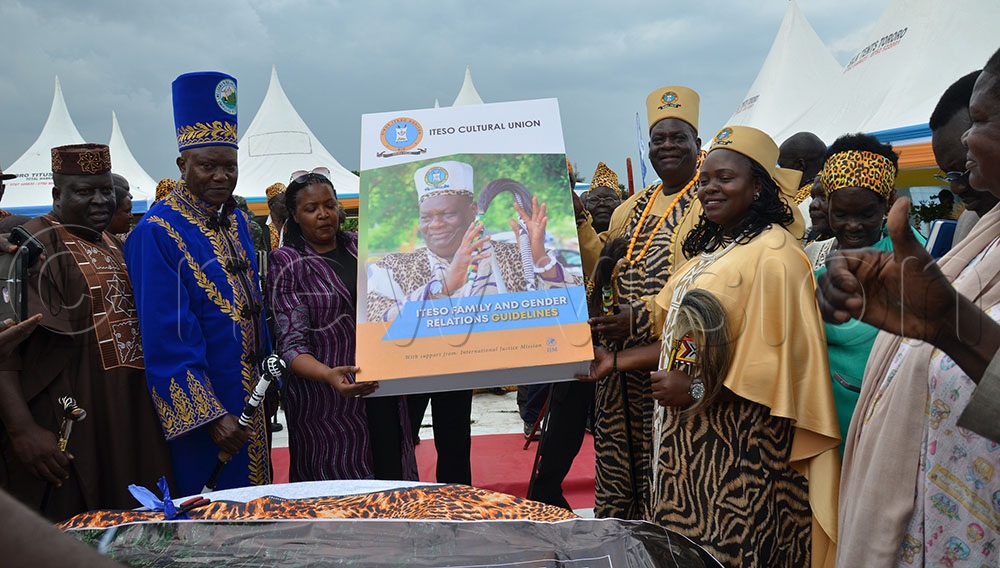
From left Obara, Mudoma, Kimani and Emolot display a copy launched book. (Credit: Faustine Odeke)
He said these guidelines have, therefore, been documented as a legacy for the current and future generations of the Iteso by providing guidance for families, communities, and leaders, and will also serve as a reference for development practitioners in their work to promote peace, gender equality, and sustainable development in the Teso sub-region.
"It is my hope that this document will contribute greatly to preserving the Iteso culture while protecting the dignity of all members of our community,’’ he said.
Juliet Among, her royal majesty, the queen of Iteso, called upon men to have mutual respect for their women and always have time for their families.
The launch was also attended by several dignitaries, including the Bugisu cultural leader, Mike Mudoma, and the King of Samia Bugwe, Robert Obara Nahaama III.
According to the 2024 baseline report commissioned by IJM titled ‘Strengthening the Criminal Justice System Protection of Women and Children in Uganda,’ 6 in 10 ever-partnered women have experienced physical or sexual violence in their lifetime, while 6 in 10 children in Uganda have experienced sexual assault.
The report shows that sexual violence against children is three times more prevalent among girls than boys.
IJM country director Wamaitha Kimani said the guidelines affirm culture as a powerful force; one that protects dignity of the vulnerable women and children, upholds justice and promotes co-existence in homes.
She commended the leadership of the Emorimor and Iteso Cultural Union for taking bold steps and unwavering commitment to eliminate gender-based violence.
"I am particularly encouraged by the recognition to report serious offences such as defilement, child marriages and gender-based violence," Kimani said.
The Iteso Cultural Union is now the third cultural institution that IJM has supported in developing such guidelines. Others are: that of Tieng Adhola in Tororo in 2023 and Obusinga bwa Rwenzururu in Kasese in 2024.
"We are walking this journey with the Tooro kingdom in Kabarole and the Pokot community in Amudat, recognising that while each context is unique, the shared goal remains the same; to re-imagine and transform harmful norms and practices that perpetuate violence," Kimani said.
The Samia cultural leader (Nahaama) called for peaceful co-existence between the Iteso and Samia as he began his tour of Buteba sub-county in Busia district, which is predominantly occupied by the Iteso.
The Bugisu cultural leader (Mudoma) commended the IJM initiative before calling for the same gesture to be extended to Bugisu since they share the same cultural norms with most of the other clans.