
Govt urged to do more to protect persons with albinism
In early March this year, Sylvia Nakiyemba, a 50-year-old woman with albinism from Nakatogo village in Kyotera district, survived an attack. But her sister, Margaret Nakabubi, also with albinism, was not as lucky. She was murdered in 2023.
The executive director of Albinism Umbrella Olive Namutebi (third right) poses for a group photo with persons with Albinism after a press conference in Kampala on May 29, 2026. (Credit: Francis Emorut)
The Ugandan government has been urged to do more to protect persons with albinism against ritual sacrifices.
In early March this year, Sylvia Nakiyemba, a 50-year-old woman with albinism from Nakatogo village in Kyotera district, survived an attack. But her sister, Margaret Nakabubi, also with albinism, was not as lucky. She was murdered in 2023.
Her body was discovered with her arm, breast, and private parts removed, and her body burnt. The case remains unsolved to this day, with no known arrests made nor prosecution.
In Malawi's capital Lilongwe, Chipiliro Laston, a 36-year-old man with albinism, was found murdered in early 2026 in what authorities believe was an attack for his body parts to be used in illegal trade. He had been missing since March 9 this year.
Over 20,000 people live with albinism in Uganda, where the genetic condition is recognized as a disability.
Many continue to face severe social stigma, risks of violence fuelled by witchcraft-related myths, and life-threatening skin cancer.
With their safety on the line, Esther Kyozira, the chief executive officer of the National Union of Disabled Persons of Uganda (NUDIPU), called for more interventions towards protection of persons with albinism.
She urged the Police to crack the whip on people who threaten their lives to the extent that some children with albinism fear to go school out of fear of being bullied or teased.
Albinism is notably more common in sub-Saharan Africa than in the rest of the world, with Uganda seeing a higher occurrence rate — sometimes estimated at one in 1,400 births in certain communities.
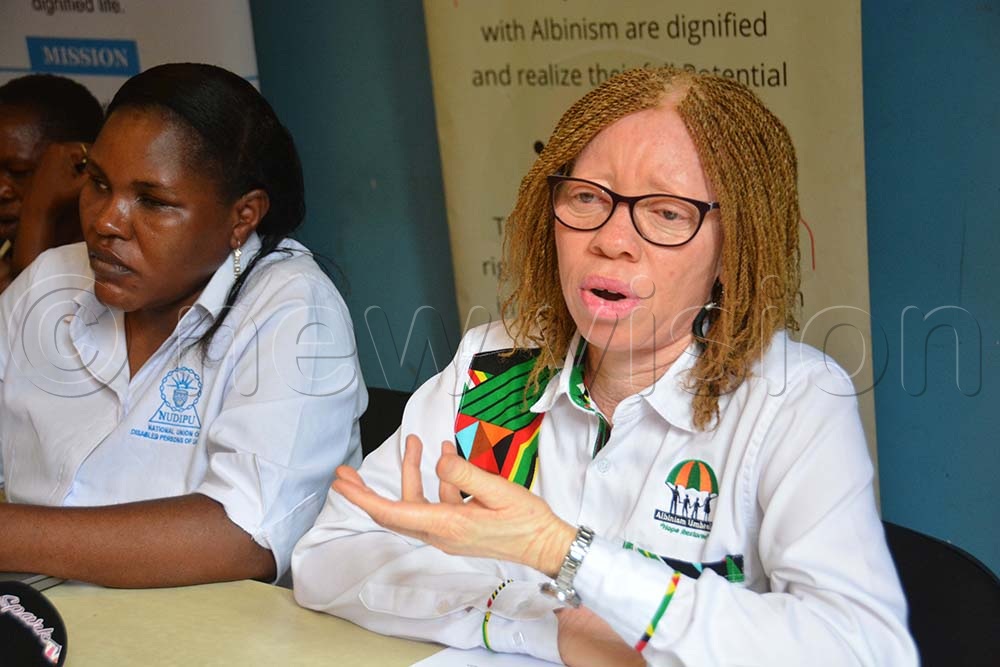
The executive director of Albinism Umbrella Olive Namutebi (right) and Esther Kyozira chief executive officer of NUDIPU addressing a press conference in Kampala on May 29, 2026. (Credit: Photo by Francis Emorut)
Because they lack protective melanin, Ugandans with albinism are highly vulnerable to the equator's intense sun, making high rates of skin cancer a major cause of premature death, according to studies.
In deeply superstitious societies in parts of sub-Saharan Africa, some people wrongly believe that body parts of people with albinism can be used in potions or charms to guarantee financial prosperity.
As a result, many people with albinism face severe human rights abuses, including abductions and ritual murders.
The Uganda Police Criminal Directorate's 2025 Annual Crime Report recorded 61 ritual sacrifice murders.
With the International Albinism Awareness Day, marked every June 13, around the corner, campaigners felt the need to voice the persistent struggles of people with albinism.
Nakiyemba, who survived an attack in Kyotera, was present at a press conference in Kampala held by NUDIPU and Albinism Umbrella on Friday (May 29).
She said she now living in fear for her life.
The civil society appealed to the Uganda Human Rights Commission to launch an independent inquiry into her case and that of murdered sister Nakabubi.
The activists also urged the Ministry of Gender, Labour and Social Development to ensure safe relocation of Nakiyemba to a secure location with access to legal aid and psychosocial support.
They also called on the Directorate of Public Prosecutions (DPP) to review all pending cases involving violence against persons with albinism and ensure prosecution.