
Experts warn of rising online child abuse, call for stronger child protection interventions
AfriChild’s executive director, Timothy Opobo, said the symposium aims to propel Uganda toward more research-informed social policies and interventions at a time when many child welfare indicators remain stagnant.
Different delegates after the child-focused research symposium at the Golf Course Hotel, Kampala. (Credit: Bridget Ahurira)
Jennie Noll, Executive Director of Mount Hope Family Center at the University of Rochester speaking at the child-focused research symposium at the Golf Course Hotel in Kampala today. (Credit: Bridget Ahurira)
KAMPALA - Childcare experts have been calling for stronger, evidence-based child protection interventions amid alarming trends in school dropout rates, teenage pregnancy, mental health challenges and surging online child abuse cases.
The call was made during AfriChild Centre’s 3rd Child-Focused Research Symposium at Golf Course Hotel, in Kampala city, on December 4, 2025.
The symposium brought together over 80 professionals, including researchers, academics, policymakers, civil society activists and development partners, to showcase new child-focused studies and to graduate participants from AfriChild’s flagship capacity-building programmes: the Interuniversity Child Focused Research Methods Training and Mentorship Programme and the Policymakers and Practitioners Use of Research Evidence (PPURE) programme.
AfriChild’s executive director, Timothy Opobo, said the symposium aims to propel Uganda toward more research-informed social policies and interventions at a time when many child welfare indicators remain stagnant.
“Our objective is to share research on issues affecting children—abuse, exploitation, education, and mental health. We want policymakers and practitioners to use this evidence to address the challenges our children are facing,” Opobo said.
“Things are not changing. Statistics remain stagnant. So, we must know what works and what does not. It is time to stop gambling with the lives of children,” he said.
Over 50 per cent of Uganda’s population is under 18, yet children continue to face pervasive vulnerabilities. Nearly 26 per cent of children under five are stunted, and 44 per cent suffer multidimensional poverty. Only three per cent of children with disabilities access education.
School retention remains a major concern: “Of every 10 children who start P1, only about three finish primary school,” Opobo said.
Child marriage and teenage pregnancy continue to rise, with 45 per cent of girls affected. And with increasing access to mobile phones and social media, children are now exposed to new risks, including online pornography, sexual exploitation and cyberbullying.
Mental health is also emerging as a critical issue. Opobo warned that more children are reporting depression, dropping out of school, and even taking their own lives.
The symposium highlighted the work of emerging researchers from nine universities in Uganda and Ethiopia who were trained to apply child-centred research methods and generate data for policy use.
PPURE participants drawn from government, Parliament and civil society also presented how they have applied evidence in their policy and programme work.
AfriChild emphasised that building capacity in both research and evidence uptake is essential to ensuring interventions are effective and targeted.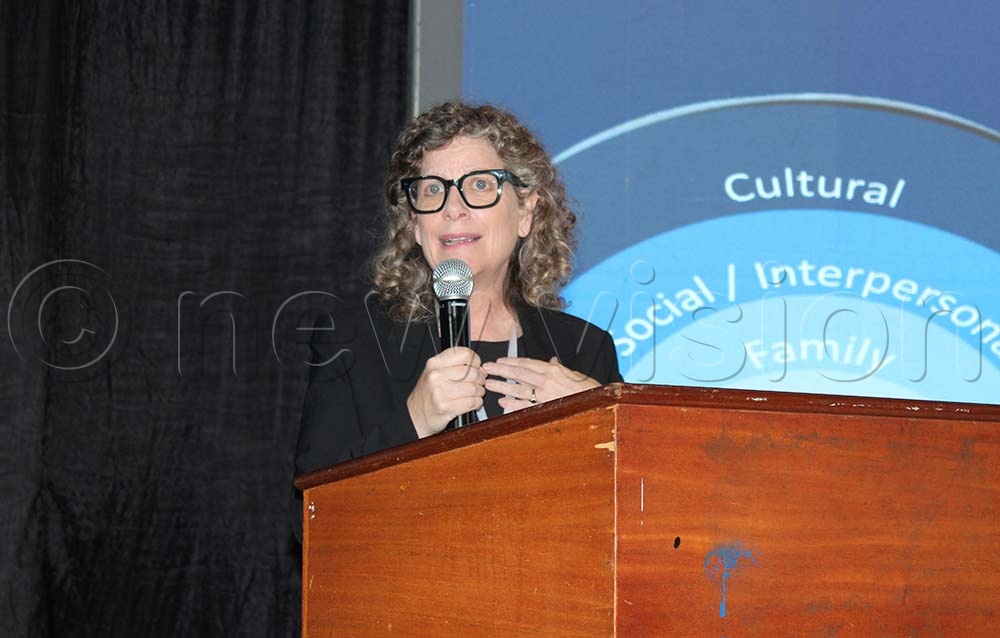
Commissioner raises alarm on surging online abuse
During a media interaction, gender ministry's commissioner for children and youth affairs, Fred Ngabirano, warned that online child abuse is rising sharply as smartphone access increases.
“Parents have smartphones, but many do not know how to control them. Some do not know the software that comes with these phones,” Ngabirano said.
He revealed worrying data from the Uganda Child Helpline (SAUTI 116): Over 1,321 cases are reported daily from centres across the country.
“The more centres we open, the more cases we get, meaning many cases go unreported,” he added.
Children are often exposed to harmful content through pop-up ads, hidden applications or deceptive online platforms. Offenders range from adults to peers and even close relatives.
During COVID-19, he noted that over 3,552 cases of child sexual abuse were recorded, including 350 cases where fathers defiled their own daughters.
Ngabirano said Uganda is collaborating with regional and international partners, including United Nations (UN) agencies such as UNICEF, UNFPA, UNHCR, WFP, and non-governmental organisations such as World Vision, as well as universities, to improve child protection systems.
Last month, Uganda sent a team to Ethiopia to train officers on handling cross-border online abuse cases.
First generation of “always-online” children
Keynote speaker Prof. Jennie G. Noll, a child development expert from the New York-based University of Rochester, warned that today’s children are the first generation growing up with unlimited and unfiltered access to the Internet, yet the long-term developmental impact remains unclear.
“This is the first generation of kids growing up with unfiltered access to the Internet, and we don’t yet understand the full impact on development,” she said.
Noll described the Internet as “a new pathway” for exploitation, with predators using sophisticated digital tools, including AI-driven lures, to target minors.
“They’re using AI to attract kids to dangerous websites and lure them offline into sexual exploitation,” she warned.
Noll said protecting children requires coordinated action from families, policymakers, and technology companies.
“By giving kids access to the Internet, they also have to give them the knowledge to say no,” she said.
Children must be taught to recognise manipulation and risky interactions.
She called on policymakers to enact stronger regulations to force tech companies to prioritise child safety through parental controls, limits in schools, and accountability mechanisms for harmful advertising algorithms.
“It’s okay to hold companies and corporations accountable for protecting our kids online,” she said.
The symposium marks a significant step in Uganda’s efforts to build a critical mass of researchers and policymakers committed to evidence-based child well-being. By linking research, policy, and practice, AfriChild hopes to transform how Uganda responds to the needs of its youngest citizens.
Opobo concluded with an appeal for collective action: “Our biggest population is children. If we are to realise Uganda’s Vision 2040, we must invest in evidence-driven solutions that protect and empower them.”