
Tumusiime's 'Ekanya' and 'Bogi Benda' creations humorously live on
No stage lights, no microphones, no viral clips. Just ink on paper. And yet, they had the whole country laughing, quietly in taxis, loudly in offices, and sometimes uncontrollably at the dinner table.
A collage of Ekanya and Bogi Benda cartoons produced from the 1970s by James Tumusiime. (Sourced by Titus Kakembo)
__________________
Long before memes, TikTok (social media), animation and binge-worthy soap operas, Uganda had its own comedy royalty: Ekanya and Bogi Benda.
No stage lights, no microphones, no viral clips. Just ink on paper. And yet, they had the whole country laughing, quietly in taxis, loudly in offices, and sometimes uncontrollably at the dinner table.
Their creator, James Tumusiime, still speaks of them like wayward sons, equal parts mischief, madness and memory.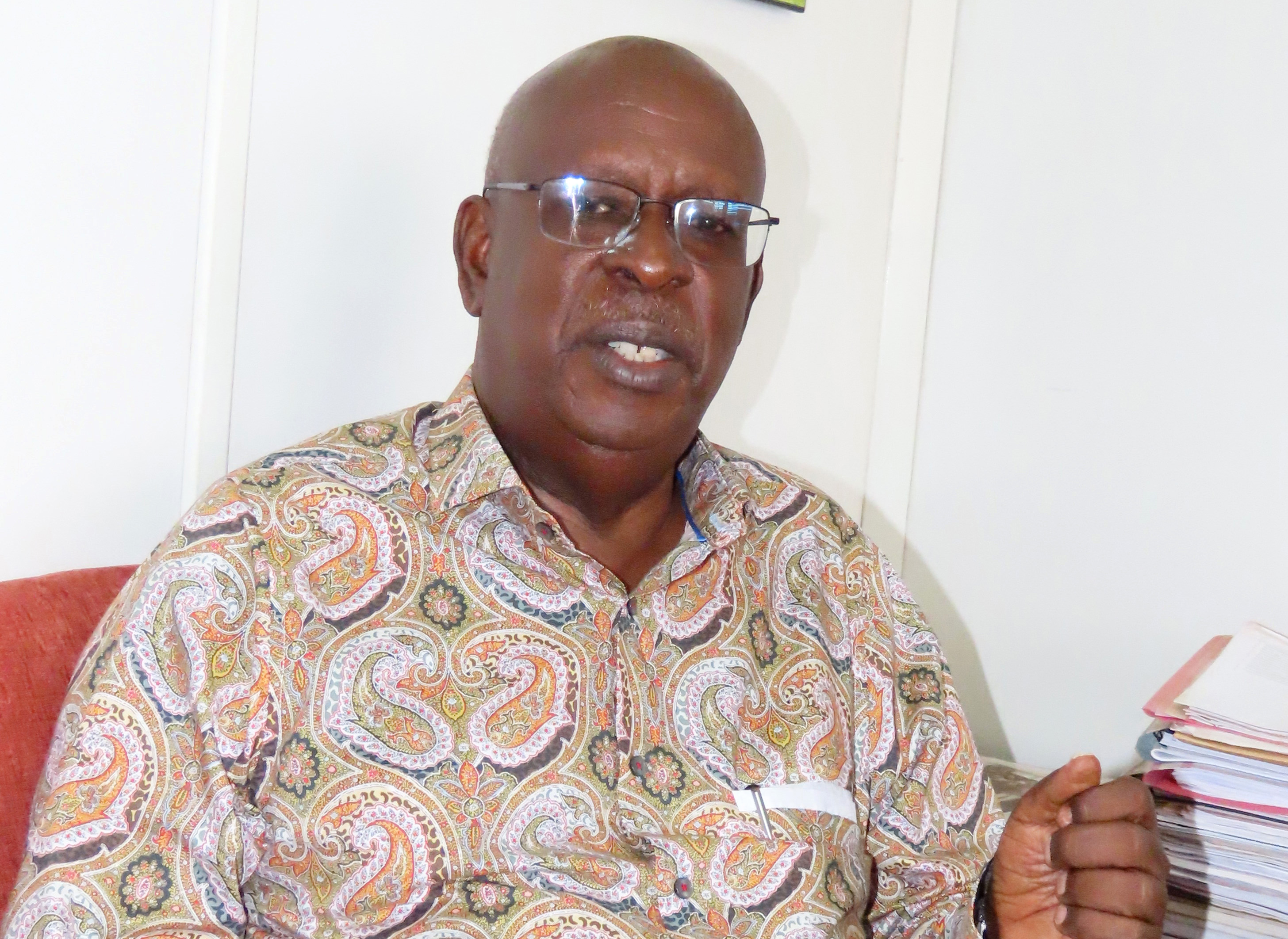
James Tumusiime at his Fountain Publishers Office. Tumusiime still speaks of them like wayward sons, equal parts mischief, madness and memory. (Photo by Titus Kakembo)
Ekanya came first. Straight out of Teso, he was cheeky, crafty and gloriously unserious. The name was borrowed from Tumusiime’s close friend Ateker Ejalu, who unknowingly donated not just the name, but also the “look” — a generous belly, three stubborn strands of hair, and often, a loyal glass of beer.
With another colleague, Tom Rushegye, in their company sketching nearby, everyday life became a theatre of humour. But comedy, especially, in troubled times, can be a risky business.
One Ekanya strip nearly turned fatal. It appeared around the time of the assassination of Archbishop Janani Luwum, a period thick with fear and suspicion in 1970s Uganda.
That particular strip, set in a butcher's shop, was innocent enough. But in a climate where foreign media had branded the regime with grim metaphors, calling then-President Idi Amin a butcher or kijambiya, it was dangerously misread.
The result? A raid by the State Research Bureau on the Uganda Voice offices. Editor Zadok Ekimwera was hauled in Nakasero for intense questioning.
Tumusiime didn’t wait for his turn. He vanished from Kampala and resurfaced in hiding at Makerere University.
Meanwhile, the newspaper ran a dramatic strip of Ekanya waving goodbye. Caption: “Ekanya is dead.”
Readers were woebegone. Circulation of the government paper dropped. For once, the joke didn’t land. Ribs were not cracked.
And yet, Ekanya had already crossed invisible lines, into the hearts of ordinary readers and, surprisingly, into the corridors of power.
Tumusiime recalls, with a hint of irony, how Moses Ali (currently Second Deputy Prime Minister), at a time of scarcity, allocated him a vehicle after discovering he was the man behind the laughter.
While in Kenya for further studies in agriculture and economics in the 1980s, Tumusiime introduced a new character: Bogi Benda.
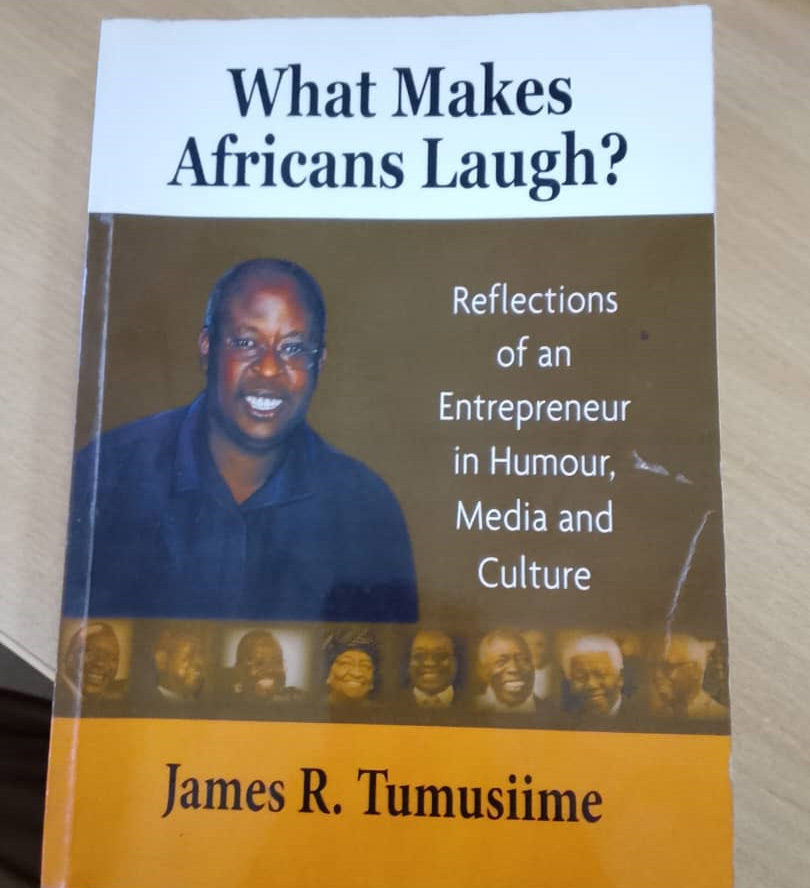
James Tumusiime wrote "What Makes Africans Laugh", a fitting title for a man who helped answer that question more than 40 years before algorithms tried. (Sourced by Titus Kakembo)
If Ekanya was mischievous, Bogi was magnificently flawed. He was the everyman of post-colonial East Africa: broke, bold, and blissfully unbothered.
Bogi didn’t just live life; he stumbled through it, often straight from the bar to domestic trouble.
In one unforgettable strip, he returns home after drinking away his entire salary. His wife is furious, naturally, and demands an explanation.
Bogi, unfazed, delivers a classic: “Give me breakfast, my darling.”
And that was it. No punchline gymnastics. Just raw, relatable absurdity.
Bogi Benda travelled far beyond Uganda, earning comparisons to global comic icons and winning fans across Africa and beyond. Publications couldn’t get enough of him. Some called him outrageous — a hard-drinking, womanizing disaster. Others simply called him hilarious.
Even legendary photojournalist Mohamed Amin penned the introduction to the Bogi Benda compilation, cementing its cultural weight. The books flew off shelves, proving that laughter — especially the honest, uncomfortable kind — always finds its audience.
Back home, the lines between creator and character blurred amusingly. People who discovered Tumusiime was Bogi’s "father" would corner his (Tumusiime's) wife, Loy, with a burning question: 'Is he like that in real life?'
Well, we may never know.
What is clear, though, is that Ekanya and Bogi Benda were more than popular cartoons. They were social commentary in disguise: mirrors reflecting everyday struggles, small victories, and the art of laughing through it all.
It’s no surprise that Tumusiime would go on to write "What Makes Africans Laugh", a fitting title for a man who helped answer that question more than 40 years before algorithms tried.
Decades later, Ekanya’s smirk and Bogi’s shameless charm still echo through Africa’s humour. Because trends fade and platforms evolve, but a good laugh never goes out of style.