
Congolese rumba, music caught between neglect and nostalgia
Dancers stoked on music and alcohol sway each weekend to the old hits on the decrepit rooftop terrace of Kinshasa's venerable La Creche bar, like little has changed in the Congolese capital since the 1980s.
(FILES) A man stands in front of the gate of the house of Congolese world music legend, renowned as the "king of Congolese rumba", Papa Wemba, in Mbinza, near Kinshasa, on April 25, 2016. (AFP)
______________
Kinshasa, DR Congo | AFP
We are offering the following story, chosen by AFP's chief editors for our Africa Selection re-publication as among the best reporting from the sub-Saharan continent over the last few weeks.
Dancers stoked on music and alcohol sway each weekend to the old hits on the decrepit rooftop terrace of Kinshasa's venerable La Creche bar, like little has changed in the Congolese capital since the 1980s.
The beer flows freely, and the party goes on into the small hours while the band keep alive the traditions of Congolese rumba, a genre of music whose origins experts believe lie in the time before European colonialism.
Yet rumba is so much more than the soundtrack to a good night out on the town. Having made UNESCO's intangible cultural heritage list in 2021, rumba stands as a source of intense national pride in the Democratic Republic of Congo, as well as across the border in Congo-Brazzaville.
"If you feel nostalgic and wish we could go back to the good old days, come to La Creche," singer Albert Diasihilua cheered before taking to the stage.
As midnight nears with the party in full swing, the waitress joins the throng on the dancefloor, swept up by the tunes, until a power cut brings the music to a halt.
A generator thrums into life, and the dancing begins anew.
Since 1984, La Creche's legendary orchestra has passed down the rumba tradition, performing covers of the great classics by legends like Franco Luambo, Tabu Ley Rochereau and Grand Kalle.
"This is the home of authentic rumba," insisted Diasihilua.
But despite the UNESCO listing, many fear for the future of the genre given its relative neglect by the younger generations.
'Under threat'
In Kinshasa's hip bars, the rumba of yesteryear has given way to a modern fusion of Afropop and RnB, a style notably popularised outside the country by Congolese artist Fally Ipupa.
"We cannot lose this music as we are on the way out," pleaded Diasihilua, who has already spent 50 of his 73 years on earth gigging.
To help preserve the genre, a national museum of rumba officially opened its doors to the public in the capital in December. The museum is housed in the former home of rumba star Papa Wemba, who died in 2016.
For Glodi Nkiadiasivi, the museum's assistant director, Congolese rumba is "under threat" of being forgotten.
"Young people do not understand its richness; they're more and more influenced by American, Nigerian and French songs," Nkiadiasivi added.
Besides displays of clothes from Papa Wemba's famously flamboyant wardrobe and traditional Congolese instruments, the museum hopes to attract visitors through guided tours, conferences and concerts.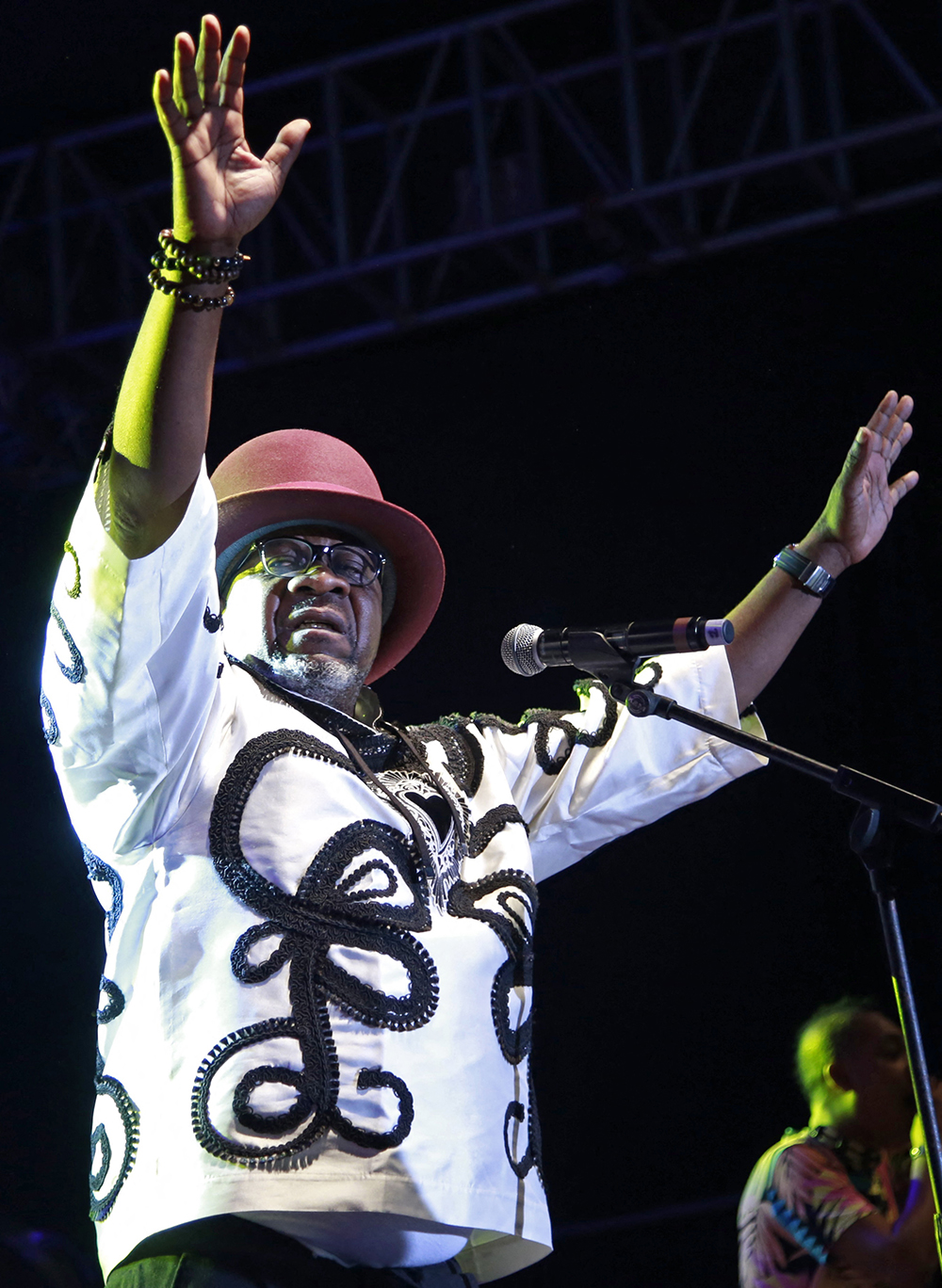
(FILES) Congolese music star Papa Wemba performs during the Femua music festival in Abidjan on April 24, 2016 before collapsing on stage. With less than one percent of the government's budget devoted to culture, little help is expected from the Congolese state. (AFP)
But just a hundred or so guests have come so far, according to Nkiadiasivi.
'Cramping the style'
With less than one percent of the government's budget devoted to culture, little help is expected from the Congolese state.
Yet at the National Institute of the Arts (INA) in Kinshasa, founded shortly after independence from Belgium in 1960, teachers are striving to train the next generation. Since 2022, students can take classes in the history of Congolese rumba and the basics of musical theory.
"There are lots of very talented artists in the city, but they don't know how to read music because they learnt on the job," said Michel Lutangamo, a professor and conductor at the INA.
Ethnomusicologist Jean-Romain Malwengo, who also teaches at the institute, pointed out that "rumba, like our other traditional music styles, is based on the oral tradition and therefore very fleeting."
"It could disappear at any moment. So the best way to preserve it is to write it down," he added.
For around 15 years, the researcher has worked with students on a project to transcribe music broadcast by television and radio or on vinyl. Between 300 and 400 songs have been preserved so far.
"It's our identity, it's a part of us," Malwengo added.
In his third year of a music degree, 26-year-old guitarist Daniel Lukusa reminisced about how much better the rumba played on repeat in his family home was.
"Pure rumba is starting to get lost," he said.
"Young people think they're adding special effects, when in fact they're cramping the style."