
A compelling ode to a village photographer
The secret is in Ntare’s genius, how he told the story. From the moment he walked into Kibaate’s studio, the conversations they had, and the promise he made to show the work to the world. From there, the photographs seemed to take on their own lives, as they are often wont to do if given their freedom.
Residents of Mbirizi watching the documentary 'Memories of Love Returned' in Mbirizi on Friday. (Photo by Kalungi Kabuye)
_________________
Film: Memories of Love Returned
Genre: Documentary
Director: Ntare Guma Mbaho Mwine
Review by Kalungi Kabuye
____________
Every village I know in Uganda has, or had, a village photographer. That guy who moved around every home asking if you wanted your photos taken. Very often, they were village fixtures; everyone knew them, and they knew everyone. And they knew everyone’s stories.
Before the onset of modern society, when cameras were treated as mysterious but necessary things everyone needed, they were the village celebrities. They were invited to every celebration, and recorded all important events in the villagers’ lives. Along with the bar and the chief’s home, the photo studio was very central to a Ugandan village’s life.
Then came modern digital cameras, and now with the phone camera, everyone is a photographer. Forgotten is the village photographer. But with Ntare Mwine’s documentary, ‘Memories of Love Returned’, which premiered in the small village of Mbirizi, 35km from Masaka on the way to Mbarara, on Friday, the world will forever remember them.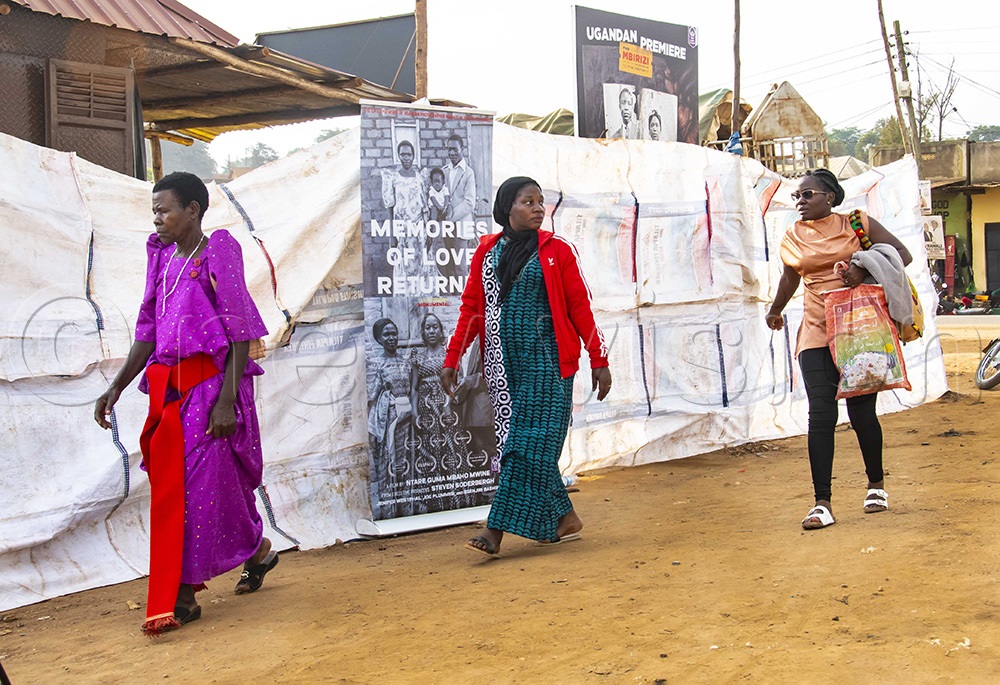
There was no red carpet - Kibaate's family members arrived for the premiere in Mbirizi. (Photo by Kalungi Kabuye)
By now, the story of how the car Ntare was travelling in broke down in Mbirizi, and how he went for walk and stumbled on a photo studio run by Ssalongo Aloysius Kibaate, is well known. Stuff romantics love.
The film has been screened across the United States and in several countries in Europe. Resounding reviews, mostly positive, have been written. But I was curious how the story of a small-town photographer in a small trading centre in literally the middle of nowhere caught the fancy of the world.
The secret is in Ntare’s genius, how he told the story. From the moment he walked into Kibaate’s studio, the conversations they had, and the promise he made to show the work to the world. From there, the photographs seemed to take on their own lives, as they are often wont to do if given their freedom.
I remember telling a photography masterclass I ran at one time that every time one makes a photograph, a moment in time is captured. That moment will never come again. And Ssalongo Kibaate did that for over 50 years, all across 5 districts, and it is said even as far as Rwanda. These were not special national events, but moments in the lives of ordinary people.
I watched the film in Mbirizi on Friday evening, along with the community, who are the main stars of the film. There was no red carpet, just a dusty parking lot with plastic chairs. No backdrop but a lone banner against a wall of gunny sacks, and no surround sound, but a truck from UCC.
It was interesting listening to the comments and reactions of the audience as they recognised the faces brought to life, like ghosts some of them wished had stayed hidden. There were emotional moments when some saw faces they had not seen before, or in a long time. Someone should tell the story of Nakimera, the good-looking woman shown with different men. Her son was present and didn’t want to know what others thought about his mother.
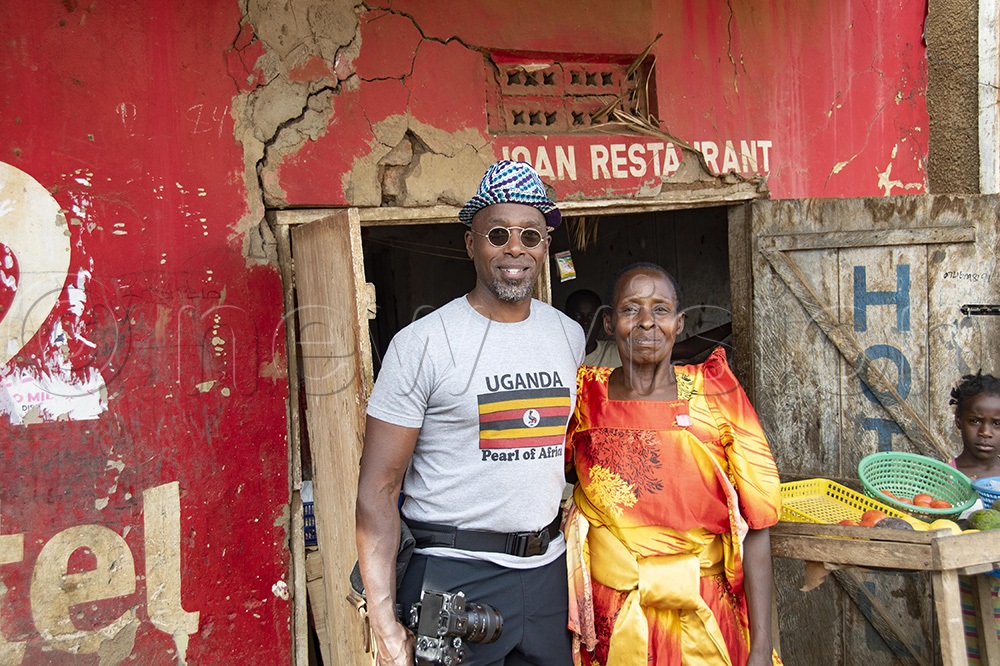
Ntare Mwine with Nanyonjjo, widow of SsalongO Alosyius Kibaate, in Mbirizi on Friday. (Photo by Kalungi Kabuye)
In a way, the documentary is a microcosm of what life was like in Uganda in the 1960, 70s and 80s. Men in the audience were loudly heard to be envious of Ssalongo Kibaate’s exploits, and women were impressed. You probably will be, too. It was said that Kibaate had at least 47 children, from more than 12 women. He left three widows when he died in 2006.
I was impressed with Ntare when he did Biro, more than with the Hollywood stuff he has done. I did photography for him then, and was blown away with the man’s prowess. With this documentary, he shows pure genius. And the world largely agrees.
It is ironic that with all the money Uganda spends trying to create a positive image of the country, a one-hour documentary about a small-town photographer will make more people want to visit Uganda. It is that good.
The VIP Premiere will be held at Acacia Mall this Friday.