
'Without innovation, universities risk becoming disconnected from societal needs'
"Higher education institutions carry an even greater responsibility not only to produce graduates, but to generate ideas, technologies, and innovations," says NCHE chairperson Prof. Kwesiga.
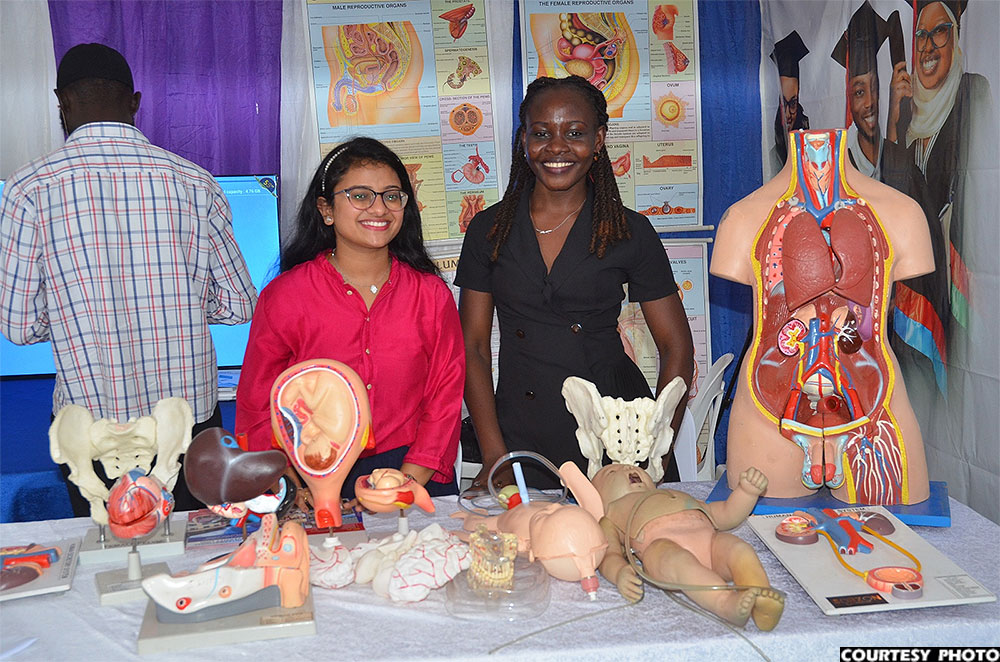
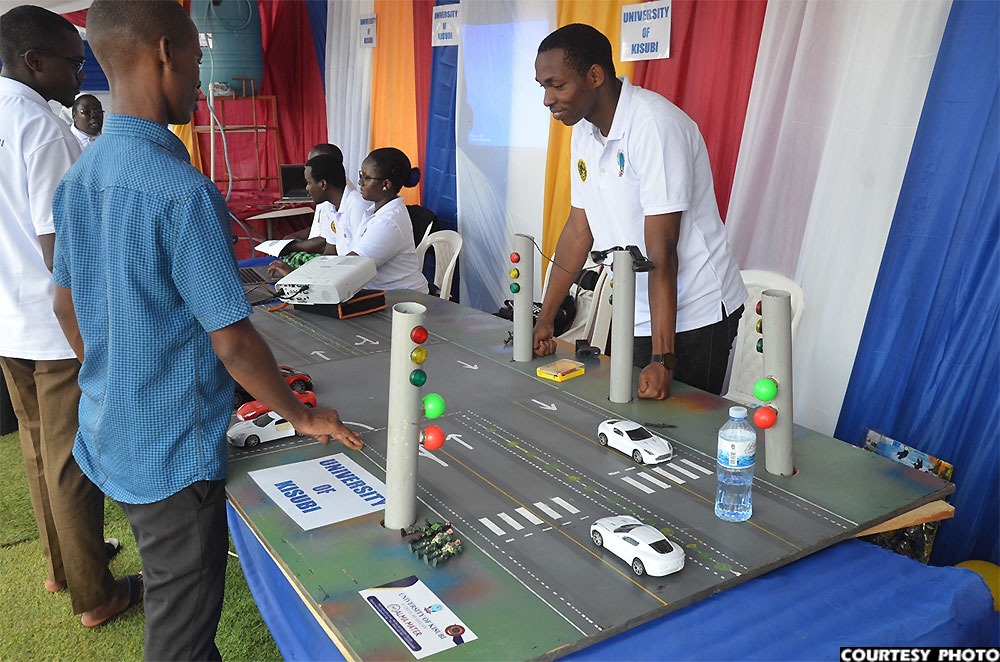
Exhibitors from the University of Kisubi are seen during the 16th Uganda Higher Education Exhibition at Gulu University in Gulu city on March 26, 2026. (Courtesy photo)
____________________________
16TH UGANDA HIGHER EDUCATION EXHIBITION
The 16th Uganda Higher Education Exhibition got under way on Thursday at Gulu University, as part of week-long activities organised by the higher education sector. The exhibition began two days after the conclusion of the 7th Annual Higher Education Conference on Tuesday at Acholi Inn in Gulu city.
Higher education state minister Dr John Chrysestom Muyingo opened the three-day exhibition, which is guided by the theme: 'Harnessing Innovations in Higher Education for Accelerated Economic Transformation.'
This is the third edition held at the regional level.
"It further provides an opportunity to education institutions to align innovations with local economic priorities, thereby accelerating regional economic transformation. It also reinforces the idea that higher education transformation is a national agenda, not a Kampala-centered initiative."
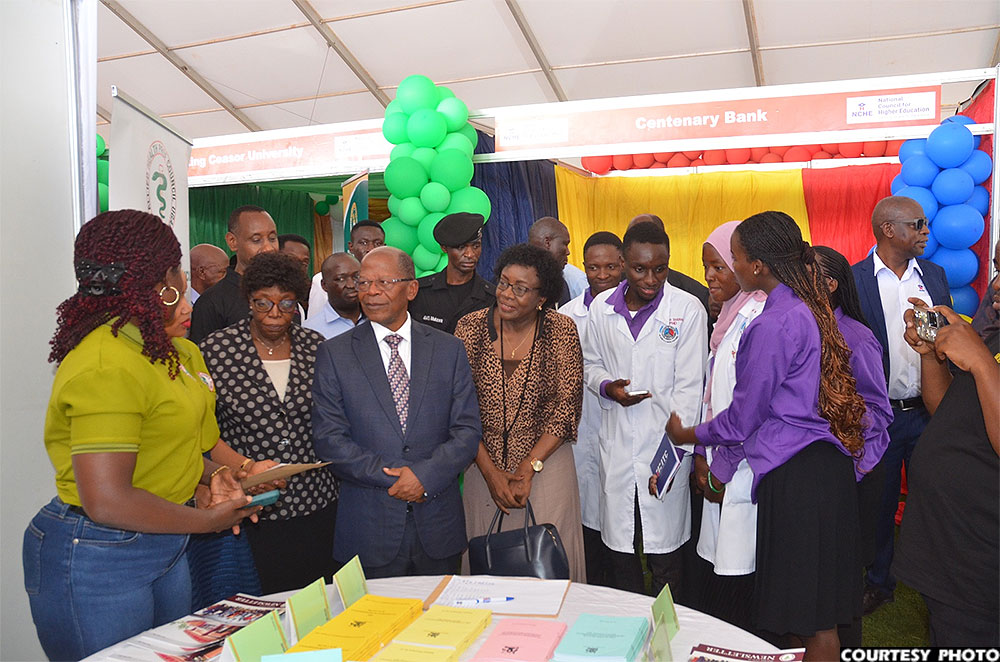
The NCHE hierarchy was present, with chairperson Prof. Joy C Kwesiga, in her statement, speaking of the importance of this exhibition.
She said it "continues to serve as a vital platform for showcasing research, innovations, and practical solutions emerging from our universities and other higher education institutions".
Kwesiga also said the exhibition presents an avenue to audit and monitor compliance of higher education institutions to activities related to research and innovations.
"Without innovation, institutions risk becoming outdated, disconnected from societal needs, and unable to contribute meaningfully to economic and social transformation."
__________________________
THE NCHE CHAIRPERSON'S REMARKS 👇🏽
❝Our Chief Guest, the Hon. Minister of State for Higher Education
Hon. Members of Parliament present
Council Members present
The Executive Director, National Council for Higher Education
The Staff of the National Council for Higher Education
Heads of Government Departments and Agencies present
Vice Chancellors and Principals of Higher Education Institutions
Staff of the Ministry of Education and Sports
Distinguished participants
Ladies and Gentlemen
It is my great honour and privilege to welcome you all to the 16th Higher Education Exhibition organised by the National Council for Higher Education. On behalf of the Council and Secretariat, allow me to welcome you to Gulu City for our 3rd exhibition held at the regional level. I extend my sincere appreciation to our host, Gulu University for hosting this event.
Before I make further remarks, allow me to introduce the Council members present and thank you for coming. Some of you have been with us right from the start of the higher exhibition week on Monday. We thank you.
Our chief guest, as you are well aware, NCHE is mandated under Section 4 of the Universities and Other Tertiary Institutions Act CAP 262 of the laws of Uganda, to promote and develop the processing and dissemination of information on higher education for the benefit of the people. To partially achieve this, the Council organises this annual exhibition as a vehicle for information dissemination to the public.
This exhibition continues to serve as a vital platform for showcasing research, innovations, and practical solutions emerging from our universities and other higher education institutions. It also provides an opportunity for academia, industry, government, and the wider public to interact and appreciate the important role higher education plays in national development.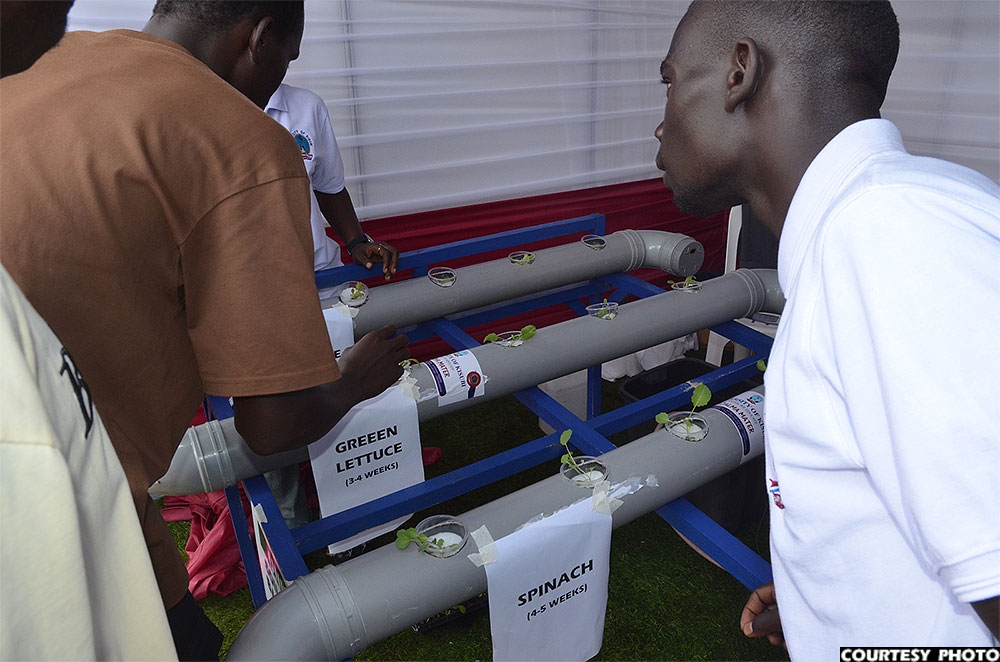
To the National Council for Higher Education, the exhibition presents an avenue to audit and monitor compliance of higher education institutions to activities related to research and innovations.
The executive director [Prof. Mary Okwakol] has outlined the different stakeholders present today, but allow me to single out the students from secondary schools. This exhibition will expose you, dear students, to opportunities in universities, careers, and modern technologies before joining higher education. It will also help you to make informed academic and career decisions when the right time comes. I, therefore, urge you to be keen in touring the exhibition and asking relevant questions.
Today, we meet at a time when the world is experiencing rapid technological advancements, shifting economic landscapes, and growing demand for knowledge-driven solutions that impact society. In such a dynamic environment, higher education institutions carry an even greater responsibility not only to produce graduates, but to generate ideas, technologies, and innovations that can transform societies and drive sustainable economic growth.
It is therefore befitting that this year’s exhibition is guided by the theme 'Harnessing Innovations in Higher Education for Accelerated Economic Transformation'.
Across the world, universities have become engines of innovation, entrepreneurship, and economic growth. Nations that have achieved rapid economic transformation have done so largely through strong investments in research, science, technology, and innovation. Higher education institutions are therefore not only centres of learning but also hubs of discovery, creativity, and problem solving.
In Uganda, the Government through the Ministry of Education and Sports and the Ministry of Science, Technology and Innovation has increasingly emphasised the importance of research and innovation as key drivers of socio-economic transformation. The role of the National Council for Higher Education is to ensure that our higher education institutions maintain quality, relevance, and responsiveness to national development needs.
Innovation is the engine that keeps higher education dynamic, relevant, and impactful. Without innovation, institutions risk becoming outdated, disconnected from societal needs, and unable to contribute meaningfully to economic and social transformation.
It contributes to responding to the changing labour market needs, improves teaching and learning, drives research and knowledge creation, supports economic development, enhances institutional competitiveness and promotes collaborations and partnerships.
On 9th July 2025, NCHE received a letter from the First Lady and Minister of Education and Sports, directing all higher education institutions to fully align their academic programmes to competence-based education for the first years of the 2027/28 academic year.
Our Chief Guest, I am happy to inform you that Council as mandated under Section 4(r), of the Universities and Other tertiary Institutions Act, approved standards for incorporating Competence-Based Education and Training (CBET) by the admissions for the academic year 2027/28; in response to the minister’s directive. The development of these standards was consultative, and management communicated to all the HEIs and the Ministry of Education and Sports.
Through the various consultation engagements NCHE held with the stakeholders, it has emerged that there is a need to be mindful of anticipated underlying challenges and concerns, particularly the limited understanding of the principles of Competence-Based Education and Training (CBET), understaffing in HEIs and inadequate training of academic staff to operationlaise CBET, a call for curriculum and assessment redesigning, and constraints in the available infrastructure among others.
Whereas we do not have a single solution to all these challenges, we are optimistic that the HEIs will find a way of mitigating them over time, in collaboration with other partners especially the industry.
The National Council for Higher Education remains steadfast in executing its central role of regulating and ensuring quality higher education in Uganda. However, there is need for the Ministry of Education to fast-track the amendment of the Act to address the regulatory challenges that affect NCHE’s effectiveness, especially the overlapping responsibilities with other regulatory bodies.
Such overlaps create double regulation, confusion, inefficiencies, and ultimately eat into the time that would have been dedicated to giving guidance on research and innovations.
Other challenges which pose a threat to the promotion of innovation include the weak enforcement mechanism and legal gaps in the regulatory framework, inadequate funding, insufficient human resources, slow aadaptation of regulatory frameworks to emerging technologies and limited research and innovation capacity.
We ask HEIs to pay attention to the challenges that accrue to them, so that they can fully realise their research potential.
Finally, ladies and gentlemen, let this exhibition inspire deeper collaboration among academia, government, and industry as we work together to translate research and innovation into practical solutions for Uganda’s development challenges.
Let us recommit ourselves to supporting research, nurturing innovation, and building a higher education system that responds effectively to the needs of our economy and society."
Prof. Joy C. Kwesiga
Chairperson, NCHE
______________________________