
UPE school innovates to improve performance for over 130 dyslexic learners
Dyslexia is a specific learning difficulty which primarily affects reading and writing skills. However, it does not only affect these skills. Dyslexia is actually about information processing.
Pupils reading together. (Photo by Ritah Mukasa)
___________________
One hundred and thirty-one of 476 learners at Wakiso district-based Sentema Church of Uganda Primary School are dyslexic.
Dyslexia is a specific learning difficulty which primarily affects reading and writing skills. However, it does not only affect these skills. Dyslexia is actually about information processing.
Dyslexic people may have difficulty processing and remembering information they see and hear, which can affect learning and the acquisition of literacy skills. Dyslexia can also impact on other areas such as organisational skills, according to the British Dyslexia Association.
In other words, the learner can be smart, active and show interest in learning. In class, they participate and answer questions correctly but trouble comes when you tell them to write down what they have been taught. For example, you will see a pupil writing the word ‘BOY’ as ‘YOB’. Dyslexic people also have difficulty in reading.
Headteacher Rebecca Nankanja says for a long time, teachers struggled with pupils who couldn’t read or write well and this affected the general performance.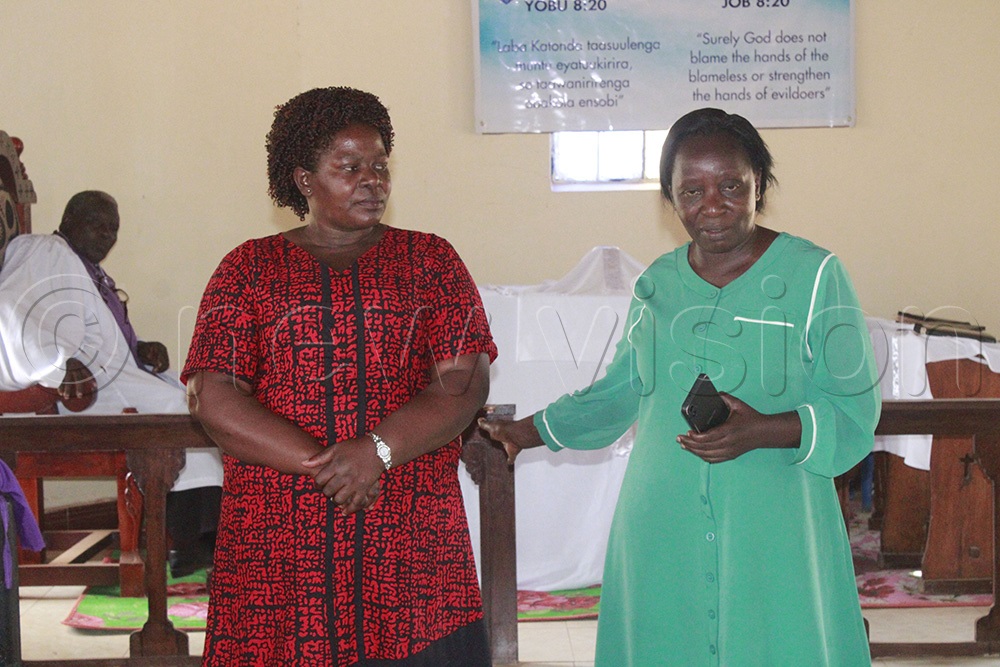
Rebecca Nankanja (left) head teacher Sentema CU Primary School with Samalie Nanvunanwa Wakiso district education officer in charge of special needs education. (Photo by Ritah Mukasa)
They devised all possible means in vain. However, lady luck struck last year when Save the Children International intervened and trained the teachers on how to identify and help children with different learning disabilities.
Nankanja calls the training a game changer. She became a champion teacher in inclusive education.
“It is hard to identify these children because the disability is not physically seen but we now easily identify and help them,” she says.
This year, she had three dyslexic candidates and she is optimistic they will pass with flying colours because; “They got all the help they needed. UNEB sent full time transcribers who helped them write their final exams.”
While teaching these children, Nakanja says, they use different strategies such as a special model hinged on teaching at the right level. They also pair these learners with their counterparts who are non-dyslexic.
In addition, special coaching is given where necessary and with those strategies the school has registered great improvement in general performance.
Nankanja urges school heads to equip themselves with the right skills to identify and help pupils with learning disabilities.
“Don’t call them stupid or cursed. These children can even perform better than the non-dyslexic colleagues,” she says.
Samalie Nanvunanwa, the Wakiso district education officer in charge of special needs and inclusive education, says all government-aided schools are encouraged to enrol children with special educational needs and that many headteachers are doing it, but the majority admit only mild cases yet they also neglect them.
She hails Sentema C/U Primary School for going out of their way to identify and help dyslexic children.
“Our role as a department is to train teachers in managing inclusive classes,” she says, adding that they empower teachers in how best they can scheme, lesson plan, and put activities that cater for all learners. They also do a needs assessment and give full support to those schools.
Meanwhile, data from the 2024 Census by the Uganda Bureau of Statistics (UBOS) indicates that about 1.7 million children (2-17 years) live with disabilities. These are part of the 5.5 million People with Disabilities (PWDs) in Uganda.