
'Partnerships are strategic enablers in today’s innovation landscape' — Prof Kwesiga
National Council for Higher Education chairperson Prof. Joy Kwesiga says partnerships help in knowledge sharing and co-creation, resource mobilization and promotion of capacity building and skills development.
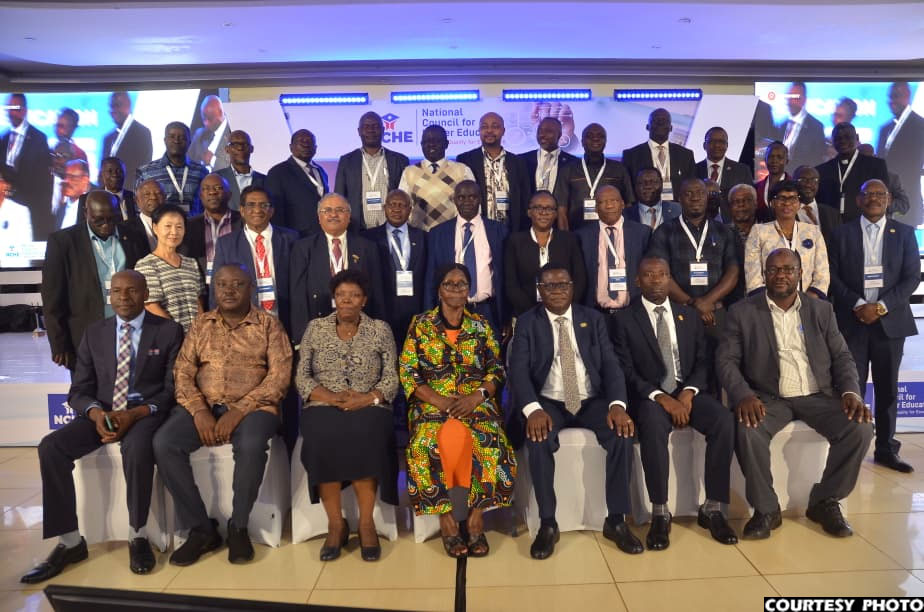
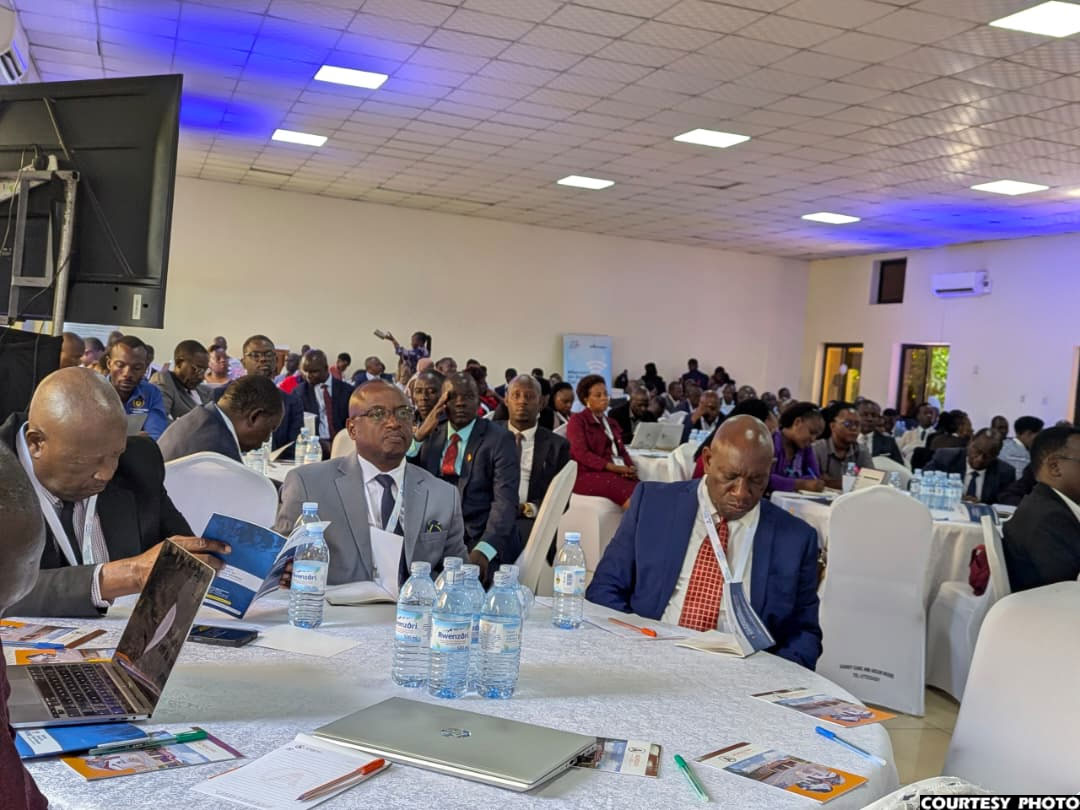
Officials pose for a group photo during the 7th Annual Higher Education Conference that opened on March 23, 2026 at Acholi Inn in Gulu city. (Courtesy photo)
_________________________
7TH ANNUAL HIGHER EDUCATION CONFERENCE
📍 Acholi Inn, Gulu City
🗓️ March 23-24, 2026
The 7th Annual Higher Education Conference, 2026 opened on Monday at Acholi Inn in Uganda's northern city of Gulu, with National Council for Higher Education (NCHE) chairperson Prof. Joy Kwesiga saying that currently, higher education institutions are struggling in the area of innovation due to a combination of internal and external factors.
"A clear example is the weak link between research and industry where the research conducted remains theoretical and disconnected from the market needs," she said.
Limited funding for research and development as well as weak intellectual property management are other factors.
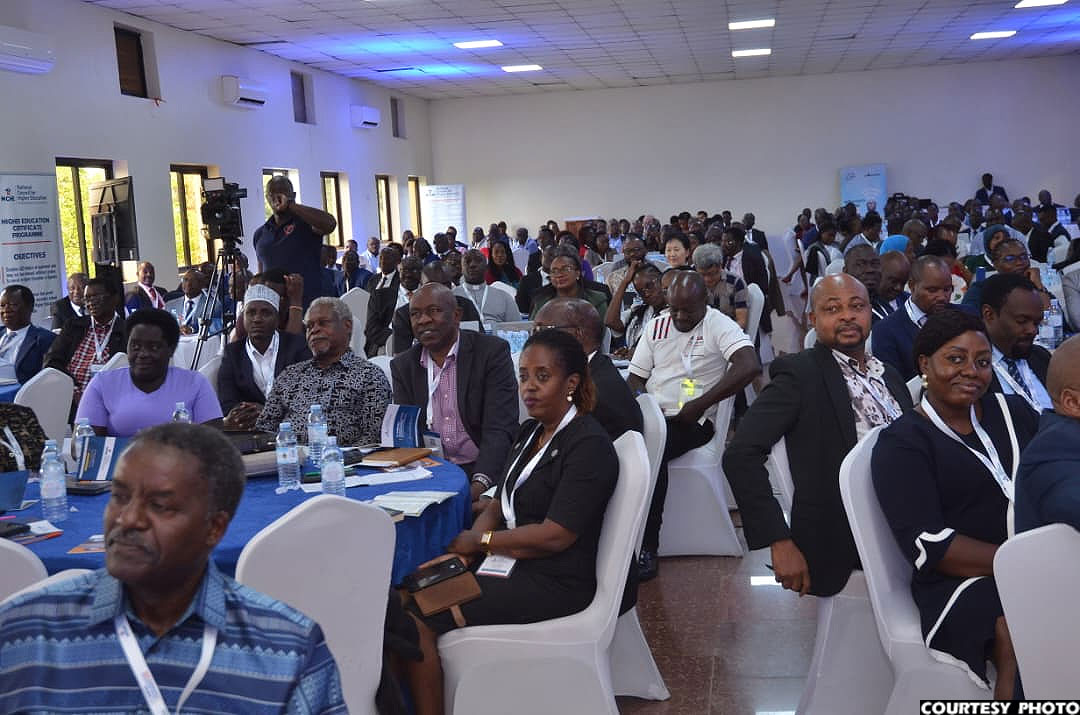
Organised by NCHE, the two-day conference has drawn around 250 participants and is themed 'Harnessing Innovation in Higher Education for Accelerated Economic Transformation'.
The participants include representatives of higher education institutions, researchers, subject matter experts, regulators, education development partners, private sector and policymakers/government.
Justice minister and Laroo–Pece Division MP-elect Norbert Mao opened the conference as the chief guest.
Among those in attendance was Dr Monica Musenero, the Minister of Science Technology and Innovations, and NCHE executive director Prof. Mary Okwakol.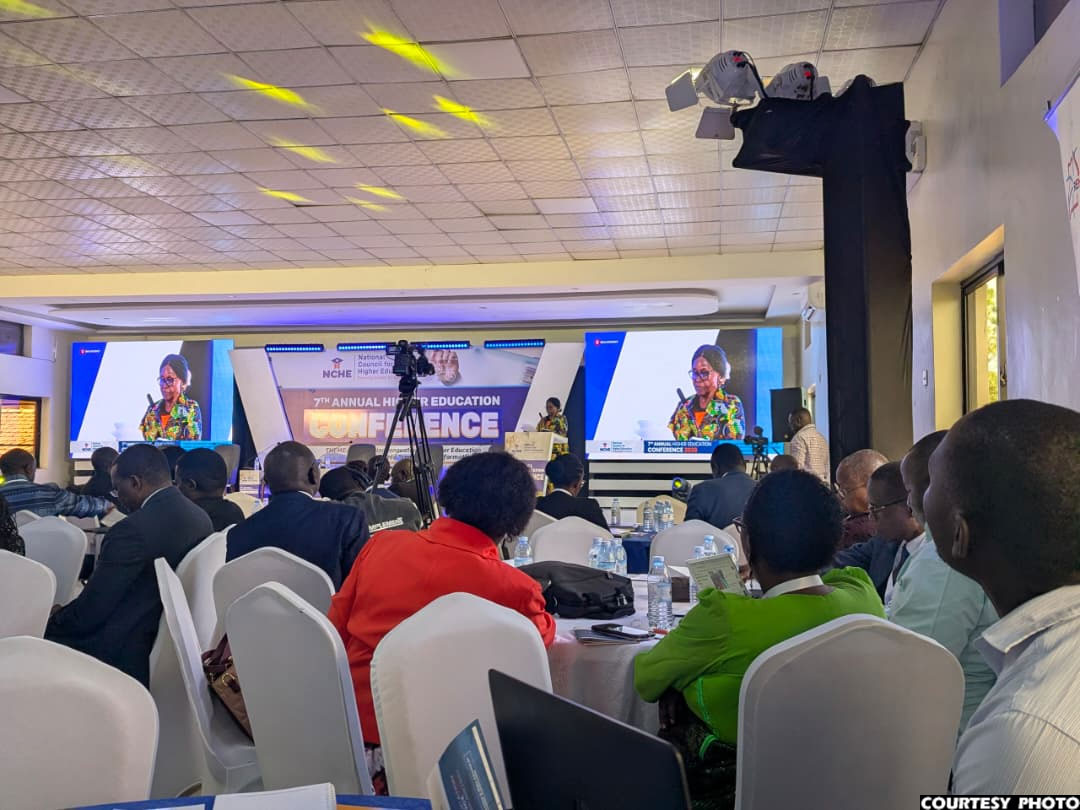
In her remarks, NCHE chairperson Prof. Kwesiga spoke of the importance of higher education institutions to align their innovations to national priorities such as national development strategies, the human capital development agenda and emerging global trends.
"Therefore, we are obliged, and we must ensure that innovation translates into employability, productivity, and wealth creation," she said.
"In this regard, NCHE calls on institutions to embrace partnerships between institutions, industry, government, and international collaborators. These should be in the areas of joint research, nternship and apprenticeship frameworks and innovation hubs and incubation centres."
Kwesiga said partnerships help in knowledge sharing and co-creation, resource mobilization and promotion of capacity building and skills development.
"Partnerships are not optional in today’s innovation landscape."
They are strategic enablers that foster collaboration, trust, and shared vision and also accelerate economic transformation. It is also important to take note of the fact that donors and partners now prefer to work with consortiums and to take advantage of the economies of scale.
Below is Prof Kwesiga's full speech: 👇🏽
__________________________
❝Our Chief Guest, Hon. Nobert Mao, the Minister for Justice and Constitutional Affairs,
Hon Dr Musenero, Minister of Science, Technology and Innovation,
Honourable Members of Parliament present,
Senior officials and Staff of the Ministry of Education and Sports present,
Members of the NCHE Council present,
Executive Director and Members of Management present
Heads of Government Departments and Agencies present
Vice Chancellors and Principals of Higher Education Institutions,
Political Leaders of Gulu City present,
Staff of the National Council for Higher Education,
Distinguished participants, here and online,
Ladies and Gentlemen,
I take this opportunity to welcome you all to the 7th Annual Higher Education Conference 2026, organised by the National Council for Higher Education.
Allow me to welcome you, our Chief Guest, Hon. Minister, and thank you for supporting the National Council for Higher Education innovation agenda, through your presence here. Thank you for accepting to officiate at the opening of the 7th Higher Education Conference. Please also accept our congratulations on your recent election as the Member of Parliament for Laroo–Pece Division, Gulu City.
I recognize the presence of Hon. Monica Musenero, once again and express our appreciation for always honouring NCHE invitations, and for generously sharing your knowledge, skills and expertise and passion for science and development. May you continue to inspire Ugandans.
Our Chief Guest, the National Council for Higher Education, established by the Universities and Other Tertiary Institutions Act, CAP 262, under Section 4 is mandated, among other functions, to promote and develop the processing and dissemination of information on higher education for the benefit of the people of Uganda. To achieve this, the Council annually organises stakeholder engagements like this Conference, and the exhibition, where information is disseminated to the public.
Through the conference, Council identifies a theme from among the emerging issues in Education for study and after a thorough research, the findings are disseminated to the public.
As Council, we recognize that research and innovation provide the bridge between knowledge and economic productivity. We therefore encourage, and support universities and other tertiary institutions to move beyond theory and become hubs of research, commercialization, technology transfer, and community engagement. You will be glad to know that many of these institutions are trying to carry out that mandate, although we are not yet there.
Strategic Objective three of the NCHE Strategic Plan 2025/2026-2029/2030 aspires to advance relevant Research and Innovation. This is intended to be achieved by regulating the implementation of STEM/STEI through minimum standards for increased enrolment. STEM/STEI are key in boosting economic transformation, increasing human capital development, fostering innovation, and building a knowledge economy by prioritising education and research in these areas.
This year’s theme, “Harnessing Innovations in Higher Education for Accelerated Economic Transformation,” challenges us as the national regulator to reflect, rethink, and to reimage the role of higher education in shaping Uganda’s socio-economic future. The Conference is one of the key avenues through which we can begin to solve the challenges at hand.
The Council remains committed to strengthening quality assurance frameworks that do not suffocate innovation, but rather those that guide HEIs responsibly. Regulation must enable progress, not impede it. In this regard, the Council has come up with strategies aimed at achieving the following;
Firstly, curriculum innovation by embedding practical skills, entrepreneurship, and problem solving. This is in line with the MOES requirement for all institutions to embrace competence-based pedagogy.
Secondly, Digital Innovation where we are Leveraging Open Distance E-Learning (ODeL), platforms to expand access, equity and flexibility. The Council keenly supports, guides and monitors this service.
Thirdly, Research and Technology Innovation, by supporting applied research that responds to Uganda’s developmental challenges, by the Council, and the HEIs.
Fourth, Institutional Governance Innovation which aims at strengthening accountability, quality assurance, and performance management systems.
I have to point out that despite the good intentions, currently, Higher Education Institutions are struggling in the area of innovation due to a combination of factors which are internal while others are external.
▪️ A clear example is the weak link between research and industry where the research conducted remains theoretical and disconnected from the market needs.
▪️ Limited funding for research and development for investing in laboratories, incubation centres, prototyping, intellectual property protection, and commercialization. In many HEIs, funding is still largely allocated to teaching and administration, leaving little for research and innovation ecosystems, skills mismatch.
▪️ Weak intellectual property management where a number of our institutions lack policies and expertise, on patenting, ownership rights, and revenue sharing.
It goes without saying that Higher Education Institutions should align their innovations to national priorities such as national development strategies, the Human Capital Development agenda and Emerging global trends such as Artificial Intelligence, green technologies, and digital economies. Therefore, we are obliged, and we must ensure that innovation translates into employability, productivity, and wealth creation.
In this regard, NCHE calls on Institutions to embrace partnerships between institutions, industry, government, and international collaborators. These should be in the areas of Joint research, Internship and apprenticeship frameworks and Innovation hubs and incubation centres. I am glad to note that innovation hubs and incubation centres are beginning to find entry into our institutions, and everything possible should be done to bring these a notch higher.
Partnerships help in knowledge sharing and co-creation, resource mobilization and promotion of capacity building and skills development. Partnerships are not optional in today’s innovation landscape. They are strategic enablers that foster collaboration, trust, and shared vision and also accelerate economic transformation. It is also important to take note of the fact that donors and partners now prefer to work with consortiums and to take advantage of the economies of scale.
On behalf of NCHE, I would like to reaffirm our commitment to strengthening quality assurance mechanisms by developing innovative quality assurance frameworks, reviewing and updating accreditation standards to incorporate digital pedagogical standards, enhancing capacity building, strengthening monitoring through digital systems and supporting research and innovation ecosystems.
Evidence of this is demonstrated through NCHE training sessions, research findings and the documentation that we disseminate to the stakeholders and the general public.
The theme of this conference is pertinent. It is timely. It is contextual to contemporary times. The challenge, however, is that many of the things we are talking about are really not so new. For example, since I was a school girl, which is many decades ago, I have heard consistent lamentations about issues pertaining to relevant and practical education; innovation, productivity or socioeconomic transformation.
The language has of course changed from the political slogan of educating job creators rather than job-seekers. BUT, but, the terrain has hardly changed – hence the urgency that we now face.
Our call as the Governing Council for Higher Education is for each player to commit to their different roles so that we can achieve accelerated transformation. This will require collective responsibility. Thus far, we continue to operate in silos and we cannot therefore build synergies. What should be done?
1. Regulators – in this case, the NCHE should enable and guide the process.
2. Universities and other HEIs - should innovate and deliver results
3. Industry – should engage and invest
4. Government - should support and prioritize
Our Chief Guest, I think we all see the direction we must take. However, the main constraint I choose to focus on is funding. There are other constraints, such as the need for mindset change, but finance remains crucial. There are many innovations by students and staff of universities, just lying on shelves. These are from both private and public institutions. A variety of these brilliant ideas will be demonstrated at the Annual Exhibition due to open, following the closure of this Conference.
The lever to all these challenges is finance. ONLY intentional injection of finances to support the following actors will significantly enhance the pace of our development. For example:
▪️Provision of high-level laboratories
▪️Establishment of class of the art Incubation Centres that are well resourced with the necessary inputs and expert mentors and trainers
▪️Funds to migrate the prototypes to incubation and eventually into marketable products
▪️Funds for innovators to reach the market, and work with the industry to the stage of commercialization
Our emphasis here is that Government must address the issue of gross underfunding of the Higher Education Sector:
▪️Of the regulatory body – the NCHE - which needs finds to play its oversight role that includes policy making, training, monitoring and evaluation, guidance and laying strategies for collaboration
▪️Funding public universities in terms of provision of standard infrastructure, support for training and human resources.
▪️Strategies for support to private universities, e.g. in the form of competitive innovation funds.
▪️Strategies for the actualization of equal opportunities, to increase access to educational services – both geographical to include hard to reach areas, lay special provisions for persons with disability, bridge the gender gap, and others.
▪️A fund for support to exceptionally talented individual innovators
We are aware that the future of Uganda’s economy will not be determined solely by natural resources but by knowledge, skills, innovation, and the courage to transform ideas into impact. This is possible when HEIs focus on problem solving. When universities become engines of economic transformation and not just certification. When the HE sector is positioned as a driver of productive economies, and a creator of capabilities, not just credentials.
It is my prayer therefore that this conference will come up with practical policy recommendations, and innovation models that can be implemented immediately to enable us move from discussion to action. May our innovations be transformative, deliberations be fruitful and higher education remain the cornerstone of Uganda’s accelerated economic transformation.
“The question before us is not whether we can innovate—but whether we can do so boldly, collaboratively, and fast enough to meet the demands of our time.”
Let us all take up the mantle and perform our specific roles for this purpose.
I thank you for your attention.
Professor Joy C. Kwesiga
CHAIRPERSON, NCHE