
New early childhood care policy to embrace play-based learning, social skills
With previous concerns of unnecessary academic overload imposed on early learners, Kaducu, who represented First Lady and Minister of Education and Sports Mrs Janet Museveni, said one of the key pillars of the new childhood care policy is to focus on social education to complement academic teaching.
Learners, teachers and other stakeholders gearing up for National launch of the Early Childhood Care & Education (ECCE) policy 2025. This was after a peaceful awareness walk from Ministry of Education to Nakivubo Blue Primary school ahead of the launch on Wednesday 29th April, 2026. (Photo by Mpalanyi Ssentongo)
__________________
A holistic learning approach will ensure strong beginnings for children under the age of six, who will in turn be able to have bright futures, primary education state minister Dr Joyce Moriku Kaducu has said.
She made the remarks on April 29, 2026, as the chief walker of an awareness walk for the Early Childhood Care and Education Policy (ECCE) in Kampala city. The event started at the education ministry headquarters and climaxed at the Nakivubo Blue Primary School.
With previous concerns of unnecessary academic overload imposed on early learners, Kaducu, who represented First Lady and Minister of Education and Sports Mrs Janet Museveni, said one of the key pillars of the new childhood care policy is to focus on social education to complement academic teaching.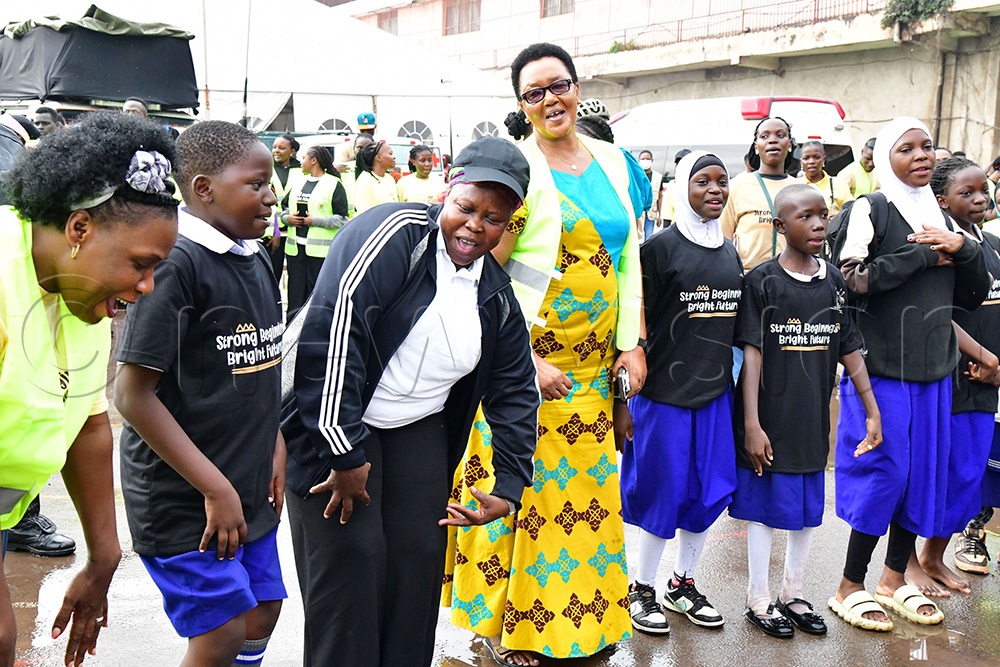
Dr. Joyce Kaducu Moriku, Minister of State for Primary Education (3rd left), Agnes Mugisha Kabalisa, head teacher of Nakivubo Blue Primary School (4th left) with learners and other participants gearing up for the national launch of the Early Childhood Care & Education (ECCE) policy 2025. (Photo by Mpalanyi Ssentongo)
“Playing while learning at this level is a key matter. It grooms social etiquette, ensuring that a child develops holistically. That is why we are providing directives for nursery teachers and not anybody thinking that they can teach our children,” Kaducu said.
She added that the ministry needed to streamline the teaching and learning process at the early childhood level, noting that it would bring co-ordination and structure.
Day care centres are no longer part of nursery schools
In the new policy, day care centres should not be within the premises of primary schools. Kaducu revealed that they will instead be around the premises of workplaces.
“They will be in markets and other institutions where mothers who are working are offered a place for their babies to stay as they work. That is why we are saying that day care centres are not part of and children between zero and three years cannot go to nursery schools,” she said.
She urged all district leaders to follow, monitor and ensure effective implementation of the policy so that schools can adhere to the Ministry guidelines and minimum standards.
Childhood policy is timely
Network of Early Childhood Development Actors Uganda (NECDA) vice-chairperson Joseph Kabanda said the policy is expected to greatly improve early childhood education in the country.
“There was no clear guideline on how the learning spaces should look concerning teacher training, registration and management committees, but now, every detail has been made clear in this policy,” he said.
The area of data acquisition is one that Kabanda affirmed will realise improvement.
“We shall have data about every ECCE centre, and this will help the Government plan even better for the sector,” he noted.

Dr. Joyce Kaducu Moriku, Minister of State for Primary Education (centre, carrying a baby) together with learners, teachers and other stakeholders gearing up for National launch of the Early Childhood Care & Education (ECCE) 2025. (Photo by Mpalanyi Ssentongo)
The walk was a lead-up to the official launching and eventual rollout of the policy slated for today at the Nakivubo Blue Primary School.
About the ECCE Policy
The ECCE policy 2026 aims to increase equitable access to quality education for children aged 0–6, shifting from private-sector dominance to active government provision in underserved areas. The policy emphasises holistic development, professionalises caregivers, and mandates strict licensing, safety standards, and management structures for centres.
The policy involves key aspects, including the target population,0-3 for early childhood care and 3-6 for pre-primary education, Government expansion, regulation and licensing, financing and accountability.