
ICT teachers equipped with computers, management skills to boost digital learning
The teachers, operating under their umbrella body, the Digital Change Agents, underwent a three-day intensive training at the Uganda Institute of Information and Communications Technology (UICT) in Nakawa.
A group of 24 information and communication technology (ICT) teachers has been equipped with essential digital teaching and laboratory management skills. (Photo by Ivan Tsebeni)
_________________
A group of 24 information and communication technology (ICT) teachers has been equipped with essential digital teaching and laboratory management skills, alongside receiving computer equipment to enhance learning in their respective schools.
The teachers, operating under their umbrella body, the Digital Change Agents, underwent a three-day intensive training at the Uganda Institute of Information and Communications Technology (UICT) in Nakawa. The training focused on strengthening ICT pedagogy and improving the management of computer laboratories in secondary schools.
At the close of the training, three secondary schools were selected to receive a total of 30 units of computer equipment to support ICT teaching and learning. The beneficiary institutions include St John Bosco Dokolo SS, Buhobe SS, and Waitambogwe SS.
Call for proper use and knowledge sharing
Speaking at the handover ceremony on March 19, 2026, Dr Irene Nakiyimba, deputy principal of UICT, emphasised the importance of proper maintenance and responsible use of the donated equipment. She urged the teachers to ensure that the computers serve not only students but also the wider community.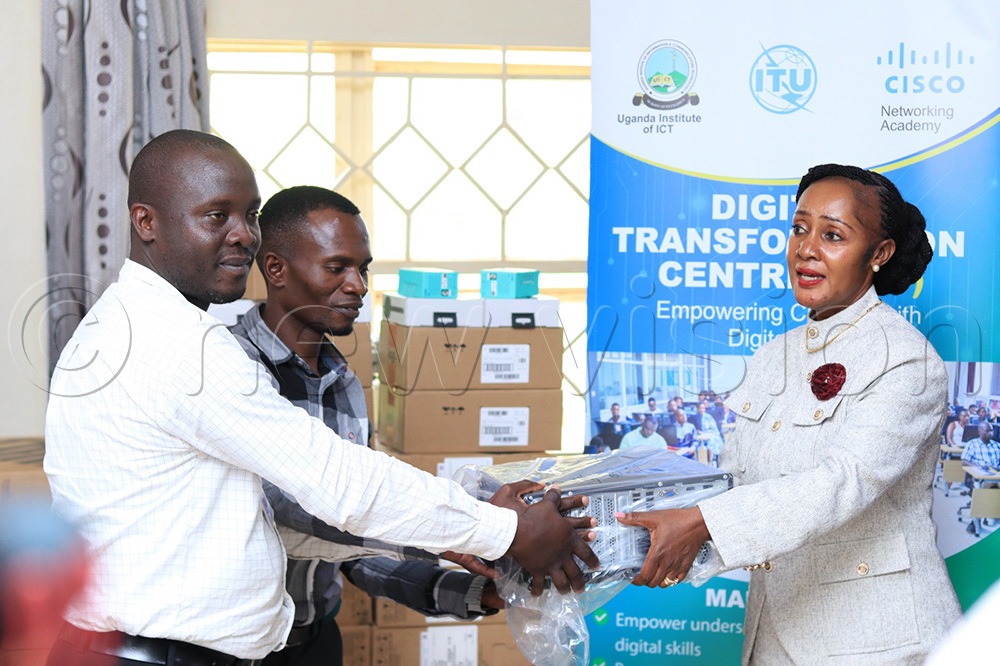
The teachers also received computer equipment to enhance learning in their respective schools. (Photo by Ivan Tsebeni)
“We expect you to take good care of these computers so they can serve for a long time,” Dr Nakiyimba said. “These resources are not just for your schools but for the communities around you. Let them benefit from the knowledge and access you now have.”
Dr Nakiyimba also called on the trained teachers to act as multipliers of knowledge by passing on the skills acquired during the training to their colleagues.
“Go back and train other teachers. Do not keep this knowledge to yourselves. Uganda needs more digitally skilled educators,” she added. “We also caution you against any malicious use of these tools. Instead, focus on empowering the young population with ICT skills that are critical in today’s world.”
Focus on practical ICT learning
Francis Bwire, officer for administration and business development at UICT, provided details about the equipment distributed and reiterated the importance of ensuring that learners benefit directly from the initiative.
“The 30 computers handed over are meant to improve practical learning in ICT. We have deliberately selected schools from different regions to widen impact,” Bwire explained. “We urge teachers to make full use of these machines to ensure that students gain hands-on experience, which is essential in ICT education.”
He added that the training also covered key aspects of laboratory management, including maintenance, troubleshooting, and proper scheduling of computer usage to maximise access for learners.
Teachers welcome initiative
Some of the participating teachers welcomed the initiative, describing it as timely and transformative, especially for rural schools that often lag behind in digital infrastructure.
Winfred Bukenya, an ICT teacher at Waitambogwe SS, said the training and equipment would significantly improve learning outcomes in her school and surrounding community.
“This initiative has come at the right time. It will have a big impact not only on our students but also on the community, which has limited access to ICT resources,” Bukenya said. “However, we still face challenges such as slow electricity connections in rural areas, which could affect the full utilisation of these computers.”
Similarly, Mose Bwambale, an ICT teacher from Kilembe SS, noted that the training had enhanced his confidence in handling both teaching and technical aspects of ICT.
“We have gained practical skills that will help us manage our computer labs better and deliver lessons more effectively,” Bwambale said. “This is a big step toward improving ICT education in our schools.”
Paul Joseph Emenyu, director of studies at St. John Bosco Dokolo SS, expressed gratitude for the support, saying the equipment would bridge a critical gap in ICT instruction.
“Our school has been struggling with limited ICT resources, and this support will greatly enhance our teaching capacity,” Emenyu said. “We are committed to ensuring that both students and teachers fully benefit from this opportunity.”
The initiative is part of broader efforts to strengthen digital literacy in Uganda’s education sector, particularly in underserved regions. By equipping teachers with both skills and tools, stakeholders hope to create a ripple effect that will improve ICT competence among students nationwide.
As the country continues to embrace digital transformation, such interventions are expected to play a key role in preparing learners for a technology-driven future.