
Govt launches health education policy to bridge skills gap
The policy was unveiled on April 29, 2026, at the Source of the Nile Hotel in Jinja city during the official opening of the 4th National Health Professional Education and Training for Healthcare Conference.
The Minister of Higher Education John Chrysostom Muyingo (5th right) joined by the Minister of Health Dr. Jane Ruth Aceng (middle) and the Commissioner of Health Education and Training at the Ministry of Education and Sports Hajati Dr. Safina Museene (5th left) in holding copies of the National Education and Training for Health Policy 2025 which was launched during the 4th National Health Professionals' Education and Training for Healthcare Conference at Source of the Nile Hotel in Jinja City on April 29, 2026. (Photo by Donald Kiirya)
_________________
JINJA – The Government has officially launched the National Education and Training for Health Policy 2025, a strategic framework designed to overhaul the training of health professionals and align their skills with the urgent demands of the country’s healthcare system.
The policy was unveiled on April 29, 2026, at the Source of the Nile Hotel in Jinja city during the official opening of the 4th National Health Professional Education and Training for Healthcare Conference.
A shift toward competence and specialisation
Representing First Lady and Minister of Education and Sports Maama Janet Kataaha Museveni, higher education state minister Dr John Chrysostom Muyingo emphasised that the era of supply-driven education is over.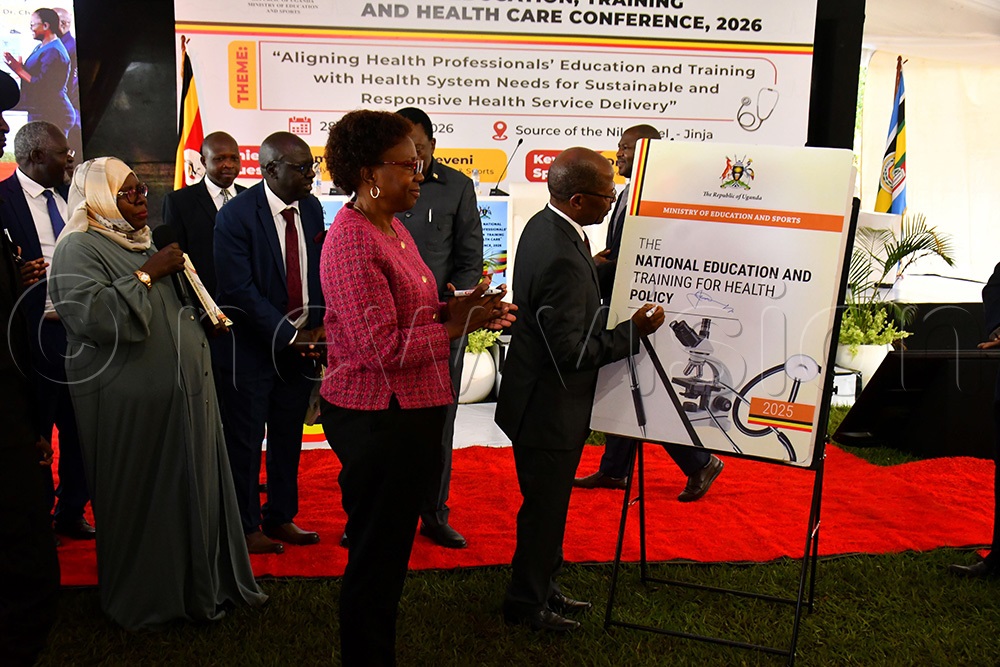
The Minister of Higher Education John Chrysostom Muyingo (right) launching the National Education and Training for Health Policy 2025 at the 4th National Health Professionals' Education and Training for Healthcare Conference at Source of the Nile Hotel in Jinja City on April 29th. Looking on is the Minister of Health Dr. Jane Ruth Aceng (middle) and the Commissioner of Health Education and Training at the Ministry of Education and Sports Hajati Dr. Safina Museene (left). (Photo by Donald Kiirya)
"Alignment is no longer an option; it is essential—the policy provides a clear framework to ensure that health professionals’ education and training are systematically aligned with national health priorities. We must ensure that what is taught in our classrooms and practised in our laboratories directly reflects the realities within our health facilities," Muyingo said.
He highlighted that the new policy focuses on competence-based training, standardisation of programmes and the integration of modern technology, including Artificial Intelligence and simulation tools, into health curricula.
Quality over profit
"Let our training schools not be focused on making money. Let our training schools be focused on quality production," Aceng urged.
She shared a compelling research story regarding post-caesarean infections, where a student’s study revealed that infections were originating from nurses’ hands rather than the environment.
"Our training must go with research and innovation. This policy recognises that education for health must be responsive to population needs—health services are not only required in the cities; they are required everywhere," she added.
Six strategic pillars for reform
Hajati Dr Safina Museene, the commissioner for health education and training, outlined the six core objectives of the policy, which was approved by Cabinet on October 6, 2025:
- Quantity and quality: Ensuring institutions admit the right numbers and students with strong science backgrounds.
- Specialisation: Moving beyond general training to produce experts in oncology, cardiology, and neurosurgery.
- Trainer capacity: Maintaining a 1:40 tutor-to-student ratio and ensuring trainers are a level above those they instruct.
- Infrastructure: Improving labs, libraries, and security for students on night rotations.
- Internship and hands-on training: Implementing strict performance assessments where failing an internship rotation prevents a student from progressing.
- Continuous professional development: Establishing a culture of lifelong learning for practising professionals.
"An intern who does not perform to the expectation of the requirements of their work will not go to the next level—you must update your knowledge regularly. It is not enough to say I graduated with my degree and I know it all," Museene said.
Health services director general Dr Charles Olaro said clinical skill alone is insufficient if not paired with leadership and management.
"I was definitely trained to be a good doctor; however, I was not taught to lead," he said.
"Leadership is what turns policy into practice. You can be a skilled surgeon, but the patient dies because the other parts of the system moved slowly—there’s no blood, or a referral failed," Olaro stated.
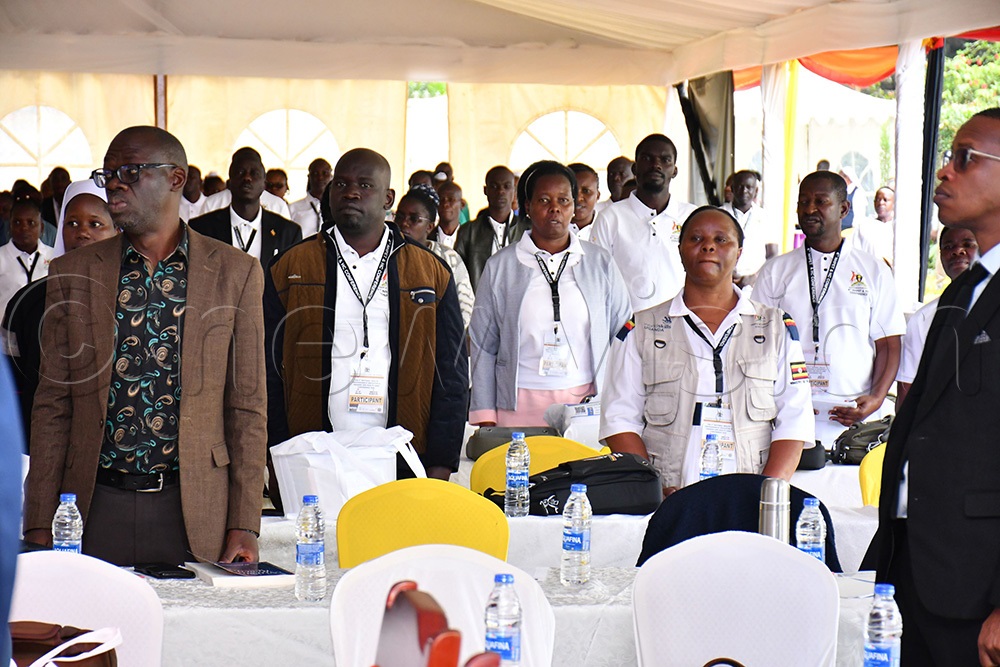
Some of the health professionals attending the 4th National Health Professionals' Education and Training for Healthcare Conference at Source of the Nile Hotel in Jinja City on April 29, 2026. (Photo by Donald Kiirya)
He proposed that 10% to 20% of the current scholarship budget be reallocated to specialisation training over the next decade to fill vacancies in regional and national hospitals.
Call to training institutions
Providing a perspective from the private sector, Sulaiman Lule, the executive director of Laura School of Nursing and Midwifery in Bugweri, welcomed the policy’s requirement for schools to establish their own health facilities.
"This policy is emphasising that those schools, as a minimum standard, should start at least by initiating and putting up health facilities themselves to avoid congestion in other practicum areas," Lule said.
The conference continues in Jinja, with stakeholders expected to develop practical recommendations for the immediate implementation of the policy across all health training institutions in Uganda.