
Gen Z politicians Alionzi, Maseruka light up Makerere on maiden return
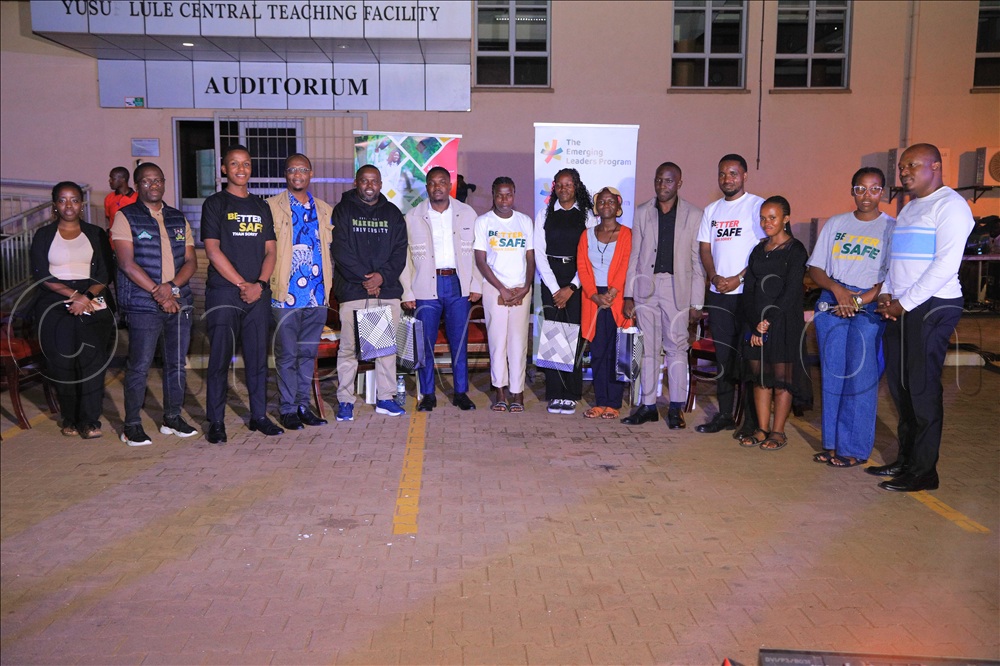
The Ekyoto panel discussion, organised by the Emerging Leaders Programme (ELP), brought together former Makerere guild presidents Lawrence Alionzi and Robert Maseruka, alongside the current guild president, Gracious Kadondi.
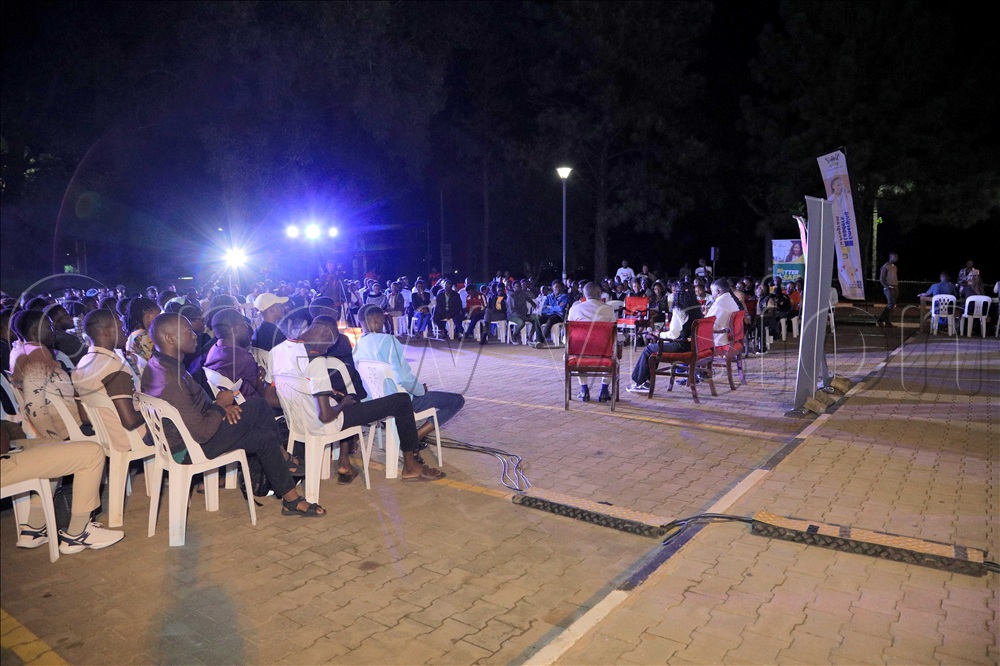
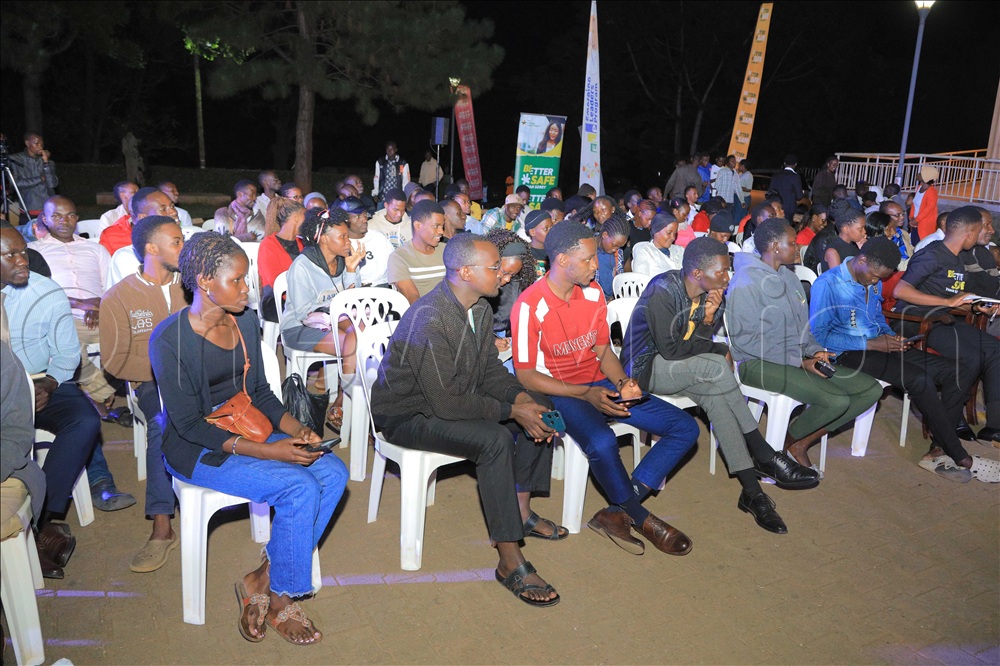
Arua City Mayor Lawrence Aliozi, Makerere guild president-elect Kadondi Gracious, and Mukono Municipality member of parliament elect Robert Maseruka, addressing students at Makerere University on May 02, 2026, during Ekyoto session. (Photos by David Lukiiza)
________________
Makerere University was awash with an electrifying atmosphere as some of Uganda’s youngest political leaders who emerged from the 2026 general election took to the stage to challenge, inspire and ignite a new generation of student leadership.
The Ekyoto panel discussion, organised by the Emerging Leaders Programme (ELP), brought together former Makerere guild presidents Lawrence Alionzi and Robert Maseruka, alongside the current guild president, Gracious Kadondi.
The value and character-driven ELP is championed by the First Lady and Minister of Education and Sports, Mrs Janet Museveni, and is implemented by a consortium comprising Makerere University, Global Leadership Summit and Life Ministry Uganda.
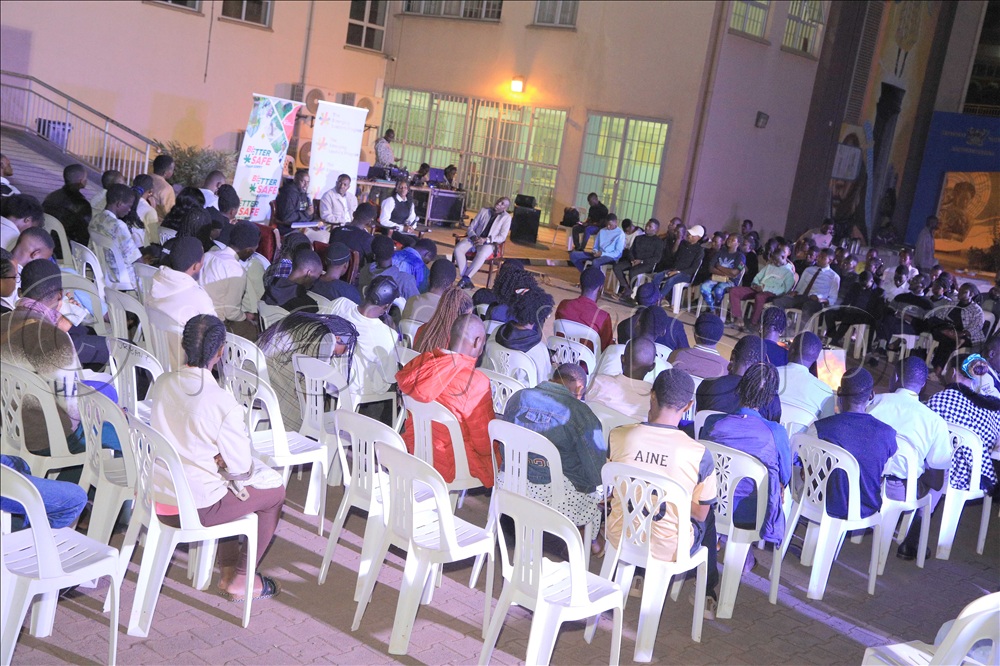
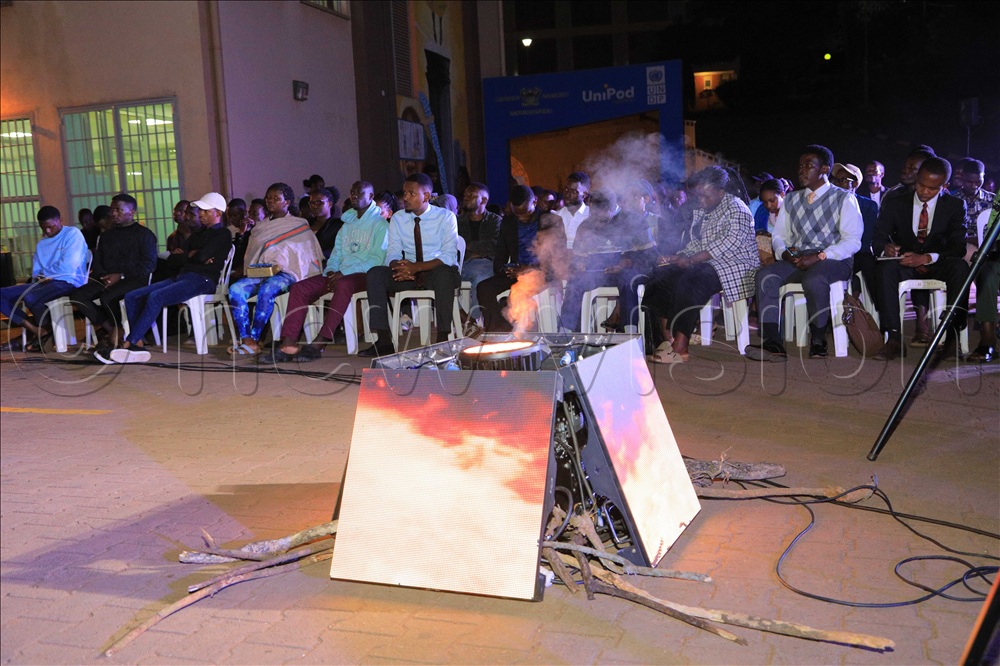
The trio delivered candid reflections on leadership, politics and personal conviction, striking a chord with hundreds of students who filled the venue.
Alionzi, aged 26 and now mayor-elect of Arua city, started off by addressing one of the most frequently asked questions about his political journey, his decision to join the NRM and abandon the National Unity Platform (NUP), a party which secured him the 88th guild presidency in November 2022.
“I will assume that it did not come late and so I will say I already gave my standard answer to this question, yes, and I stick to it,” he said, stressing that political identity goes beyond party affiliations.
“Political parties are not the only sensors of belonging as far as the political arena is concerned,” he said.
He challenged students to think beyond labels and divisions, warning against superficial judgments.
Using a metaphor, he said: “When you paint a monkey, its behaviour does not change; it will still jump from one tree to another.”
Drawing from his campaign experience in Arua city, Alionzi stressed the importance of unity over sectarian politics.
“The Ayivu are not the enemy of the Terego, the Terego are not the enemy of the Maracha, our enemies are poverty, illiteracy and disease,” he said.
Despite criticism from some quarters, he maintained that his message had been misunderstood rather than misplaced.
“So how do I know I'm not being misunderstood? Because I know unity is okay in whatever form,” he explained.
On leadership and decision-making, Alionzi urged students to stay anchored to their vision.
“Only time will tell. But if at that moment you show it is the right thing, then you stick to it,” he said.
He advised young leaders to constantly evaluate their actions against their long-term goals: “If at any point you are faced with a challenge, look at your vision. Does it make a positive contribution to your vision or a negative contribution?”
Reflecting on his grassroots campaign, he highlighted the value of direct engagement.
“I had 469 villages, and I moved to each of them twice in the primary elections. Every day I was doing ten rallies and my approach was grounded in practical realities rather than theory,” Alionzi said.
“I don't claim any expertise on the subject of politics. What I have said are just real and urgent solutions to the problem I was faced with,” he added.
Alionzi likened political struggle to childbirth, emphasising resilience; “Every political arena is like a woman giving birth, unique with its unique pain.”
On his legacy as guild president, he remained modest. “Sometimes we make history, sometimes history makes us. I think I'm just a result of history,” he said.
He warned emerging leaders against seeking validation from public applause. “When no one is clapping for you, don't do it for the applause, do it for some other reason. For as long as that reason is there, I will continue to do it, and only time will tell my story,” Alionzi said.
A generation with a mission
Maseruka, now Member of Parliament-elect for Mukono South, used the platform to highlight the importance of structured leadership development.
“It is important to note that in Uganda we lack such places where young people can be involved, get to understand, get to be educated, get to be trained,” he said, citing that exposure goes beyond the formal school curriculum.
He praised the ELP for filling that gap. “We are so thankful because we are very sure that through this, we have leaders who are going to impact this country,” he said.
Maseruka challenged the emerging leaders to reflect on their generational responsibility.
“Every generation has a mission, and it is upon that generation to either fulfil or betray the mission,” he said.
He emphasised that Uganda’s future will be shaped by present attitudes and actions.
“What our country is going to look like in the next 40 years is going to be determined by how we treat ourselves as we speak today,” he said.
Calling for unity, he dismissed identity-based divisions. “It is not about where you come from, your tribe, your political party, your religion, it is about how ready we are to see the country we want in the next 40 years,” he said.
Maseruka also underscored the importance of personal discipline in leadership. “The ELP programme trains us to have personal administration of ourselves to influence others in their day-to-day living,” he noted.
He urged young leaders to prioritise values over convenience. “We should be leaders led by conviction rather than convenience,” he said, adding that leadership must be rooted in service.
Breaking barriers and redefining leadership
Kadondi drew applause as she shared her journey to victory, attributing her success to a shift in student mindset.
“By the time we voted, I had about 800 people viewing my status updates, yet I received 6,800 votes. That means thousands voted for me without even having my contact,” Kadondi said.
Addressing gender dynamics in student leadership, Kadondi spoke about overcoming stereotypes.
“Whenever I’m part of a minority group, I always want to stand out and prove that we also can,” she said.
She challenged perceptions about female leadership at Makerere. “People say Makerere cannot be led by a female, yet we have had five female guild presidents. I wanted to prove that even as a woman, I can lead,” she said.
Kadondi also emphasised mentorship and empowerment, stressing, “If my candle is lit, it doesn’t cost me anything to light another.” She urged leaders to create opportunities for others.
“It’s not about holding a big position, it’s about creating space for others to grow,” she said.
ELP shaping future leaders
Currently in the pilot phase, ELP was launched at Makerere University on September 24, 2024, after conceptualisation at State House. Its implementation framework is tailored on four pillars: Sexually fortified, Addiction-free, Financially faithful, and Education-focused (SAFE).
The ELP programme director, Geoffrey Denye, described the session as a powerful peer-driven engagement.
“Today we had a powerful talk, it was young people speaking to young people. students connected deeply with the speakers because “these are people they identify with.”
Denye explained that the Ekyoto forum is part of a broader framework that includes SAFE clubs and small peer groups where students reflect on lessons and personal challenges.
“Those who would like to speak to people about issues affecting them. We link them up with counsellors, coaches and mentors,” he said.
According to Denye, the initiative is already yielding results. “We are seeing many children emerge into positions of leadership; two of the speakers today are alumni,” he said.
He added that the programme has reached over 25,000 students, with each session attracting between 300 and 400 participants.
“Change starts small, but we know that it is going to catch fire. The programme is now extending beyond Makerere through partnerships and digital platforms, reaching institutions such as Makerere University Business School (MUBS) and Kabale University,” Denye said.
“We are using technology to reach far and wide,” Denye said while reiterating that future plans include expanding to more universities while offering mentorship, counselling and internship opportunities.
Deogracious Mawanda, one of the students, commended the leaders for the inspiration they provided, while wondering how they managed to overcome highly monetised political competition at their age.
Monica Nasazi, a former guild speaker, engaged the guild president on how best she will navigate stereotypes associated with being a woman to deliver on her promises with impact.