
Teso education giant Ocaet laid to rest as bishop warns against post-election hostility
Bishop Odongo made the remarks while presiding over prayers at the burial of prominent Teso educationist Byatt Horace Ocaet in Orungo County, Amuria District, which was attended by hundreds of mourners.
The Bishop of Soroti Anglican Diocese Kosea Odongo addressing mourners who had gathered in the the home of the late Horace Ocaet to pay their last respects. (Photo By Alfred Atwau)
__________________
Soroti Diocese Bishop Kosea Odongo has cautioned political leaders against promoting violence and hate speech even after the conclusion of the general elections.
Bishop Odongo made the remarks while presiding over prayers at the burial of prominent Teso educationist Byatt Horace Ocaet in Orungo County, Amuria District, which was attended by hundreds of mourners.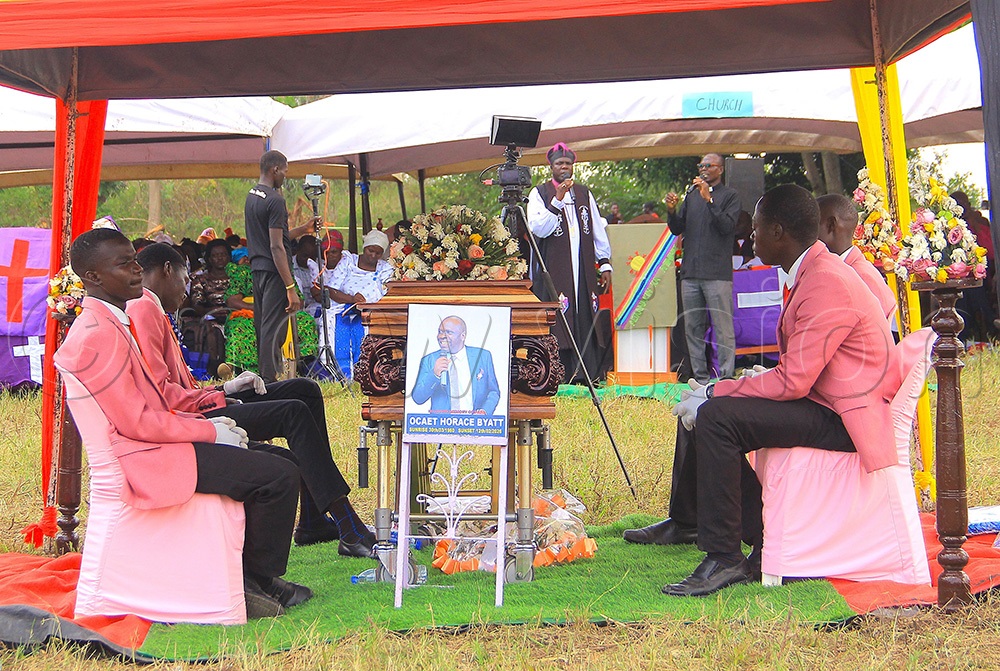
Horace Ocaet died at 66-years-old, leaving behind eight children and 16 grand children. His legacy in Teso sub-region was mainly built on education. (Photo by Alfred Atwau)
He observed that despite the end of campaigns and voting, parts of the Teso sub-region continue to witness intimidation, hate speech, and isolated acts of violence from both victorious and defeated candidates.
He urged leaders to promote reconciliation, unity, and peaceful coexistence among communities, stressing that leadership should now focus on service delivery rather than sustaining political rivalries.
He said lingering tensions between rival political camps threaten community harmony and development.
“This business of threatening others must stop. The period of campaigns and elections is over. We must accept the results and begin working together,” Bishop Odongo told mourners.
He urged both winners and losers to shift focus from political rivalry to service delivery and reconciliation, reminding residents that politics is seasonal but families and communities are permanent.
Orungo heated political environment
The bishop’s message carried particular weight in Orungo County, one of the most contested constituencies during the elections. The race between NRM’s Teddy Anyuk Osire and Foreign Affairs Minister Jeje Odongo drew national attention.
The constituency also recorded one of the first election-related deaths in the Teso sub-region following clashes between rival supporters, an incident that heightened fear and mistrust within the community.
A life dedicated to education
Born on March 30, 1960, in Orungo sub-county to the late Enosi Aropet and Hilder Mary Ilora, Ocaet was widely recognised for his lifelong dedication to education.
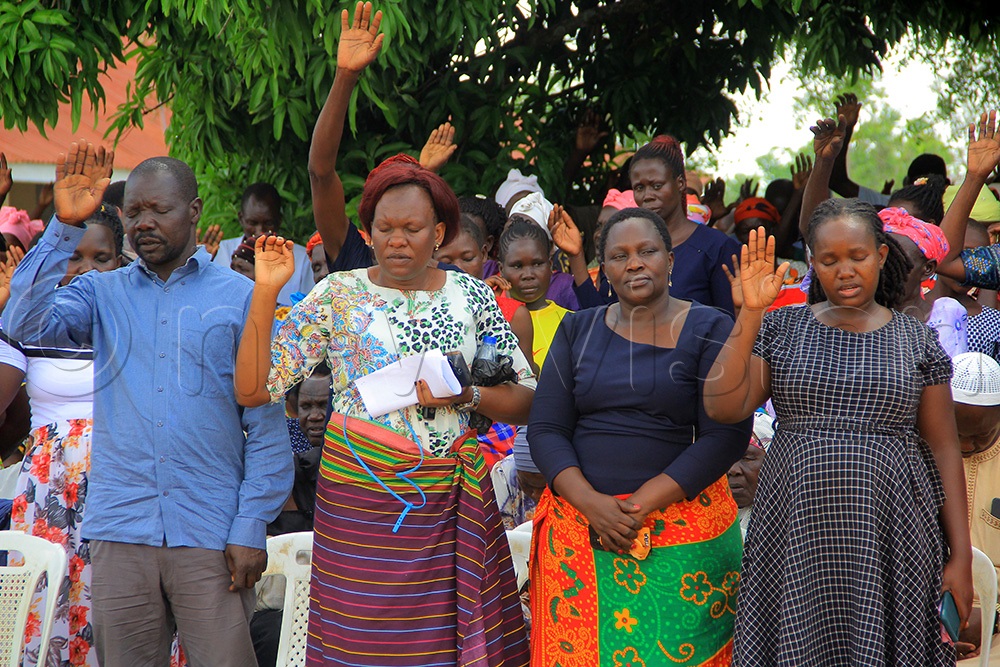
Mourners came from different places across Teso, Lango and Gulu sub-regions to pay their last respects. (Photo by Alfred Atwau)
He began his studies at Orungo Primary School before joining Layibi College for O-Level and A-Level. He later obtained a Diploma in Education from National Teachers College, Ngetta and a Bachelor’s degree in Education from the Institute of Teacher Education, Kyambogo (1995–1997).
Professional Career
- Mathematics teacher at Teso College Aloet
- Deputy Headteacher at Dr Obote College, Boroboro (2010–2016)
- Headteacher at Amuria Secondary School
- Retired in 2020 after decades of service
Colleagues described him as disciplined, professional, and deeply committed to mentoring fellow educators.
Rt. Headteacher Martine Okiria Obore, Director of Bethany Girls in Soroti City and former national chairperson of headteachers, described him as a unifying professional who shaped many careers.
Service beyond the classroom
Beyond education, Ocaet played a central role in church leadership within the diocese, serving as:
- Secretary of the diocesan synod
- UNEB Chief Examiner
- Secretary, Teso Secondary Schools Mock Examinations Association
- Member, Soroti District Disability Council
- Chairperson, Board of Governors, Orungo High School
- LC1 Chairperson at Teso College Aloet
- Head of the Ikaruwok clan
Church leaders said his death leaves a significant leadership gap in the Orungo Archdeaconry, especially following recent losses among other committee members.
Emotional tributes
Amuria District LC5 Chairperson Moses Emabu used the moment to highlight the broader issue of low teacher pay.
“The person we are burying today is a teacher, someone who transforms lives, yet he died earning little. Leaders must recognise the contribution of teachers and ensure better pay,” Emabu said.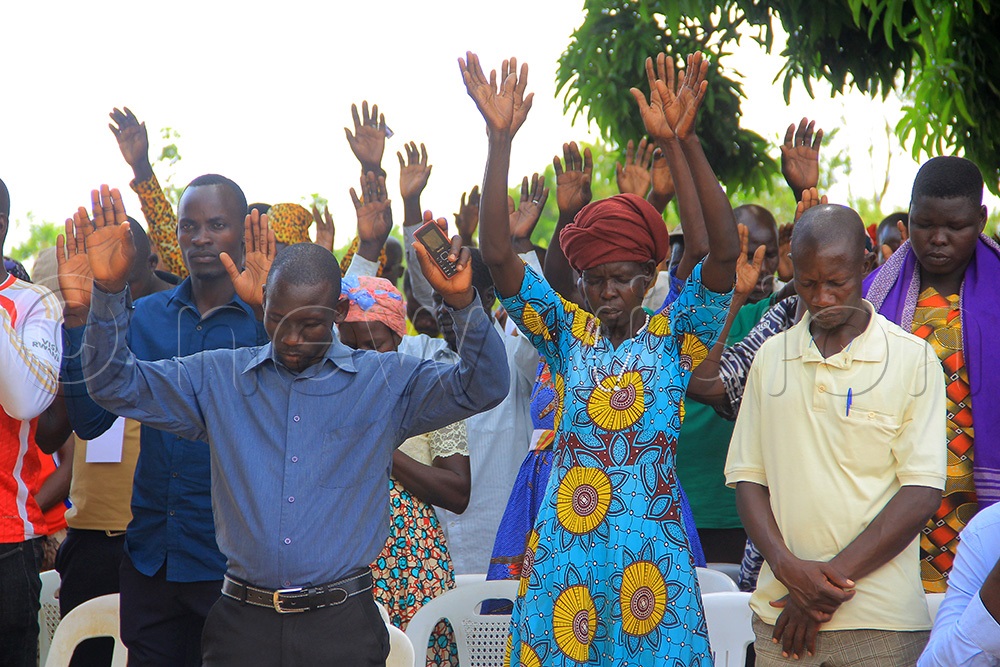
Mourners praying for the soul of the late during the burial. (Photo by Alfred Atwau)
Retired Bishop Charles Bernard Obaikol Ebitu praised Ocaet’s ability to unite people and build institutions without division.
Circumstances surrounding his death
According to a postmortem report from St. Clair Hospital, Ococcia, read by family member Simon Engitu, Ocaet died from hypovolemic shock resulting from severe acute watery diarrhoea.
Family members indicated that he had taken herbal medicine intended to manage diabetes, which reportedly triggered vomiting and diarrhoea.
A final call for unity
Concluding the burial service, Bishop Odongo linked Ocaet’s legacy to the region’s need for peace.
“If it were in my power, I would have wanted him to live longer. Whenever I gave him an assignment, he delivered beyond expectations. We deeply miss him.”
He urged residents to honour Ocaet’s memory by building peaceful communities, strengthening institutions, and focusing on development rather than political division.
Legacy of service
For many across Teso, Ocaet’s passing marks the end of an era defined by discipline, mentorship, and integrity.
Speakers described him as a quiet but effective leader whose influence extended beyond classrooms into families, churches, and institutions.