
When protecting consumers becomes dangerous
The bureau estimates more than half of inspected products fail to meet required standards. While thousands of inspections are done annually, officials admit they can only cover a portion of the market due to limited resources.
UNBS engaging supermarket owners on selling certified products. (Credit UNBS)
_________________
The morning begins like any other in Gulu, one of the three cities in Northern Uganda. Retail and wholesale shops, supermarkets creak their doors open as a stream of customers flood the streets looking for a variety of goods.
To most residents, it is business as usual. But for inspectors from the Uganda Bureau of Standards (UNBS), the day carries a different weight, marked with hostility, resentment, and sometimes, violence.
The bureau estimates more than half of inspected products fail to meet required standards. While thousands of inspections are done annually, officials admit they can only cover a portion of the market due to limited resources.
Peter Abongu leads a group of inspectors moving from shop to shop, supermarkets and confectioneries, checking expiry dates, quality standards, product labels, and certification marks. They remove non-conforming items including expired foods, unsafe domestic goods, and counterfeit products from the shelves in the presence of furious or agitated traders.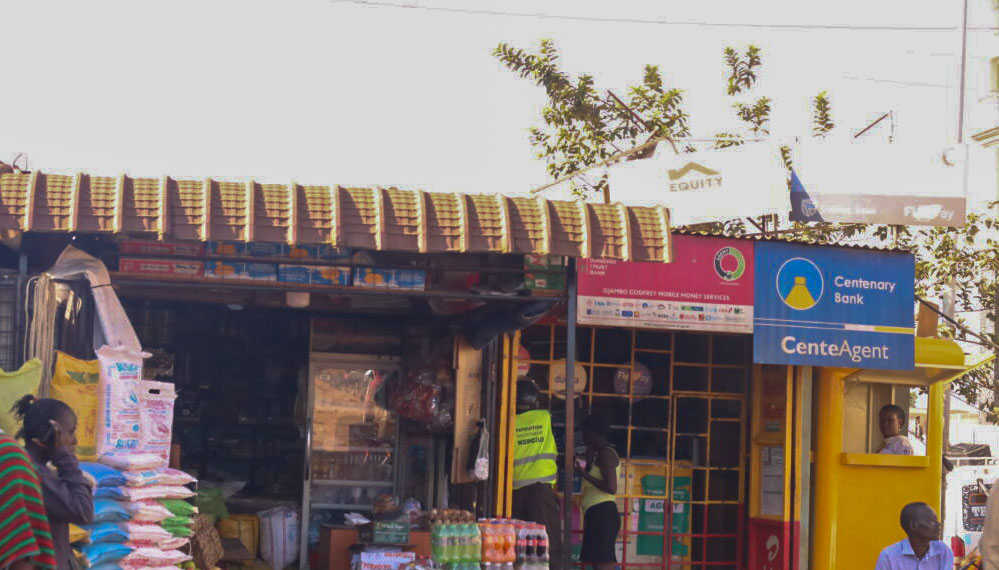
Retail shops selling consumable items. (Photo by Davis Buyondo)
Their work involves closing businesses, including bakeries, juice producers, and other outlets for failure to meet food safety standards. But one defiant bakery owner later decides to illegally break the UNBS seal and resumes production.
Even the World Health Organisation (WHO) links the prolonged exposure to unsafe or contaminated products to chronic illnesses, including cancers, mainly caused by harmful chemicals and food contaminants like aflatoxins.
However, when the team goes back for a follow-up check, he suddenly loses control and attacks the inspectors. In the scuffle, he grabs Abongu’s hand and bites down hard, leaving a deep, open wound that bleeds profusely. “My colleagues quickly rush him to a nearby hospital for treatment while the police arrest the suspect immediately,” he recounts.
Abongu, once the regional head of Market Surveillance in Northern Uganda, told the New Vision that this is not the first time he has been threatened or attacked while on duty. “Our responsibility of protecting consumers from dangerous products on the market resembles a daily frontline battle,” he explains, adding that their efforts are hardly noticed and appreciated by some people.
“Many traders, producers or manufacturers treat us like enemies,” he says, adding that some think the officials are selectively targeting them, while others believe the inspectors are trying to destroy their livelihoods.
Such incidents are increasingly common while enforcing product safety standards across the country. They highlight the struggles of upholding these standards in a hostile business environment.
“Sometimes we feel unsafe going into the field, but we have no choice and work must go on,” he reveals.
Operating under threat
While the law allows the inspectors to seize and destroy substandard goods under the UNBS Act, obstructing or assaulting enforcement officers on duty remains evident in many cases.
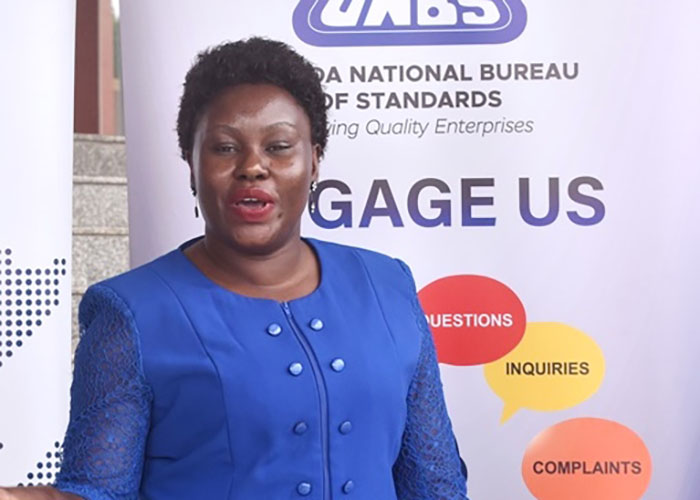
Damalie Kanyago, an administrative officer, UNBS Mbarara Regional Office, explaining her plight while enforcing standards. (Photo by Davis Buyondo)
But Gaston Kironde, the Principal Inspector in charge of Imports at the standards bureau (UNBS), recounts two of the many incidents that nearly cost his life during product inspection in Mbale district.
They were taking out substandard items from a shop in Mbale city when the owner called her husband to intervene. The enraged husband, also a retired army officer, arrived and grabbed one of the police officers’ guns.
“A scuffle ensued as the man wanted to pull the trigger to shoot us. But he was eventually overpowered and arrested,” he says. The operation was suspended.
Another incident occurred a few years back in Musoto village in Mbale City Industrial Division, as UNBS officials were confiscating substandard locally distilled spirit and brewing apparatus. Kironde says they were confronted by an angry mob that wanted to lynch them.
“The residents were incited by local politicians to confront us. We were forced to withdraw, but some pursued the team and jumped onto our truck,” he states.
Kironde explains that the resistance among traders or producers is often coordinated. “For shops selling the same items, such as electric appliances, food, and beverages. When you enter one, others close and disappear or alert others, which hampers operations,” he reveals.
He adds that sometimes the business owners lock the inspectors inside their shops and disappear, leaving them stranded.
Emotional stress, motivation
The officers say enforcing standards is one of the most stressful jobs, but they continue going back to the field because they uphold a very critical mandate of protecting people from harmful and dangerous products, and also to save our environment.
Consumer advocates, like the Uganda National Consumers Organisation (UNCO), attribute the problem to low public awareness, whereby the majority of consumers prefer cheaper products over safety.
“So, we are motivated by some of our consumers who support us. Whenever we are doing such operations, they are always positive about our work and the leaders, government officials, the police and other political leaders who always support our activities and defend us,” Abongu and Kironde say.
A misunderstood mandate
UNBS is tasked with the responsibility of ensuring that products on the market comply with the requirements set out in relevant standards and do not endanger public health, safety or any other aspect of public interest protection. Market Surveillance activities build consumer confidence by identifying, tracking down and/or removing non-conforming goods, either before or after they are placed on the market.
However, Daniel Arorwa, who heads the Market Surveillance department at UNBS, explains that every operation comes with a risk since many business owners react angrily and resist being checked. He says the traders and producers often perceive inspection as a greater threat to their businesses than a way of protecting consumers from health risks.
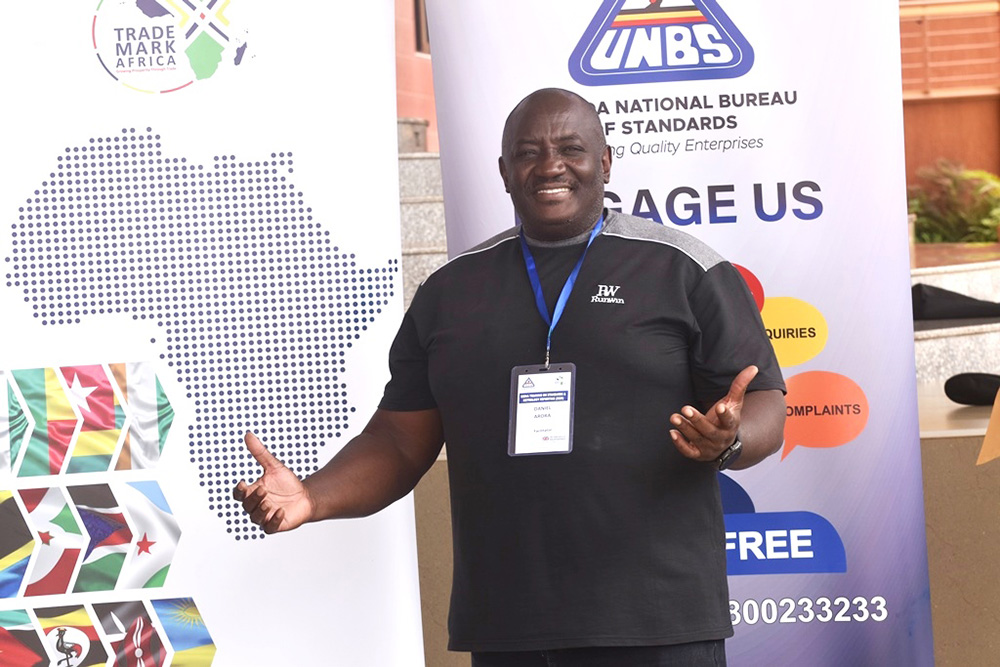
Daniel Arorwa, the head of Market Surveillance department at UNBS. (Photo by Davis Buyondo)
“Our enforcement decisions are mainly based on science, and our officers are professionals. They include experienced engineers, chemists, and microbiologists,” he says. He explains that the poor perception fuels public distrust and, incites aggression in some cases. “The public needs to see us as partners and not enemies because we are helping them avoid harmful products. We need to work together,” he says.
During enforcement, he says, many bystanders, including the consumers of the product, often side with traders or manufacturers, looking at the inspectors as enemies. “They will defend someone who is selling expired goods, arguing that ‘No one has died’, forgetting that the risk is real,” Arorwa explains.
Health experts warn that the product does not cause immediate harm, but this does not imply it’s safe. Many dangers associated with substandard goods like chemicals and contaminated food, always develop over time, leading to organ damage or cancer.
In some cases, operations can be classified as high-risk and the officers need to be extremely vigilant and well protected to do enforcement. “Intelligence is often gathered in advance and now we encourage our officers to move together and avoid isolation,” he says.
The bribery dilemma
While carrying out their work, Arorwa says, the inspectors often encounter attempts at bribery. “Sometimes even before we start carrying away substandard items from the shops, the owners are already offering money so that we leave them,” he adds.
And when the checking team declines, then the story quickly turns against them. “The same person will then tell others that the officers wanted more money,” he explains. As a result, such information causes mistrust and damages the reputation of the institution, even when officers act professionally.
However, Arorwa says that corruption cases have also been reported within the system. In the past, he adds, some officials have been arrested and charged in court for soliciting bribes from manufacturers and traders.
He further acknowledges the problem but says that disciplinary action is always taken when it happens. “The cases are dealt with. But they damage public trust,” he states.
The economics of compliance
According to the Uganda National Bureau of Standards (UNBS) data, approximately 58% percent of goods on the Ugandan market were substandard.
For many traders like Rehma Nasozi, who runs a groundnut processing machine in Masaka city, the issue is not just awareness but survival. She adds that in Uganda’s informal economy, profit margins are usually very small. “Therefore, selling cheaper goods, whether substandard or not, can give the traders a competitive advantage, and this is risky for public health,” she says.
Economists say this points to a bigger problem in Uganda’s informal economy. Some traders say the inspections come abruptly, causing heavy losses and a threat to their livelihoods.
“Some of us don’t know whether the products we are selling are non-compliant since we get them from different suppliers. And when those inspectors come, we lose everything,” they say.
Seasoned business analyst Jamiruh Mutaka says the traders face unbearable pressure from stiff competition, customers demanding low-priced goods, strict regulators enforcing standards, and the rising supplier costs in a tough economy. “So, they are just trying to keep their businesses running,” she explains.
Limited resources
Apart from hostility, Arorwa says UNBS is grappling with severe staff shortages and they are still agitating for more staff. “We are currently over 600 staff instead of 1,200 required to operate effectively.
This staffing gap makes it hard for the agency to conduct routine inspections, particularly at border points and in remote areas, where unchecked goods can easily enter circulation without being checked.
“As we speak, market surveillance is understaffed. There are only 37 officers, including the department head, covering the entire country,” he reveals, adding that with this thin number, some border entry points usually remain completely unchecked.
Import Consignments Inspected Over the Years (https://public.flourish.studio/visualisation/28127927/)
He says the limited workforce largely affects inspections, yet the available teams can hardly cover entire towns. “Because of a few officers, traders often close shops in advance until inspectors leave,” the official explains.
In addition, the inspection delays are slowing the certification process and laboratory testing. With too few auditors and analysts, it takes longer to process certification applications, yet verification of certain equipment, such as weighing scales, slows significantly. “So even with machines, there isn’t enough skilled staff to keep things running effectively,” he adds.
The bureau further adds that its workload is huge and appeals to policymakers to approve the recruitment of more scientists and inspectors. Without extra staff, the bureau warns it will keep facing various challenges in enforcing standards and safeguarding consumers.
While threats and intimidation are frequently reported internally, data on arrests and successful prosecutions remain limited. This raises a concern about whether the perpetrators are held accountable.
Threat beyond the field
Damalie Kanyago, an administrative officer at the UNBS Mbarara Regional Office, told us that the threats come in different fashions and do not stop in the field, but they also follow the officers back to their offices.
“Traders and manufacturers whose premises were closed for various reasons come to the office angry,” she says, adding that they think the administrator’s office can reverse decisions without following due processes.
She cited a scenario where she was followed by some individuals seeking to influence their case. “It was so frightening and I realised I was not safe at all,” she recalls.
According to Kanyago, the threats mostly come from traders in busy towns and long-time business owners and they deliberately manipulate enforcement. Meaning they break the law intentionally.
“But in most cases, if you communicate and offer to assist regular clients with small businesses, especially in rural communities, some of them comply and visit our office for assistance, and they go back happy,” she explains.
She further recounts a scenario where a client attempted to bribe her to open a business that had been closed for violating standards and was still under inspection. However, when she declined, a client became furious and threatened her and started blackmailing her until the matter was addressed after the intervention of her superiors.
Strengthening UNBS capacity
In the 2024/25 Financial Year, UNBS conducted 4,028 market inspections across the country. This indicates a 1,575 increase from the 2,453 inspections done the previous year. It also reflects the bureau’s intensified efforts to ensure the products meet national standards.
In the 2025 Annual Report, Eng. James Kasigwa, the Executive Director of UNBS, noted that the Bureau is working to improve its capacity to fulfil its duties under the UNBS Act.
Eng. James Kasigwa, the Executive Director of UNBS. (Credit UNBS)
Kasigwa also noted that as more Ugandan businesses expand into regional and international markets, adherence to standards becomes increasingly important, not only for trade but also to ensure products are safe before reaching consumers.
This year, he says, the bureau plans to strengthen its presence in different regions in addition to supporting local manufacturers, and adequately equip inspectors so as to operate safely and efficiently to protect the public from unsafe and substandard products.
Uncertain future
The need for strong regulations will increase as Uganda’s economy continues to grow. Experts say that the supply chains are becoming more complex every day, while the volume of goods flooding the market is rising. “For a small number of inspectors, this means heavier workloads and potentially more risk while doing their job,” they add.
For now, Uganda’s standards enforcers continue doing their job despite persistent threats, resistance, and limited resources, while working tirelessly to protect millions of people from unseen dangers.