
'Uganda's ten-fold growth demands discipline and sustained implementation'
"Today, we reaffirm that trade and industry will remain at the heart of our transformation agenda," says the trade minister.
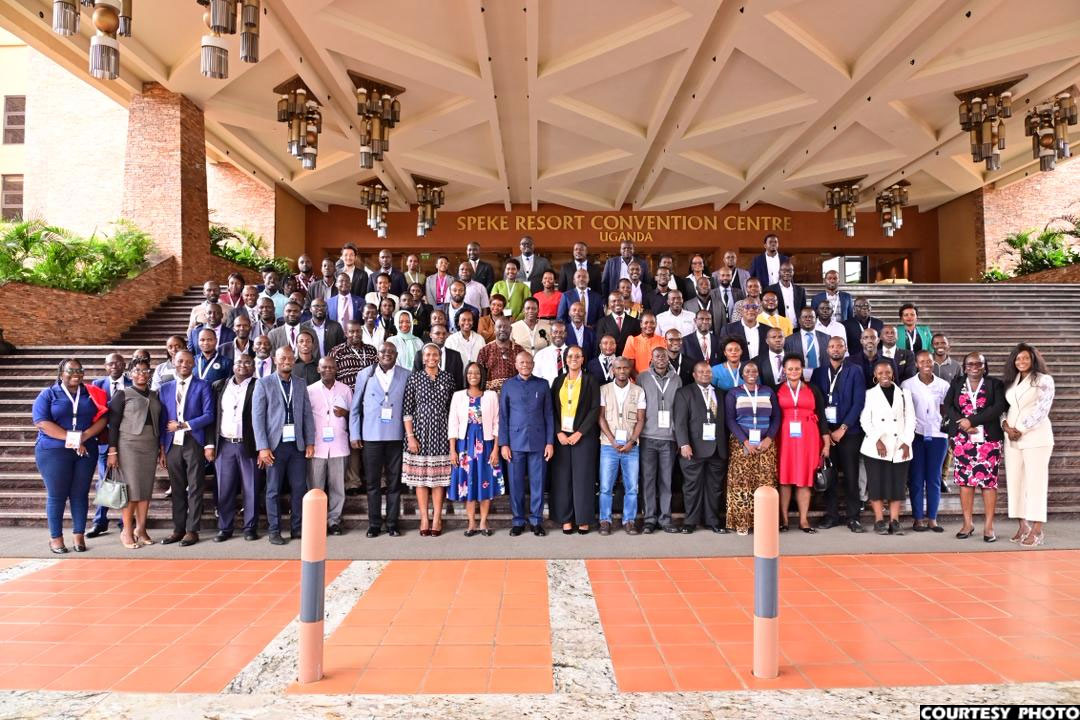
The National Trade Review Conference 2026 took place at Speke Resort Munyonyo, Kampala on March 4-5, 2026. (Courtesy photo)
_________________________
NATIONAL TRADE REVIEW CONFERENCE 2026
The two-day National Trade Review Conference 2026 ended on Thursday (March 5), with the Ministry of Trade, Industry and Cooperatives underlining that Uganda’s journey toward a 500-billion-dollar economy by 2040 demands "discipline, partnership and sustained implementation".
In closing the event at Speke Resort Munyonyo in Kampala, trade minister Francis Mwebesa, represented by trade state minister Gen Wilson Mbasu Mbadi (pictured below), said the "rich discussions" during the course of the conference had demonstrated that building a competitive, resilient and export-oriented economy is a shared national responsibility.
He emphasized the role of the private sector as the engine of trade development in Uganda, driving production, investment, and export growth.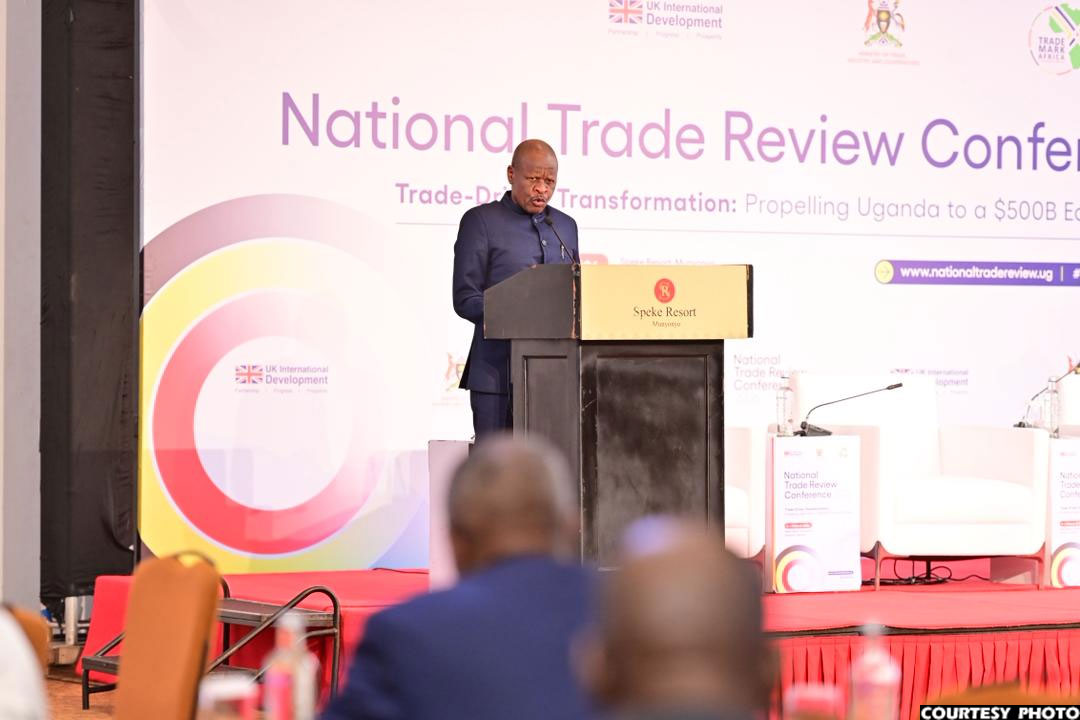
The trade ministry said it will prioritize strengthening trade financing mechanisms "to ensure that businesses, especially micro, small and medium enterprises (MSMEs), have access to affordable and predictable capital.
"We will intensify efforts to address non-tariff barriers that continue to constrain our exporters, and we will accelerate the full and effective implementation of the African Continental Free Trade Area," added the minister.
"Today, we reaffirm that trade and industry will remain at the heart of our transformation agenda."
Below is the minister's remarks in full:
____________________________
❝Permanent secretaries and heads of aencies
Development partners
Private sector leaders
Distinguished guests, ladies and gentlemen.
As we come to the close of this National Trade Review Conference 2026, allow me, on behalf of the Ministry of Trade, Industry and Cooperatives, to sincerely thank each one of you for your active participation, your candid contributions, and your unwavering commitment to Uganda’s economic transformation.
Once again, I wish to express special appreciation to our valued development partners, TradeMark Africa and UK International Development, for their continued technical and financial support to Uganda’s trade reform agenda and for their partnership in organizing this Conference.
Your sustained collaboration in trade facilitation, standards, regional integration and private sector competitiveness has significantly strengthened our institutional capacity and improved the business environment. My ministry remains firmly committed to working even more closely with you and other partners to ensure effective implementation of our shared objectives.
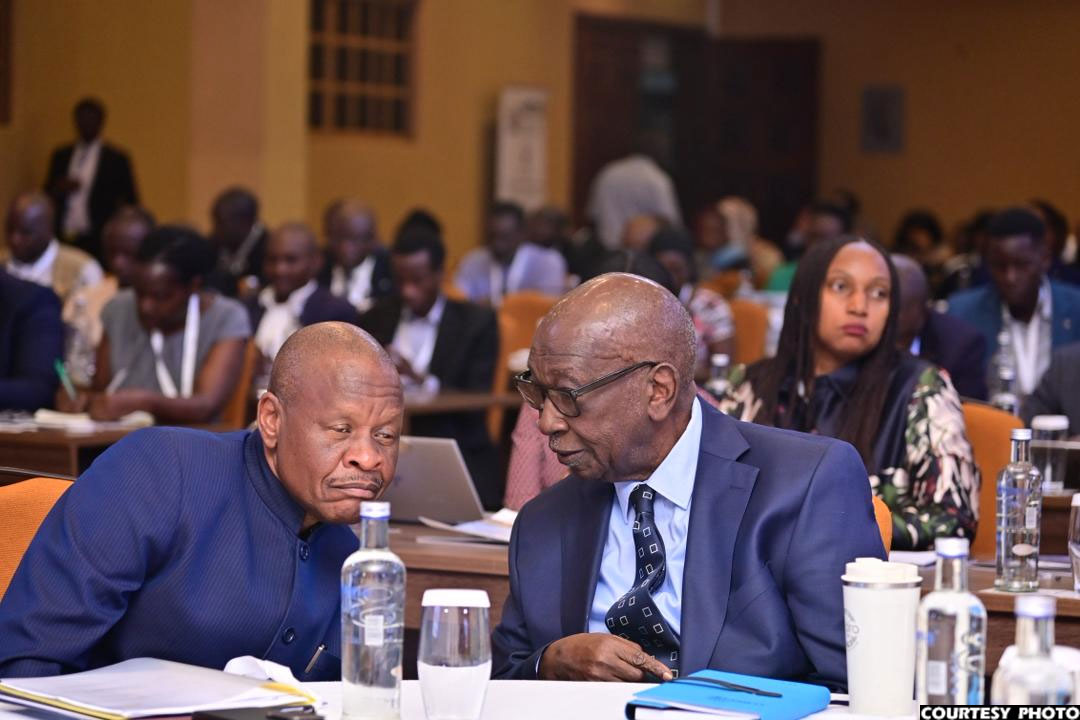
Trade state minister Gen Mbasu (left) and trade minister Mwebesa (right) on the opening day of the conference
We also extend our sincere appreciation to the secretary-general of the African Continental Free Trade Area Secretariat for delivering such a powerful and thought-provoking keynote address.
His insights set the tone for our discussions, reminding us of the immense opportunities that the African Continental Free Trade Area presents for Uganda’s industrialization, export diversification, and regional integration agenda. We are deeply grateful and as a Ministry we commit to translating the valuable perspectives he shared into concrete actions that will advance our national and continental trade objectives.
We also wish to express our heartfelt thanks to all our panellists and moderators who generously took time out of their demanding schedules to contribute to this important dialogue. Your expertise, practical experiences, and candid reflections have enriched our deliberations and provided clarity on the strategic priorities we must pursue.
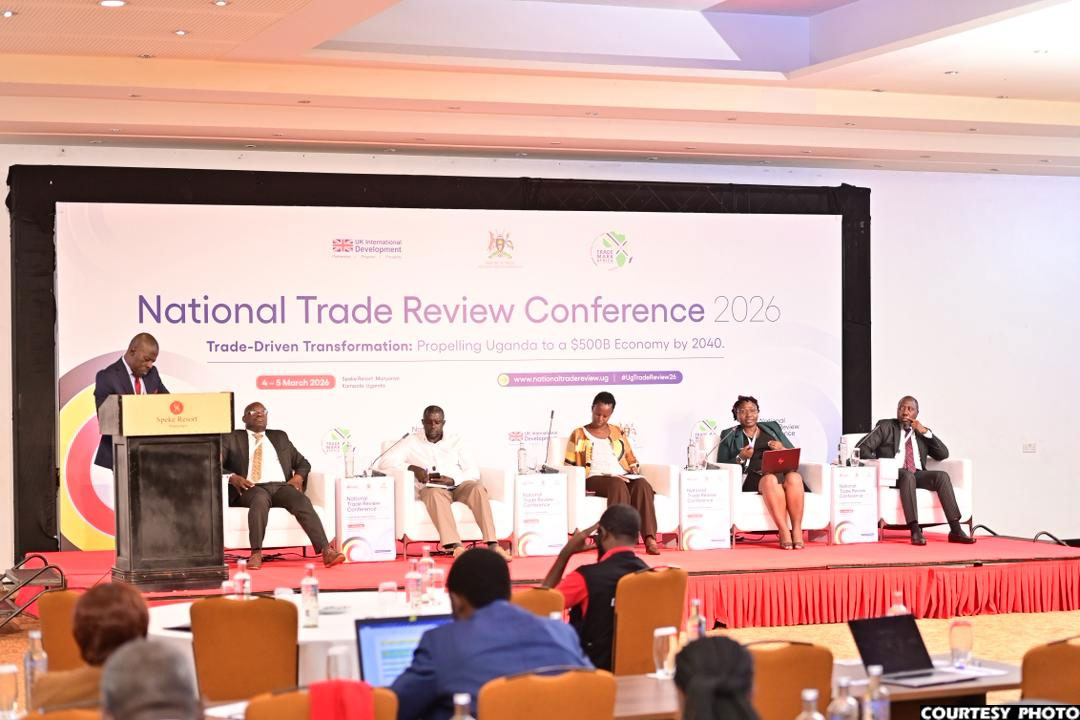
Several plenary sessions were held over the course of the conference
Your contributions have not only deepened our understanding of the challenges and opportunities within the trade sector but have also strengthened our collective resolve to drive forward a results-oriented trade transformation agenda.
The rich discussions held over the past two days demonstrates that building a competitive, resilient and export-oriented economy is a shared national responsibility between Government, the private sector, development partners, academia, civil society and all the people of Uganda.
I must emphasize that the private sector is the engine of trade development in Uganda, driving production, investment, and export growth because they are the ones who do business.
The role of the private sector is embedded in the vision of the National Trade Policy, the 10-Fold Growth Strategy and NDP IV, with institutional frameworks that foster public-private collaboration, address trade barriers, and promote standards and value addition to strengthen a dynamic, private sector-driven economy.

The ministry takes seriously the recommendations that have emerged from this Conference. We commit ourselves to fully incorporate and implement the outcomes under the Revised National Trade Policy and the National Export Development Strategy, in alignment with the National Development Plan IV and the Ten-Fold Growth Strategy.
In particular, we will prioritize strengthening trade financing mechanisms to ensure that businesses especially MSMEs have access to affordable and predictable capital. We will intensify efforts to address non-tariff barriers that continue to constrain our exporters, and we will accelerate the full and effective implementation of the African Continental Free Trade Area, so that Ugandan enterprises can take full advantage of continental market opportunities.
Uganda has made significant strides in implementing the African Continental Free Trade Area (AfCFTA), establishing strong institutional frameworks and policies to guide participation in the continental market.
We have set up the AfCFTA National Implementation Committee to coordinate across ministries, private sector actors, and civil society, ensuring alignment of trade policies and stakeholder engagement.
We developed and launched a comprehensive National AfCFTA Implementation Strategy (2024/25–2033/34) to enhance export competitiveness, support SMEs, strengthen value addition, and integrate Uganda into regional value chains.
The Ministry has also spearheaded technical measures include the configuration of AfCFTA Rules of Origin into the Uganda Revenue Authority’s ASYCUDA system, and the notification of 92% of tariff lines to the AfCFTA Secretariat under the EAC Customs Union, enabling seamless application of preferential tariffs and commencement of trade with in the African region and ensuring compliance with continental trade regulations.
Implementation has also focused on trade facilitation, regulatory reforms, and industrialization. Customs digitalization, border infrastructure improvements, and adoption of continental systems such as the Pan-African Payment and Settlement System (PAPSS) have lowered transaction costs and improved cross-border trade efficiency.
These measures collectively strengthen Uganda’s integration into African markets, promote industrialization, and enhance private sector growth across the country.
We further commit to scaling up productivity and production across priority value chains, strengthening standards and quality certification systems to enhance the competitiveness of Ugandan products, and harnessing regional integration frameworks such as the East African Community and COMESA to navigate increasingly complex traditional markets.
As global trade becomes more uncertain, diversification of both products and export destinations will no longer be optional, it will be essential.
The Ministry will therefore champion value addition, deepen industrial capacity, and ensure that youth, women and vulnerable groups are fully integrated into trade and industrial development as active participants and beneficiaries.
Uganda’s journey toward a 500-billion-dollar economy by 2040 demands discipline, partnership and sustained implementation. Today, we reaffirm that trade and industry will remain at the heart of our transformation agenda. The Ministry stands ready to translate these commitments into action, working closely with all stakeholders to ensure that the resolutions of this Conference lead to measurable impact on the ground.
With those remarks, it is my singular honour to declare the National Trade Review Conference 2026 officially closed.
I thank you all, and I wish you safe travels.
______________________